


Disability History Is Our History: Anita Griffin on Pride and Advocacy
Anita Griffin shares how disability history has shaped her pride, advocacy, and connection to generations of disabled activists who came before her.
Multimedia Gallery

-
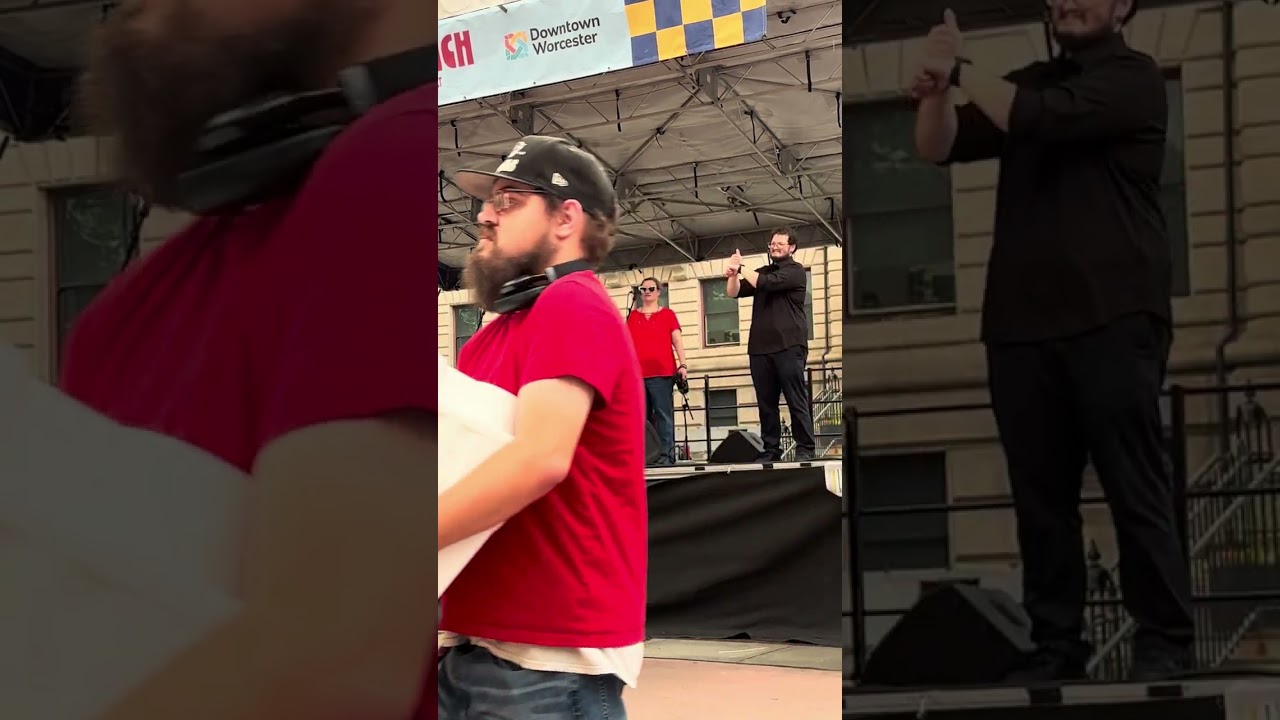
Anita and her friends at Easterseals Massachusetts' Teach Disability History
Multimedia Gallery

I have an intellectual disability, and I want to talk to you today about laws that have changed a lot for me and what it means to be proud of who I am. Before 1990, this country had no guarantee that a person with a disability could walk or roll into a workplace and be judged on their skills. No guarantee that a student with a disability could enter a public school through the front door. No guarantee that the sidewalk would have a curb cut, that the bus would have a ramp, or the hotel room would be accessible. People with disabilities were denied jobs, education, access to public life—not because they lacked abilities, but because the world was not built with them in mind.
That started to change on July 26, 1990, when President George H.W. Bush signed the Americans with Disabilities Act. He called it “the world’s first comprehensive declaration of equality for people with disabilities,” and he was right. The ADA was a civil rights law, full stop. It said that 54 million Americans with disabilities possessed the same rights and dignity as everyone else. The ADA prohibits discrimination in employment, public accommodations, transportation, government services, and telecommunication. It is the reason that there are ramps on buildings, captions on videos, accessible parking spaces, and reasonable accommodations in the workplace. It is the reason that I can be here, in this room, at this podium today.
But the ADA did not happen by accident. It was won by disability activists who chained themselves to inaccessible buses, who crawled up the steps to the US Capitol because there was no ramp, to demand that the Congress act. People who refused to be invisible, people who said we are here, we belong here, and the world must make room for us. I think about those people a lot. I think about Jennifer Keelan who was eight years old when she got out of her wheelchair and dragged herself up 82 steps to the Capitol. Eight years old. And I think, if she can do that, I can stand here and speak.
But I don’t want to just talk about the law. I want to talk about pride. Growing up, I was taught by the world around me, not always in words, that my disability was a problem to be solved, something to overcome, something to apologize for. I absorbed that message for a long time. I believed it. Disability Pride taught me differently. My disability is not a flaw, it’s part of who I am. It shaped how I think, how I solve problems, how I connect with people. Being involved in organizations such as Easterseals Massachusetts and Special Olympics has made me feel more connected to the disability community, which is one of the most creative communities on Earth. We’ve had to be.
Disability pride is not pretending that disability is always easy—it isn’t. It means insisting that our lives have full value. It means refusing to see ourselves through the eye of a world that was not built for us. It means saying, “I exist, I contribute, and I’m not less.” The ADA was the beginning, not an end. There is still work to do. Too many people with disabilities face unemployment, inaccessible housing, and inequity in health care. The fight continues; it needs all of us. If you have a disability, your identity is worth celebrating. You come from a long line of people who fought for you and you are worthy of every right and opportunity that this world has to offer.
If you do not have a disability, be an ally. Listen, consume content, push for access, understand that accessibility benefits everyone, because disability can happen to any of us at any time, at any age. I’m proud to be a disabled woman. I’m proud to stand on the shoulders of the activists who made this moment possible. And I’m proud to be part of a community that has always known that the rest of the world is still learning. The difference is not difficult, and access is a right, not a favor.
More Like This
-

More Than Baseball: Building Community Through the Miracle League
Easterseals MORC’s Miracle League brings disabled athletes and families together through sports, friendship, confidence, and community. -

Drawing His Own Path: How Derek Heard Turned Art Into Advocacy
Derek, an Easterseals Southern Georgia participant, built a business from his love of art and now uses his work to advance advocacy and civic engagement. -

Caregiving, Early Intervention, and the Joy of Raising Quadruplets
Amanda Corcoran's story highlights the power of early intervention and celebrating every milestone along the way. -

Early Intervention: A Strong Start for Children and Families
From everyday milestones to lifelong skills, early intervention helps children grow while guiding families every step of the way.


Sign up for Emails from Easterseals
Get exciting news, helpful resources, & inspiring stories delivered to your inbox each month.