


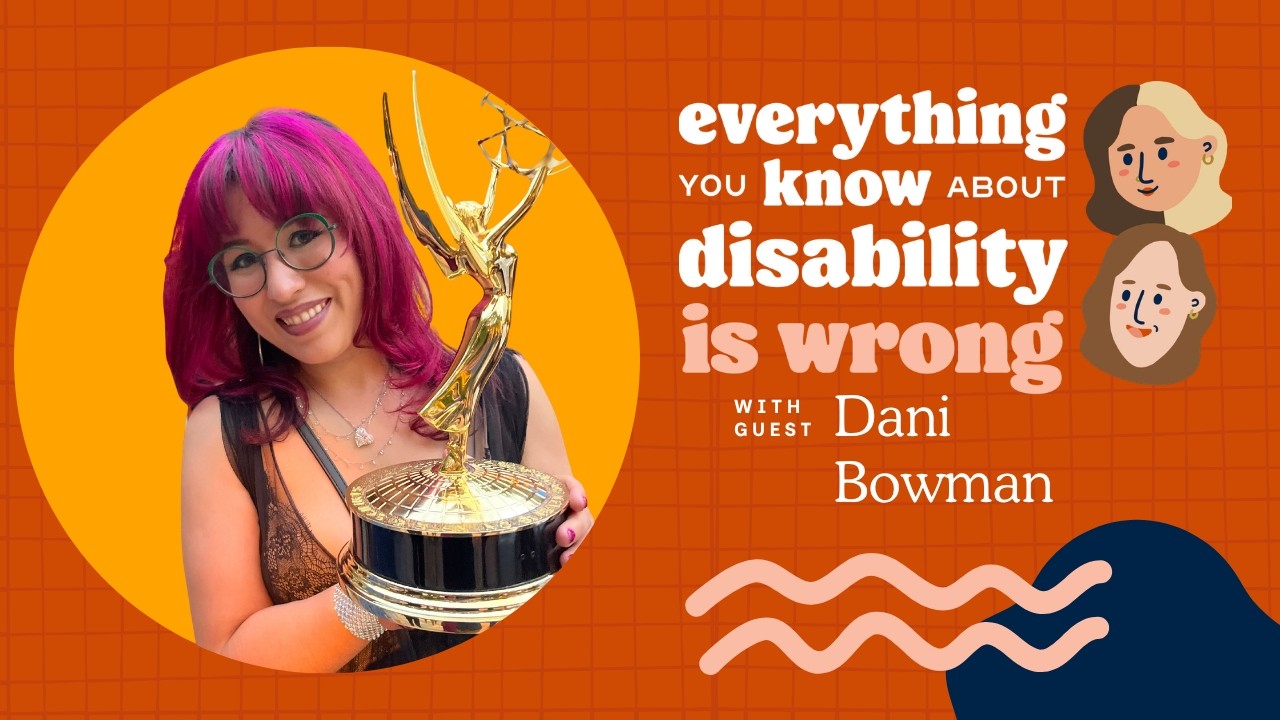
Episode 51: Meeting People Where They Are: Dani Bowman on Autism Acceptance
Autistic animator Dani Bowman discusses autism acceptance, neurodiversity, self-advocacy, and creating career pathways through DaniMation Entertainment, plus her experience on Netflix’s Love on the Spectrum.
Listen Now
Published on April 1, 2026.
Watch Video
Episode 51 Show Notes
Dani Bowman is an autistic animator, entrepreneur, and educator who founded DaniMation Entertainment to help people on the autism spectrum develop creative and professional skills. Through her work and advocacy, she empowers neurodivergent individuals to pursue their passions and build meaningful careers.
In this episode, Dani reflects on her journey in animation and business, her experience on Netflix’s Love on the Spectrum, and her company DaniMation. The episode highlights the many ways Dani creates learning and employment opportunities for neurodivergent adults. The conversation also explores relationships, self-advocacy, and what authentic autism acceptance looks like in everyday life.
This episode is a kick-off to Autism Acceptance Month and our Understanding Disability campaign. At Easterseals, we know that disability looks different for every person, and support should be tailored to individual strengths, goals, and needs.
Transcript
Dani Bowman:
Many autistic adults do want full grown up relationships that includes both emotional and physical connection.
Music interlude:
One, two, three, let's go. Everything you know about disability is wrong!
Lily Newton:
Hey listeners, and welcome to another episode of Everything You Know About Disability is Wrong. We're your hosts. I'm Lily Newton.
Erin Hawley:
And I'm Erin Hawley. And today on the show we're going to be talking about Autism Acceptance Month, meeting people where they are, and a lot more with Love on the Spectrum star, Dani Bowman.
Lily Newton:
Dani is an autistic entrepreneur, animator, educator, and speaker, and she's the founder of DaniMation US, an animation studio and training program supporting autistic and neurodivergent creatives.
Erin Hawley:
She has taught animation to over 3,500 students. Created 16 original animated short films at San Diego Comic Con and as a task member on LL Spectrum, Dani uses her platform to advocate for inclusion and empower others to share passion into possibility.
Lily Newton:
Welcome to the show, Dani Bowman.
Dani Bowman:
All right. Thank you so much for having me be on your podcast, Lily and Erin.
Lily Newton:
We are so excited to have you. Thank you so much for being here. I have loved you on Love on the Spectrum since your first appearance, and I'm just so excited that you are our first guest for Autism Acceptance Month. It's so exciting. Before we dive into questions, let's go ahead and do our audio descriptions. I will start. This is Lily speaking. I am a mixed-race woman with half blonde, half brown hair, split right down the middle. And I'm wearing my usual necklace that I will probably fidget with throughout the whole episode. Behind me, there are a bunch of disability related books and stim toys and plush toys. And I'm holding the microphone today because I'm going to try not to fidget with my hair the entire episode. And I will pass it to Erin for her audio description.
Erin Hawley:
Hi, this is Erin speaking. I'm a white woman with red hair and blue eyes, and I'm wearing a black and white shirt I got recently and I love it. It's so comfortable. And I have, I'm sitting in my wheelchair in my bedroom and I will pass it to Dani.
Dani Bowman:
So I am Dani Bowman. I am a Latina woman and I have burnet hair. I have these some split curtain bangs with me and I have this hot pink shirt, hot pink, long sleeve shirt. And I'm also wearing some stud earrings, these diamond stud earrings. And I also have my gold heart necklace. And I even have, and in the background, it's mainly just a ... I have this ... This is the blind covers, which I usually use as my background. Basically, it's all white. So that way you don't really see my room though. I can't really wait to tell you all about the fun things that is happening, and especially the upcoming season of Love on the Spectrum.
Lily Newton:
Yeah. This is a super exciting time to be interviewing you, Dani. This episode will come out the same week that Love on the Spectrum is premiering its season four on Netflix. So if you're listening to this right now, after you finish the episode, pop over to Netflix and check it out. If you haven't seen Love on the Spectrum, it is an incredible show and I'm sure we'll get into that during the episode. But I want to start with Happy Autism Acceptance Month, Dani.
Dani Bowman:
Happy Autism Acceptance Month to you, Emily, and to Erin as well, and to everybody celebrating Autism Acceptance Month.
Lily Newton:
And what does the phrase autism acceptance mean to you?
Dani Bowman:
What autism acceptance means to me is that we on the autism spectrum are accepted for who we are, and we are working together just to make sure we people on the autism spectrum have the same rights as everybody else.
Lily Newton:
Absolutely. And I think that there's something really important about autistic people getting to live authentically and not necessarily changing ourselves to fit molds or standards. So I'm interested in, what is either a time or something that you're doing where you feel just most authentically you?
Dani Bowman:
So I've been most authentically myself from every single day, pretty much. Being myself is the greatest thing that we on the autism spectrum deserve. And for me, I've been 24/7. I've been 100% myself the whole time.
Lily Newton:
I love to hear that. Yes.
Erin Hawley:
I really appreciated you on the show because you definitely stayed true to yourself the whole time. And I think that's so important for other people to see that.
Dani Bowman:
Oh, thank you so much. And the beauty of this show is that every cast member from Love on the Spectrum get to be their authentic, true selves. And this is what I really like about the, not the cast members that I meet, not just the cast members, but also the crew from Northern Pictures, the filmmaker, the production company behind Love and the Spectrum are very authentic. They allow us to be our true selves, and especially with the interview questions that make it very accessible.That's what I really love about that show.
Lily Newton:
Oh, I love that. And have you always been just authentically yourself or was there ever a time that you felt like you were trying to change yourself to fit for other people?
Dani Bowman:
I don't think so. For me, I've been 100% authentic myself the whole time throughout the show of Love on the Spectrum. I didn't think I have to fit in well, but except for societal norms and the little basic rules, like for example, like not daydreaming and being able to pay attention 100% all the time is something that we on the autism spectrum have to do just to be sure that we function.
Lily Newton:
Yeah. I'm really glad you said that because I think that there is ... It's a nuanced topic, this idea of being ourselves, but also wanting to learn how should I behave to be taken seriously, to be listened to, all of those things. So I know I'm a daydreamer for sure, and I tend to take conversations into long tangents, and I just want to talk about my dreams all the time. And I've learned how to try to stay focused and stay on topic, but it does feel really affirming when I get to just be my daydreaming, authentic self and talk in long paragraphs like I do. Do you feel the same way sometimes?
Dani Bowman:
Yeah, I kind of do. It's good to talk in long paragraphs to anybody who's having a conversation. One of the rules that I've learned from UCLA peers is to not be a conversation hog. What it means you're just talking at people. In order to talk with people, it's like playing the game of hot potato. You just start with a little bit of a small talk and then you expand and then you ask the person, "Do you have to get to know the person pretty much? It's a two-way street.
Lily Newton:
Yeah. It sounds like you've had a lot of great learning experiences where you've gotten to learn kind of the rules of socialization and how to grow those relationships. How do you balance staying authentically yourself and trying to follow the rules of conversation?
Dani Bowman:
When it comes to the follow the rules of the conversation, it's not just about learning about the rules of the conversation, it's about applying the rules, applying what I learn. I'm not very much of a conversation hog as I used to be, but now it just comes out naturally for me now. It just becomes eventually when you learn these social skills, it just becomes second nature. You don't have to worry about having to learn those anymore. It just becomes second nature to you, which means I just speak in small talk now and then.
Lily Newton:
And it feels authentic and natural to you now because you've had the opportunity to practice.
Dani Bowman:
Exactly. When you practice, it eventually becomes second nature.
Lily Newton:
I really love that you said that, Dani, because I think that there sometimes can feel like there's some resistance to trying to change autistic people or making the way we speak differently, but the truth is that we want to be in conversation. We want to have real relationship and grow. So having these skills taught to us actually tends to open up pathways to be our true authentic selves. I really like that you said that. Is there some activity or event or thing that you do where you feel just most like, this is me, this is the truest version of Dani, maybe when you're animating or teaching or ...
Dani Bowman:
Well, all of what you mentioned is definitely 100% true. I am my most authentic self when I teach animation to students on the spectrum and if I do some animation productions with the DaniMation team, and if I speak at the autism conferences or any of the animation of events.
Lily Newton:
I love that. I love that you get to be your most authentic self, especially when you're in rooms with other autistic people. And I think it's so great that your work at DaniMation is you and other autistic teachers working with autistic people. I think that's a really cool business model you've created where it's a service by and for autistic people. I love that.
Dani Bowman:
Hey, thank you so much. We at DaniMation don't just create animation for people on the autism spectrum. We create animation just for everybody, no matter if our team is on the autism spectrum, we are predominantly a team of people on the spectrum.
Lily Newton:
That's so great. Are there any things you do in your workplace to make sure that it feels inclusive to all of your team members because some autistic people have different needs?
Dani Bowman:
We do make it inclusive as much as possible. And what we do at DaniMation is that we do provide the onboard sessions to check out who the student is. Instead of providing a linear curriculum for every people on the autism spectrum to fit the mold, we get to know the person, we get to know their interests first, and we just have little fun little conversations while we talk about what their animation lesson is going to be. So as we do a little bit of a diagnostics before we get into the actual animation lessons to make the person on the spectrum feel comfortable with the sessions, we make the animation sessions fun and conversational and interactive as possible.
Erin Hawley:
Yes, I love that because we talk a lot about on the show, how every disabled person has different needs and different accessibility. So that's really important that you make sure people on your team have the support they need every day to work.
Dani Bowman:
That is definitely true. And if we have a person on the autism spectrum that wants to be part of our team, we slowly introduce the person on the autism spectrum and others like to get to know each other. We include that interactive experience if they work together on an animation production, pretty much get to know each other before an actual animation production begins at DaniMation.
Lily Newton:
I love that. I think I promise we did not prompt Dani to say this because it aligns so well with everything we're talking about at Easterseals right now, which is about how to understand disability means meeting the singular disabled person you're speaking to right where they are, because every disabled person has their own lived experience. And there's a common phrase, which is if you've met one person on the autism spectrum, you've met one person on the autism spectrum because we all have very different views or very different traits and experiences. And I think that that meeting people where they are and getting to know what do you actually like to do is such an important part of true autism support. And I think that that is really important and something that Easterseals really prides itself in is that when you come to Easterseals, you and your family are going to be met where you are and your specific needs are going to be figured out.
So I think that getting to know someone and asking about special interests or anything like that can help just make a connection. So it seems like what you try to do with your team and the students that you work with is before you try to do anything work related is establishing that initial connection and making sure everyone feels safe and comfortable together.
Dani Bowman:
That is definitely correct. And I forgot to mention about this, the most recent animation project that we've worked on for Stanford, which is seven animation modules for doctors and clinicians educating about people on the spectrum.
Lily Newton:
Yes. And that project is such an incredible example of changing culture and society to meet autistic people where they are. I got the distinct pleasure of getting to preview some of these videos that Dani has created and listeners, they are so incredible because so much content about autistic people gets made trying to change or adapt autistic people. But the work that Dani has done with this Stanford Neurodiversity Project is she's not asking the autistic people to change. She's asking the healthcare providers how they can make their practice affirming and what they can do. So can you just tell us a little bit about that project, how you got involved with it and why it's so important to you?
Dani Bowman:
So how I got involved with the Stanford Neurodiversity Project, well, it all started when I get to be invited to be part from the Stanford Neurodiversity Summit that they hosted back in 2020 at that time. And we also got to know Dr. Lawrence Fung, who is the head of the Stanford Neurodiversity Project. He invited me to not just intend the Stanford Neurodiversity Summit, which is a conference about educating professors and all of the parts about the autism and neurodiversity community, but he also invited me to teach at his high school camps called for, I mean, a camp for high schoolers, which is called REACH, which is to help high schoolers that attend these camps to create these animation related projects. And I teach them how to create projects, which which ranges from interactive books, interactive animations and interactive and little comics that helps educate the neurotypical community about neurodiversity.
And the most recent and with the most recent project, the Stanford Neurodiversity Project called Neurodiversity Informed Culturally Equitable Healthcare, which educates about doctors and clinicians. And with this short film, these modules help doctors and clinicians better understand how to support neurodivergent patients and what respectful, effective care should look like. So we at DaniMation, we carefully chose the team members that are on the autism spectrum who worked with us. And most of the team members are students and instructors who have been previously been our students for a couple of years, worked on these projects. And I'm so proud of, and we at Deana Mason are so proud of what the students have accomplished, when we finish these projects.
Lily Newton:
Yeah, you should be so proud. I mean, there's so many different parts of this project that you should be so proud of because the fact that you have created this company that not only is educating, but also is creating career pathways for people on the autism spectrum. I mean, the fact that some of the people who worked on this project were initially DaniMation's students, I just hope that you feel so proud every day when you wake up because you really have given back to our community by creating these career pathways and using the platform that you've been given to help our community. So thank you for doing that.
Dani Bowman:
No problem anytime. And that's why the main focus is creating opportunities for neurodivergent creators has always been rewarding. One of the most important thing to mention is that I'm also currently serving as the ambassador for the Marvels of Media Festival at the Museum of the Moving Image, which takes place in March from the 26th to the 28th. Sorry. This festival celebrates the film and media created by autistic artists or screenings, panels, and workshops. And what makes this especially meaningful is that four of my Danimation students have their films featured at this festival and I help run this event as well. And seeing my students grow from learning animation to having their work shown at the major museum festival is also incredibly rewarding. Because I'm on the spectrum myself, this work is deeply personal. It's about opening doors, creating opportunities, and showing the world what neurodivergent creators are capable of.
Lily Newton:
Through the work you've done and being authentically you on Love on the Spectrum, I think you've certainly challenged stereotypes of what people think autistic people are or who we can be. I think you've certainly challenged that and have shown we can be whatever we want to be as long as we have the supports and services we need.
Dani Bowman:
And all the people that definitely supports us, like my aunt and uncle that really helped me out throughout the 17 years of running DaniMation.
Lily Newton:
Yeah, that's a really important point and something we talk about a lot at Easterseals is how caregivers are just a super important part of our community. And I'm so glad that you have affirming caregivers who support you, but also see your potential and see ... I think that a lot of autistic adults we face being underestimated. And I could tell just from meeting with Sandy and Patrick the first time I met you all, they do not underestimate you. They think you could go for the moon and I love that because you can, you can do whatever you want. I love that.
Dani Bowman:
It's true. And so the same goes to my students and all my fellow animation instructors.
Lily Newton:
I'm wondering if you have any things that you have learned on how as an educator or a public speaker, how you can make learning environments more accessible and accepting for neurodivergent students.
Dani Bowman:
How can I make these environments more acceptable for neurodivergent students? So first of all, as I've mentioned, we help the students ... We get to know the student first of what their sense and get to know their sensory needs a little bit before we change the environment. And I've learned from the metaphor that says, "You cannot really change a flower, but you can actually change the flower's environment." So I get to know the student, I get to know one student some sensory need, and then I change and accommodate the environment that suits well for the student. Again, every neurodivergent sensory needs are different.
Lily Newton:
I love that. You can't change the flower, but you can change its environment and help it grow. That's amazing. You don't change the flower. You change the soil and the sunlight and the amount of water. And I love that because I think that that is really going back a little to the videos that you made for healthcare providers. I think that the healthcare experience can be really scary for a lot of people, especially disabled people and your videos help make doctor's office a better environment for people. So just going back a little bit, can you kind of just give a little explanation of maybe an example of what one of the videos is or what the topics are in the videos are?
Dani Bowman:
So the first module explains about, it really explains about the primary care visit. So in this example, it's about one doctor who tries to rush, who has a compact tight schedule, tries to get to know the person on the spectrum by asking questions about her autism. This is the wrong ... And then she felt so misunderstood and she feels very bad and how he unintentionally made that patient cry, which is something that it's not, which is, I think it's unacceptable for most doctors to do. And then the second scenario of module number one is that Dr. Newman gets to know Emma in advance. He got all the papers and every documents to get to know the patient in advance before meeting the patient in person. And he dives deep into the topic about what the patient really likes, like the Atola Jellyfish, for example.
Lily Newton:
So this is called the curb cut effect, which is that when you make a place more accessible for someone with a disability, you tend to make the place more accessible for everyone. And I was thinking about the video that you showed of, there are neurotypical people out there who experience healthcare related anxiety and the type of work that you have done in creating those videos will allow doctors to use what they learn on all of their patients, which just might make the healthcare experience less anxiety inducing for everyone involved.
Dani Bowman:
But then again, just because the characters are portrayed in these videos, nobody is the same, like the same patient. They could relate to the character in one. One person in real life could relate to the character in one, others may not. It's just that we're all different.
Lily Newton:
Absolutely. And I think that a big part of autism acceptance is being okay with that difference and understanding that there's not one right way to be around autistic people. But rather, if you lead with curiosity and getting to know us for who we are instead of just asking about our autism, that will create a more accepting feeling, I think. And I hope that that's a trend, this Autism Acceptance Month, that we're getting to know each autistic person as who they are individually, because Dani's an incredible example. If you were just put in a box as just an autistic woman and didn't get to know you as a full person, we might not know you're this incredible animator and educator and public speaker. So we contain many things within us, autistic people.
Dani Bowman:
Well, thank you so much, Lily.
Lily Newton:
Okay. Switching topics a little bit, because I want to talk about, you're on the show, Love on the Spectrum, and I think it was at the end of last season, there were some hints that maybe there was going to be a new relationship in your life. And I've seen through your Instagram, you just got back from a trip to Japan with your boyfriend, Henry. Can you tell us a little about your relationship and what that's been like?
Dani Bowman:
So how this relationship and what's been like for me and Henry, well, for Henry and I, we've been boyfriend and girlfriend for a year now. And what I really love about Henry so much is that he's very, he got to know me a little bit and he got to know me when we first met a little bit more. And then he researched a little bit more about me how it's ... And then what's so nice about him is that he's very kind, very caring. He understands my autistic traits and helps me out with all the fun just to help. He's very accommodating, which I really, really like about Henry.
Erin Hawley:
I love that. It's really important to find somebody that accepts every part of you, so that's awesome.
Dani Bowman:
He does.
Lily Newton:
Do you have any examples of how he is accommodating?
Dani Bowman:
Like for example, I would always communicate, he would always make compromises with me. For example, if we're like at a club and if it's a little too much or a little too loud, he would say, "If you're feeling uncomfortable, just please tell me. " And I would say, and then if I tell that, that it definitely works. He would definitely give me these little verbal instructions if I was feeling uncomfortable. You see?
Lily Newton:
Yeah, that's really great. And I like that in the way you explained that, I think that something we deal with in the disability community is people thinking we need constant help when sometimes we don't and sometimes people try to be helpful and end up not being. I like that he has basically said, "Let me know, advocate for yourself and I'm willing to adapt." And he does only when you ask. He's not trying to make assumptions. He's waiting for you to tell him.
Dani Bowman:
That's a good thing. He always asked me like, "If there's something wrong, just say something."
Lily Newton:
And it can be really almost healing to find someone. I feel the same way with my fiance of that I feel like I really can be vocal about how I'm feeling. And I think that I've spent a lot of my life feeling uncomfortable, but not being willing to voice it. And with my fiance, I've really learned this whole new level of self-advocacy of being able to, like you said, be out at a club or be out dancing somewhere and then just go, "I'm overwhelmed. I need to go home right now." And to be met with love and care is so wonderful. And I hope that for every disabled person to find love where you feel accommodated as your true self.
Dani Bowman:
Oh, thank you so much. And that's what I really love about Henry. He allowed me to be my authentic self. That's a good trait of a boyfriend.
Lily Newton:
That is a good trait of a boyfriend. I saw on your Instagram, or maybe it was Henry's Instagram, but there's a video of guess who's the calm one in this situation and Henry's standing there and you're dancing in every video and I just love that. Yeah, I love dancing
Dani Bowman:
In every video because he showed me a round of Japan of different places. He always lets me know in advance of what's going to happen and explains about the itinerary and he showed me- Oh, that's great. And I was so happy dance throughout.
Lily Newton:
That's so wonderful that you were able to enjoy and be present on this trip because your needs were accommodated in advance. So sharing the itinerary helps you stay calm and knowing what your day is planned for probably helps you stay regulated.
Dani Bowman:
That's the good thing about what a boyfriend does.
Lily Newton:
Yeah. And or a loved one or a friend or a caretaker, I think listeners, this is a really great thing to, if you're thinking to yourself, "It's Autism Acceptance Month, I want to make an autistic person in my life feel more accepted, a really great Great place to start is sharing plans in advance and then saying, "What could I do with these plans to make you feel more accepted?" Or, "Does this work for you? " I think that that's a really easy way to build relation with an autistic person in a way that feels incredibly affirming.
Dani Bowman:
That is something really true.
Lily Newton:
Going back to Love on the Spectrum for a second, you were a beloved character and I think you challenged some people's expectations of who autistic people are. And I think especially having some mature conversations that they didn't expect, I think you really shined a light on this autistic adults. We're just young adults. We want the same things all young adults want. Yeah, talk about it.
Dani Bowman:
That's the kind of response the show that shows why representation really matters. It really helped people see that autistic individuals can have full complex lives, including careers, relationships, and big goals. And I've also heard from young autistic creators who say they feel more comfortable pursuing their interests after watching the show. That really means a lot to me because creating opportunities for neurodivergent artists is something I focus on through my work at DaniMation. And with this positive reception, it just makes everybody feel like they feel if Dani could do it, then I can. Intimacy. Absolutely. And I forgot to ... And one other thing I wanted to dive deep into is about intimacy. And one of the biggest lessons I've learned is that finding love isn't just about finding the right person. It's about being the right person. And that means being kind, clear, and honest about what you want in a relationship while also respecting yourself and your own values.
Because of the way my autism presents, when someone asks me a clear direction, I tend to answer very honestly. Sometimes that can come across as blunt, but my intention has always been to communicate openly about my expectations in a relationship. When conversations about intimacy came up on the show, what people saw was honesty, but not always the full context. For me, intimacy is one part of a relationship, but emotional connection and mutual respect are just as important. I believe open communication about expectations is actually very healthy in any relationship. I also understand that people interpret things differently when they watch a television show. The reality is that everyone on the show is different. Some people may not want intimacy and that's completely valid, but many autistic adults do want full grown up relationships that includes both emotional and physical connection. And another way I've grown is through hearing from viewers.
Many people have told me the show has helped them feel seen or helped them better understand neurodiversity and knowing that the show has had the kind of impact that is incredibly meaningful to me. Personally, I'm grateful that I found a loving relationship with my boyfriend, Henry, and that experience has reinforced the importance of honesty, communication, and mutual respect in building a healthy relationship.
Lily Newton:
Yes. And I'm so glad that you were your honest, authentic self. And you mentioned that you just answer honestly, and sometimes that comes across as blunt. But I think that by sticking to your values and being authentically you, you're now with someone who appreciates that bluntness. And that's one of the big parts of dating, I think, is finding the people that appreciate you for who you are rather than the people that you feel like you have to change for. Because it seems very much like you and Henry just accept who you are, and I bet he appreciates your open, direct conversation.
Dani Bowman:
And that's what I really love about Tim Henry.
Lily Newton:
Sometimes my ... I'll be with non-autistic people and they'll hear the way that I talk to my fiance and they'll think like, "Oh, are you guys fighting?" And I'm like, "No, I just speak that directly. That's just how I am." And that I think because I've been authentic with him is why we're a good match, because he likes me authentically. And yeah, there's just something so nice in being able to be your blunt self in a way that might make other people mad, but it makes this person happy.
Erin Hawley:
Yeah. With my partner, we're very direct and honest all the time. And that's like, I've never had that in a relationship before. And I think that honesty is why we lasted still together, why we've lasted so long because that is so important.
Dani Bowman:
That's fantastic. And that is the beauty of a long lasting relationship. In order to get a long lasting relationship, don't just settle for somebody that is that just because you like that person. Don't just settle. It's like you never know because you eventually find out that the slipper fits.
Lily Newton:
Yes. And I really appreciate you saying that. Don't just settle. I see how much me in the past used to just settle in every aspect of my life, whether it was friendships or relationships. I would just think that, "Well, this is the best I can get. " These people, I think about some friends I had in college where I think about I never felt good after hanging out with them. I always was sad or felt bad, but I thought that that must be me. I must be the problem. And now I know that that's not the case. So I'm so glad. And listeners, I hope you really took that in, especially autistic listeners, what Dani just said, of that don't settle because just because our brains might work a little differently doesn't mean that we don't deserve to find the right person, not just a random person, but the person who actually sees us and cares about us.
And there are some autistic people who, like Dani said, are not interested in intimacy or relationships at all. And that's perfectly valid too because we're all different.
Dani Bowman:
And then again, it goes back to being the right person. It's not just about finding the right person or just settling for that right person you want. It's just being the right person. But then again, but one thing I wanted to add is that being the right person actually goes both ways, you see? Yeah,
Lily Newton:
Absolutely.
Dani Bowman:
And you find love when you least expect it.
Lily Newton:
Oh yeah. I love that. And I also think that sometimes the right person makes you kind of become your best self without even you trying to. They bring out that part of you. And I think that when Brian and I first met each other, we first started dating, which was now like eight years ago, there was a song out that was called like the lyrics were I Like Me Better When I'm With You. And I loved that. I sent that to him. And I remember thinking like, this is really awesome to be learning to love my authentic self because when I'm around this person, I feel real and I like it. I like the way it feels. And I think that when it comes to like being the best version of yourself in a relationship, I think that it should feel like it's coming kind of naturally because of the relationship, not that you're trying to change yourself because like we said, don't settle and don't feel like you need to change.
Dani Bowman:
And that relationships, when it comes to relationships, just be patient with yourself. Always take your time. There's no need to rush in relationships.
Lily Newton:
I completely agree. And remember that your time does not have to be anyone else's time. I think that if anything is going to be the summary of this episode, it is be true yourself. And real autism acceptance means that we accept you for who you are and that we feel accepted for who we are.
Dani Bowman:
That's what autism awareness and acceptance months means. It really means being our true authentic selves.
Lily Newton:
Yes. And it means other people understanding that we are not just one thing and getting to know us as our authentic selves. We're running out of time here, so I just want to switch directions a little bit and go to, I call this like the quick fire section, which is just quick questions. And this is just a personal preference because autistic people are allowed to have their own preferences. Do you personally, Dani, do you prefer to be described as a person who has autism or a person with autism or an autistic person? Do you have a preference on that?
Dani Bowman:
I don't have a preference at all. I can be preferred as a person with autism, autistic person. I have no preference.
Lily Newton:
I'm the same way. I think I use autistic more because it just comes out naturally, but I don't really mind either way. I think that that's another part of autism acceptance means accepting that people want to talk about it in whatever way feels comfortable to them and that's okay.
Dani Bowman:
That's right. And that is the point for what autism acceptance really means.
Lily Newton:
What is one thing you wish was better understood about autism?
Dani Bowman:
So there's one thing that I wish better understood about autism is that we on the autism spectrum, we want to show the workforce that we can be capable and the workforce and what I wish for the workforce to do is get to know the person on the autism spectrum or other disability of what we can do and what position of what we can fit for any role. And I do wish, and of course it would be really great for people on the spectrum to have a lead role in the business world or any industry. But as of right now, while there is a workforce for people on the spectrum working in jobs that are repetitive roles, I wish there will be more people on ... It would be great to see more people on the spectrum taking leadership roles.
Lily Newton:
I completely agree. I think that's a huge part of autism acceptance is us understanding that we might need to reshape what professionalism looks like and understand that there are autistic people who may need to speak differently or dress differently or talk differently, but that doesn't mean that we can't be great leaders. Well, employment's a huge thing. Employment's a really important part of feeling self-assured and self-confident and independent. So I love that you bring up employment because I think that that's a part of autism acceptance that sometimes gets left out, but that acceptance means access to careers where we feel empowered and affirmed.
Dani Bowman:
And that's what our mission is about that same emission applies to DaniMation. Educate, elevate, and empower the autism community by helping by providing, by turning their talents into important career paths.
Lily Newton:
I love that. I love important career paths because for some, an important career path might look one way and for others, it might look a different way. And that's the same thing we've been saying this whole episode, which is finding the thing that works for that person is really important. Okay. This quick fire question is going to feel very random. It's very different than everything else I've asked, but I just want to know what is the best thing you ate in Japan?
Dani Bowman:
Oh, the best thing that I ate in Japan. Well, to be honest with you, I really had the best authentic Nigeria sushi ever. It's a row of sushi there. And also one thing I've tried is the Anagiri, their rice balls are the best.
Lily Newton:
What are you most excited about for this new season of Love on the Spectrum premiering?
Dani Bowman:
Oh, this is going to be the best one yet, but I cannot reveal or reveal any spoilers whatsoever. So be on the lookout, Love on the Spectrum season four will be coming out on April 1st.
Lily Newton:
Before we go, one final thing, I just want to talk a little bit about the collab you're doing for Easterseals. Dani is animating a video for Easterseals that is going to help explain. It's actually a graphic that I made a few years ago that is ... A lot of people think that the autism spectrum goes from a little bit autistic to a lot autistic, and that's just not the case. And Dani's going to animate a video explaining that. So I'm really excited and listeners, followers, stay tuned for that. That'll be on the Easterseals and Dani's social media pages. So check that out.
Dani Bowman:
As a closing message, if there's one message I hope people take away from my story, it's that neurodivergent individuals have incredible potential when they're given the right opportunities. My goal has always been to turn passion into opportunity for neurodivergent creators through DaniMation, and we help students move from learning animation to working on real projects, from healthcare training modules to film festivals like the Marvels of Media Festival. Another important takeaway is that autistic people want many of the same things as anyone else, including relationships, connections, and meaningful lives. We may express ourselves differently, but the feelings are very much the same. Representation is important, but opportunity is even more important. It's one thing to see yourself on screen. It's another to have a chance to create the stories yourself. I also want young neurodivergent people to know that their differences are not something to hide.
They can actually be their strengths. Many neurodivergent individuals have incredible creativity, attention to detail, and unique ways of thinking that can lead to amazing careers and contributions. With the right support and opportunities, passion can truly turn into purpose. If you'd like to learn more about what we do at DaniMation, you could go to our website at danimation.us. We also provide free introductory animation classes on select Saturdays when available. So you could sign up at danimation.us for more information for our free introductory animation courses.
Lily Newton:
Yes. And listeners, the links that Dani just referenced are going to be in the description of the episode as well. So you can go check out what DaniMation has going on, and there's a lot going on. And thank you for those amazing closing messages, Dani. I, as an autistic person myself, needed to hear some of that, and I feel very accepted and affirmed, and I'm so grateful. And I think that the world is finally starting to understand how broad the autism spectrum is and all the amazing things we can do. So thank you for being a huge part of that. Erin, thank you for being an amazing co-host. I love having you with me on this show.
Erin Hawley:
Yes, I love having you on this show too.
Lily Newton:
And yeah, Dani, thank you so much. This has been so wonderful. I can't wait to continue working together and changing the way people think about autism and neurodivergence in general. So thank you so much.
Erin Hawley:
Thank you, Dani.
Dani Bowman:
Thank you. Thank you so much for having me on. So have a wonderful rest of your day.
Lily Newton:
Yes, and we will see you next time for another episode of Everything You Know About Disability is Wrong.
Music Outro:
Oh my goodness. You are such an inspiration. Wow, you really are. You're so strong. Can I pet your service dog?
One, two, three, let's go! We are artists, parents, teachers, good guys, bad guys, students, leaders. I’m not your inspiration. I fully who I am. Got my own expectations that don't fit into your plans. I'm not your sad story, so I wrote it in this song. Everything you know about disability is wrong! Yeah, everything you know about disability is wrong!
Legal
Sign up for Emails from Easterseals
Get exciting news, helpful resources, & inspiring stories delivered to your inbox each month.