


Episode 50: Love, Humor, and Real Life: Shane & Hannah Burcaw on Relationships and Disability
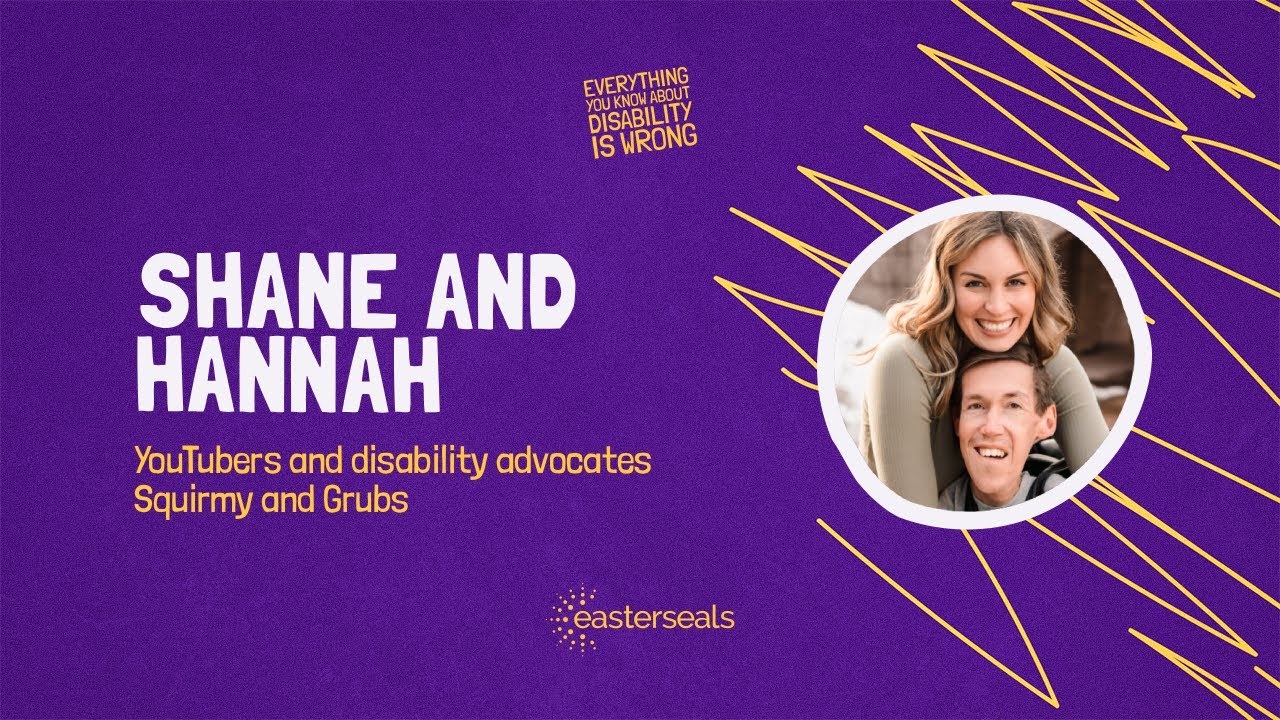
Shane and Hannah Burcaw share candid insights on love, disability misconceptions, content creation, and staying grounded while navigating life online together.
Listen Now
Published on January 8, 2026.
Watch Video
Episode 50 Show Notes
Shane and Hannah Burcaw, creators of the YouTube channel Squirmy and Grubs, join Lily and Erin for a wide-ranging conversation about relationships, content creation, and what people consistently misunderstand about disability. As a married couple whose lives are highly visible online, Shane and Hannah share how public assumptions, especially about love, worth, and caregiving, show up in comment sections far more than in real life.
They reflect on how a viral interview shifted their channel from casual vlogs to a platform that sparks deeper conversations, and how they learned to balance humor with heavier topics without losing their audience. From navigating internet cruelty to deciding how much of their lived experience to share on camera, Shane and Hannah speak candidly about pressure, boundaries, and staying grounded.
The episode also explores how caregiving fits naturally into their relationship, why long-form storytelling still matters, and how shared routines, sarcasm, and trust keep their partnership strong. Throughout the conversation, Shane and Hannah emphasize curiosity, patience, and showing up honestly, online and offline.
Connect with Shane & Hannah:
Transcript
Lily Newton [00:00:39]:
Hey, listeners. Welcome to another episode of Everything You Know About Disability is Wrong.
Erin Hawley [00:00:43]:
Today on the show, we are very excited to have our first couple on the show, Shane and Hannah Burcaw.
Lily Newton [00:00:52]:
Shane and Hannah Burcaw are the creators of the wildly popular YouTube channel Squirmy and Grubs, which has over 1.5 million subscribers. Their content focuses on normalizing disability and challenging societal misconceptions about relationships and disability, combining entertainment with advocacy that reaches viewers worldwide.
Erin Hawley [00:01:12]:
And we're both big fans of your channel, so we're very excited to have you here. So welcome.
Shane Burcaw [00:01:21]:
Thank you so much. Yeah, we're really excited to be here and appreciate you guys for being fans of the channel.
Erin Hawley [00:01:28]:
Yeah. Awesome.
Lily Newton [00:01:30]:
We are major fans.
Erin Hawley [00:01:31]:
Yes. Our first question.
Lily Newton [00:01:34]:
Wait, Erin, before we do questions, we should do audio descriptions.
Erin Hawley [00:01:37]:
Every time.
Hannah Burcaw [00:01:39]:
Every time.
Lily Newton [00:01:39]:
It's fine. Don't worry. I have it in our notes. For this reason, let's do some audio descriptions.
Erin Hawley [00:01:46]:
Okay, cool.
Lily Newton [00:01:48]:
You want to. You want to start?
Erin Hawley [00:01:49]:
All right, sure. Hi, I'm Erin. I'm very forgetful. I have red hair, blue eyes, and I'm wearing a huge sweater that I can't move in. And I'm sitting in my chair in my room. I'll pass it to Lily.
Lily Newton [00:02:08]:
This is Lily speaking. I am a mixed race, half Indian, half white person with some blonde highlights in my short brown hair. I have green eyes and you can kind of see behind me there are some blurry Jonas Brothers towels hanging on the wall because that is how I decorate my room of choice. And throughout the episode, I'll probably fidget with my necklace like I always do. And I will pass it to Shane and Hannah. If you could just give us a little audio description.
Shane Burcaw [00:02:39]:
Yeah.
Lily Newton [00:02:39]:
Should I go? Sure.
Hannah Burcaw [00:02:40]:
So I'm Hannah. I am a white woman with medium length brown. Light brown hair. My hair's been growing. So normally I say short, but I feel like I'm at medium length now past my shoulders. And I'm wearing a brown plaid ish v neck sweater. And I'm sitting next to Shane.
Shane Burcaw [00:03:00]:
Yes, I am Shane. I am a white man with brown short hair. It's kind of doing this weird little poofy thing in the front right now that we tried to tame before we got on, but it didn't really tame. I have circular wire rimmed glasses and I'm wearing a brown, I mean blue or maybe black shirt. It's a blue shirt. And behind us you can see a nondescript white rim. It's not a very stunning backdrop. Bare at our house.
Hannah Burcaw [00:03:42]:
Yeah.
Lily Newton [00:03:44]:
Incredible. Thank you. I really like when we have like supportive audio descriptions going on. We're all kind of like nodding along like, yeah, you're right. That is your hair length. Good job.
Shane Burcaw [00:03:53]:
Yeah, yeah.
Lily Newton [00:03:55]:
Supportive room. All right, Erin, now let's dive into questions.
Erin Hawley [00:03:59]:
Awesome. So the name of our show is everything you know about disability is wrong and what do people get wrong about you?
Hannah Burcaw [00:04:13]:
That's a good question.
Shane Burcaw [00:04:14]:
This is a good question. And I'll be honest. This morning, about a half hour ago we both remembered, oh, we were told that we would be asked this and we needed to think of a good answer. I did for me and I'm afraid that Hannah and I might have very similar answers. But I'm going to say that many people assume that my life has inherently less value or worth because I have a disability compared to a non disabled person. And this idea manifests in a variety of ways. The way that we see it most often is in comments left on our various social media that say things like our world would be better off without chain training resources or that Hannah would be better off with a non disabled partner because there's nothing that Shane has to give. I'm starting this episode on just the most lovely, uplifting note.
But yeah, I wish that people saw me and others with disability as having the same level of, you know, worth and value as any other non disabled person.
Hannah Burcaw [00:05:54]:
Yeah, that was indeed my almost verbatim answer. So same. Yeah, I mean thinking to like the comments that we get. I feel like people get wrong. Just the nature of our relationship, the worth that Shane has as a person and a partner, just all the stuff that you already said and it's like shocking how many people get that wrong. So yeah.
Lily Newton [00:06:16]:
Yeah. And shocking how many people feel so emboldened to be so loud and so wrong like behind a computer screen, I think is always shocking, especially just the number of people your content reaches.
Shane Burcaw [00:06:32]:
Yeah. I think when we say like, oh, we get mean comments online, people maybe stint that we mean likes one or two here and there every other week or something. But it's a daily occurrence that we see dozens of people being awful about us and our relationship and our disability. All just centered on the fact that Hannah is not disabled and I'm disabled. And these people have never, like, we. We need a lot of people out in the real world, like, physically that watch our channel and people come up to us all the time and, you know, say that they love what we're doing, whatever, but we have never, in eight years of doing this or however long it's been, have met a, like a person who's left a negative comment. They've never come up to us and been like, there you are, the fake couple. Like, no one has ever said anything rude. And I know statistically that we have passed them and they have seen us in public. And it's just funny that no one, like, it's an online thing. No one would ever come up to us in person and be like, you're a fake couple. You know, but they say it online.
It's a lot. Sorry, I don't think you really go into this too deeply, but we had. Whenever a post goes viral, it reaches new people that are not familiar with us, and that's when the comments really go downhill. And the one that stands out to me the most was there was a comment on a fun little video we did that referred to me as a vegetable.
Hannah Burcaw [00:08:10]:
The comment referred to as a vegetable.
Shane Burcaw [00:08:12]:
Yeah, yeah, yeah. Very important.
Hannah Burcaw [00:08:14]:
Just to make sure that doesn't sound right.
Shane Burcaw [00:08:17]:
That comment referred to me as a vegetable. And, like, as of today, it has well over 100,000 upvotes. 100,000 people. That is a large city. Like, that's a crazy number of people. So, yeah, it's kind of mind boggling when you think about it.
Lily Newton [00:08:41]:
Yeah, yeah. That's like a horrifying number. Especially because you all have built, like, a wonderfully supportive, amazing community having collaborated on content with you with Easter Seals. It's like the comments are so on either side. It's either like, really, really supportive or not at all. And it's, you know, it shows, like, a wider misunderstanding of just disability in general. And even the nature of, like, disability will impact you in your life at some point, no matter what. And I'm engaged right now doing wedding planning stuff. And I think so much about the. Like, how many of y' all are leaving these comments on videos like this after standing up and being like, in sickness and in health, I choose you. And Then you go on this comment like, why are you in this relationship? It's like, wait, so what are you going to do when disability inevitably comes? Because if you're lucky to live long enough, it will.
Hannah Burcaw [00:09:38]:
Yeah, totally.
Shane Burcaw [00:09:40]:
And I have a hard time not thinking about that every time I read it, you know, Horrible comment. Just a little bit like, just wait, just wait.
Lily Newton [00:09:50]:
Yeah, maybe. Yeah. I don't want to use it as like a threat, but there is like a...It will come.
Shane Burcaw [00:10:00]:
Someday. They're going to have to reckon with the way that they feel about disability. And you know, it would be better if they could just adopt a more positive mindset from the beginning like so many other people are able to do. Like, it's not a difficult thing. So.
Lily Newton [00:10:19]:
Yeah, that's such a good point. And actually something I've noticed being like close to 30, I. My non disabled friends have such a, like a harder time with aging and like it's such a scary thing for them. And then me and my other disabled friends are like, whatevs, like this is life is how bodies work. I have a question. You brought up virality and how that kind of brings like new people to you. That was kind of yalls origin story. As you started making content, you had an interview that went very viral and brought hundreds of thousands of people to your page.
So you were pretty quickly thrust into like disability advocacy on a community level. And I'm wondering what are some early things that you learned about the difference between like self and family advocacy versus being like a, a disability advocate and what you learned like kind of being put into that position very quickly? Well, because, you know, so much of like disability advocacy in general comes from this. Like, well, I have to, like, I'm advocating for myself. I have to. But you were very quickly put into a public position and made like kind of the faces of this and early like you guys started in 2018, I think. And I think in 2020 we had like a lot of new faces of like disability advocacy online because, you know, everyone was making content but just kind of wondering what that ascension was like and what if there were any like changes you had to make in your content.
Shane Burcaw [00:11:49]:
I mean, I can start a few.
Hannah Burcaw [00:11:51]:
Yeah, you can start.
Shane Burcaw [00:11:55]:
When we started our channel, our minds were not focused on advocacy in any way. You know, we just the way we live our life, we are, you know, pro disability and disability rights and stuff. But our channel wasn't about that. It was about our, you know, spreading relationship and our travels and just being silly young people that we were at the time. And then when we had, you know, we did that interview and all these people were suddenly watching our page, it felt like an opportunity to make more important messages or to share more important messages with the world. We knew that what we were doing prior to that was fun, and it was a nice passion that we had for making content and being funny. But there was an opportunity to do something more important that would have an impact on the world.
We talked a lot about that in the weeks that followed. All these people coming to our channel was like, should we try harder to make our channel, like, to give our channel more of a purpose in terms of disability advocacy? And we decided that we would not knowing what that would look like. And I think we just, like, from there forward, kept an eye out for things that happened to us, negative things that happened to us, in terms of ableism, inaccessibility and putting that into our content in a way that was like, hey, world, was it this stuff that we face? Isn't that annoying? And it turned out that people really responded to that, and many people had no idea the kinds of ableism and inaccessibility that disabled people experience. Do you have anything to say?
Hannah Burcaw [00:14:25]:
Well, yeah, I think at the beginning, we definitely approached the advocacy part as. At least I did. I remember having conversations about this. Like, when we first met, I was introduced to Ableism, disability advocates, like, every. All of that, that entire world. And when we started our channel and then people started watching it and there were. People had questions. Like, we thought of our channel as a way for people to get the information that I had gotten through knowing you, you know, so we'd be like, we're out and about, and like, look, oh, this coffee shop has a step.
You know, and like, that had happened to me two years earlier when I started dating you. And then I went to my favorite coffee shop, and I was like, oh, no, there's a step. So, like, we. We just thought of it as a way to give people the experience with disability that. That I had gotten, you know.
Shane Burcaw [00:15:12]:
Yeah.
Hannah Burcaw [00:15:13]:
And then also when we started getting more into, like, heavier topics, not just like, there's a step at our coffee shop, but, like, you know, systemic issues that we would bring up. I think we. We knew what our audience was there for, which was originally, like, just fun blogs. And so we've always kept that because, like, that's what they signed up for, that's what they like, and that's where we have, like, a connection with our audience. So if we had just pivoted fully to, like, every video is a different horrible thing that's happening in the world. No one would watch the videos.
Lily Newton [00:15:45]:
Like, everyone would be like, why?
Hannah Burcaw [00:15:46]:
This sounds awful. Like, why am I watching this? So I think we also were very mindful to like mix in advocacy with the humor and like the normal stuff that just kept people watching.
Shane Burcaw [00:15:57]:
I think that, yeah, it's a really good point. Was a lot of the early work was figuring out how to make the advocacy approachable and fun, you know, so.
Hannah Burcaw [00:16:09]:
That people will care.
Shane Burcaw [00:16:10]:
Like how to make the medicine go down with a spoonful of sugar. And our case was by being funny about it. Like, we would make videos about these horrible, like airline experiences with flying that were in the moment dehumanizing and painful and terrible. But if we could relate that to the audience in a funny and safe way, people would respond and they would watch the video and get that experience rather than if we just made a video that was like, here are the six ways that you can help support airline accessibility. That's not going to get people to watch.
Lily Newton [00:16:56]:
Yeah.
Hannah Burcaw [00:16:56]:
And the only people that would watch that are people that already care about accessibility. So we were definitely trying to bring in new people to caring about all these issues that we already cared about.
Lily Newton [00:17:07]:
Yes, totally.
Erin Hawley [00:17:09]:
Yeah, I. I had a YouTube channel and not big, but. Do you ever feel, because I do. Pressure to talk about disability even though, like you don't want to or. Cause like the videos I talk about, you know, how I play video games, how I make it accessible, Those perform way better than any other content that I do.
Shane Burcaw [00:17:44]:
Yeah.
Erin Hawley [00:17:44]:
So I'm just wondering because I sometimes feel like I gotta make another video about something disability when really my channel is focused on reading and books. So I'm just wondering, how do you handle that pressure that you might feel?
Shane Burcaw [00:18:06]:
That's a great question.
Hannah Burcaw [00:18:08]:
Yep.
Shane Burcaw [00:18:10]:
Yeah, I definitely do feel that pressure. The same pressure that he described. We have a joke that if we can just get a clip of Hannah lifting me out of my chair, the video will instantly do better. Yeah. Which is sadly true. Obviously we don't do that in every video. But I think there is a difficulty for us in showing non disability focused parts of our life. Like if we made a video tomorrow about Hannah's passion for sewing or she doesn't have a passion for.
Hannah Burcaw [00:18:58]:
I was gonna say you couldn't have picked something I actually care about.
Shane Burcaw [00:19:03]:
I was thinking of a random hobby you used to do. Knitting.
Lily Newton [00:19:07]:
I did do.
Shane Burcaw [00:19:08]:
That's what I was thinking. Yes. To do.
Hannah Burcaw [00:19:10]:
Yeah. No, that wouldn't do.
Shane Burcaw [00:19:12]:
Well, you know, that wouldn't. Our audience would be like, what? And if your goes what? The algorithm goes what? And then no one sees it.
Hannah Burcaw [00:19:20]:
Yeah. Um, and it's different. It's a little different for us, I think on YouTube because we did start, like, we talked about Shane's disability, but it wasn't like, we also talked about a lot of other stuff. But I feel like it really shows up on like, on short form content. Like, there will be a couple's trend and we cannot do a couple's trend without Shane's disability being almost the only thing people comment about. Like, aside from people that already watch our content, they'll think it's cute or funny, but like, we cannot do a normal. Like the outfit swap, you know, like, guess whose outfit is who's. Like every.
That you know, went viral. Whatever. Every comment is about our relationship. Not a single comment. Like, there are hundreds of this trend out there and it only turns into being about your disability.
Lily Newton [00:20:04]:
Yeah.
Hannah Burcaw [00:20:04]:
So. So I feel like there's a difficulty in disabled creators creating anything aside from disability content that's in your fault. Which is why we just like, you know, we've got to just keep trying.
Shane Burcaw [00:20:13]:
And another point in that is that when we did the outfit swap, we weren't making content about my disability.
Hannah Burcaw [00:20:22]:
No, it was just the trend.
Shane Burcaw [00:20:23]:
We were just doing the trend. It's almost like how the audience reacts to that content.
Hannah Burcaw [00:20:29]:
Yeah.
Shane Burcaw [00:20:30]:
And if we made a video about taking our dog for a walk, there's no disability in there, but the audience will be like, wait a minute, they're a couple. And again, I hate to mention this, but there are so many people who watch our content, understand our relationship, and would comment like, what a lovely day to walk your dog. You know, we're talking more about the people that are new to seeing.
Hannah Burcaw [00:21:02]:
Yes.
Lily Newton [00:21:02]:
Yeah, yeah. And there's that added layer of like, the engagement machine wants engagement. And so like on top of balancing the like spoonful of sugar advocacy of it all, there's also the layer of like, what level of like, using my lived experience feels comfortable versus exploitative when I know we had a. We had Chelsea Bear on the show and she. We had a good conversation about this because she had similar things. She was like, you know, if I make the thumbnail specifically, like while I'm walking, people get more views. And it's like a hard thing to manage when content creation is your full time job of that, like, I want to get views because, you know, non disabled people find the thing that brings them views. They do it over and over again.
But it's a hard thing to balance. So I think that that's an added layer people might not know you're balancing while you're making content. Another kind of balance question before we move on from content is so Erin and I work in marketing for Easter Seals, and one of the things that we, like, lament about in making content is that we want to get into, like, the nuanced parts of disability, the things that people don't talk about but then or constantly surprised by, like, market research that a lot of people still are so shocked to learn that one more than one in four people have a disability in the U.S. like, people are still really shocked by the basics. So this is kind of a question just for us as marketers and people who make content for a nonprofit, like, how do you balance making content for the general public who may be like, entering the world of disability versus that core target audience of people who want to move past that disability 101.
Shane Burcaw [00:22:51]:
I think that something that frustrates me is our societal shift away from long form anything to just like the TikTok ification of everything. Because that really complicates that problem even more. It's hard to get into the nuance when you're, when you have 15 seconds.
Hannah Burcaw [00:23:19]:
To do it, especially because you started all of this by writing and you would write very long things about a specific topic.
Shane Burcaw [00:23:27]:
That's what I was getting to, is like, I'm still very resistant to the short form of it all. And, you know, throughout the recent years, I will go on these like, phases where I write long form about disability on, you know, Facebook or a blog or something. And that feels so good to me as an outlet to get into the more nuanced stuff. But beyond that, I don't know. And from YouTube videos, I think that people are moving away from that. But we've kind of resisted that and continue to post 20 minute videos whenever we can, hoping that if we can get them interested in the beginning with more broad kind of stuff, then maybe we can get into the nuance later in the video.
Hannah Burcaw [00:24:30]:
But there's also like, if we do post a, a video that's about something that is not like the one in four people are Americans are disabled type thing, that is a little bit more something that people aren't comfortable with already. Our audience is a very mixed group of people who are just as like, in the disability community as us. Like 100% will, will take what we're saying and like, give us things back that we haven't heard yet. Like very, very involved. And then there's a lot of people who are still surprised by the one in four. So like we'll get comments on things that are just like pushback from mostly non disabled people that are like, this doesn't sound right to me. Like, you know, a lot of those comments and I feel like over the years that has pushed us away a little bit from going beyond like the basics because it's so frustrating to like put stuff out there and then receive things back from people that like have no idea what they're talking about for.
Shane Burcaw [00:25:30]:
Just like a little bit of inside baseball here. But we're working on a video idea right now about the role of a caregiver and personal autonomy for the one receiving care. Because it's something that we get quite a lot people telling Hannah, like, oh, you need to put a tote on him. Or most recently I've been post, I posted about my sobriety journey and their comments about, you know, to Hannah, you should have just not given him beer. Yeah. And I know that when we make this video, which is a nuanced topic, there's going to be a lot of people that just don't get it, that are going to be like, no, you are his caregiver. It is your responsibility to take care of him. So that's a nuanced thing that it's going to take a long video to really explain to them why that is not the case.
Hannah Burcaw [00:26:40]:
That'll be fun.
Shane Burcaw [00:26:41]:
Nuance takes time and we all need to get back to reading and consuming long form stuff and delete all of the short form in the world. That's my take.
Lily Newton [00:26:54]:
Well, I'm glad you brought that up because I was thinking about when prepping for this interview, I was like, man, to go from like writing books to long form YouTube to the TikTok vacation, it makes sense that you'd be frustrated. Like it's just you have to get things in so quickly now. And yeah, it's definitely a challenge of the online world. But I think that that's like the plus to really like growing a real community is those people who will be like, okay, I like their short form stuff. So I'm going to take the time to read the book because I want to get that.
Shane Burcaw [00:27:30]:
Yeah. Very grateful for all those people. Yeah.
Erin Hawley [00:27:33]:
Yeah. And speaking of content, you've written a few books and one with Hannah. And can you tell us about what prompted you to write those books and what they're about?
Shane Burcaw [00:27:52]:
Yes. So the first book I wrote Laughing at. My nightmare came from the blog that I had been writing, which that kind of kicked off everything that ever happened in my life. I started writing a blog just for the fun of it, telling funny stories about my life, and it did better than I imagined. And that led to that book deal, which was like a introduction to my life and my childhood and things like that, living with a disability. And then I wrote a second memoir, Strangers Assume My Girlfriend Is My Nurse, mainly because the first book performed well and the publisher was like, hey, do you want to write an updated book with the later years of your life? So I did that. I read a children's book along the way, because back then, there was not a whole lot of children's material out there about disability. And obviously, kids are very curious about disability, and the way that they learn about it can have a big impact on how they grow up thinking about it.
Shane Burcaw [00:29:19]:
So I did that, and then. Hayden, do you want to talk about our book project?
Hannah Burcaw [00:29:23]:
Yes. So our book project was us interviewing a bunch of other couples where one or both of them had a disability, and. And then chapters about our relationship that I think I was in. Strangers Assume a little bit, like meeting and then moving in. But then this book picked up after that. So, yeah, it was really fun writing it together. It was my first time writing a book, and, yeah, it was fun.
Shane Burcaw [00:29:49]:
The purpose of that book was to show the kind of beautiful variety of relationships that involve disability. A very common sentiment on our social media is people assuming that relationships like ours must be extremely rare because they've never seen one like it before. And we know from being in the disability community that that's not the case. And so we wanted to show that we're not the only ones doing this. And, yeah, that's kind of where that book came from. But, yeah, we love writing. And I'm working on my first fiction novel right now, so I'm very excited about that. Excited is a strong word right now.
I'm in the stress phase of it, but I'm excited for it to be done.
Commercial [00:30:52]:
This podcast is brought to you by Easterseals. Easterseals empowers people to live independent, full lives. And we've been doing it for over 100 years. We're in communities nationwide, providing support at every age and stage of life. Whether you need employment services, mental health support, or want to find a welcoming community, we've got you covered. Visit easterseals.com to learn more.
Lily Newton [00:31:19]:
Well, I'm excited for it. That's awesome. Speaking of a couple of things that have been brought up. But you did a collaboration for Easter Seals recently with your besties, Cole and Charisma, which was really cool. I would love to know how the four of you became friends. Like a. A quick version of that. And then also, just like you, you've talked about it a little bit that people don't necessarily understand how caregiving in a relationship can go together.
So how does that understanding of disability and caregiving deepen your friendships with the many interabled relationships you have in your life? Because it's, as you said, not rare.
Shane Burcaw [00:32:00]:
Yeah, yeah, yeah. So the story of how we met and became friends. The full story is in our latest book, Interabled.
Lily Newton [00:32:09]:
Yes, it is.
Shane Burcaw [00:32:10]:
With some spicy details about the beginning of our friendship, but without spoiling that we met because we were both starting YouTube channels around the same time.
Hannah Burcaw [00:32:28]:
It was like a month apart. We started them.
Shane Burcaw [00:32:29]:
Yeah. And we obviously saw each other on YouTube and we were like, oh, they're doing it like us. And vice versa. Do you remember? I'm terrible about timelines.
Hannah Burcaw [00:32:44]:
I was surprised you launched into this.
Shane Burcaw [00:32:46]:
I know this is not my dream.
Lily Newton [00:32:47]:
I was like, I want to see.
Shane Burcaw [00:32:49]:
You didn't explain that.
Lily Newton [00:32:51]:
No.
Hannah Burcaw [00:32:52]:
So I think the first time we ever, like, actually spoke was. It was a FaceTime and it was before we met in person.
Shane Burcaw [00:32:57]:
Yeah. I didn't know that.
Hannah Burcaw [00:32:58]:
It was early in our YouTube careers. And yeah, we're just like, oh, look, it's just us out there. Like, nice to meet you guys. And then they ended up coming to Shane's non profits 5k in Pennsylvania. They drove up from Virginia. So we met them in person there the first time. And there's details in the book, but it was like. It was.
It was fine. And then we didn't really see them for three years after that because they lived in Pennsylvania. I'm sorry. They lived in Virginia, we lived in Minnesota and we just like never saw them again.
Shane Burcaw [00:33:32]:
Yeah, Every time they just saw it. We weren't going to be friends.
Hannah Burcaw [00:33:35]:
Yeah.
Shane Burcaw [00:33:36]:
It just sort of seemed like it wasn't meant to be.
Lily Newton [00:33:40]:
Yeah.
Hannah Burcaw [00:33:41]:
So we just never saw them. And then we both ended up in LA at the same time. They moved out there and I think we. We were spending the winter there in like an Airbnb. And so we got dinner with them. And this was, I think, 2021. Like it was three years after. Yeah, 2021 probably.
And got dinner with them and it went well. Like, we really got along. It was great. Then they invited us over to their apartment, after which they had said later, like, they were gonna if it went well, but they wanted to not bring that up in case it didn't go well. So we ended up going to their apartment. We hung out.
Shane Burcaw [00:34:18]:
Yeah.
Hannah Burcaw [00:34:18]:
And we became close pretty quickly as we were in LA at the same time. And then we at one night, like, had a discussion about how we hadn't really gotten along at first. And, like, now we were gonna be best friends.
Shane Burcaw [00:34:28]:
Yeah, there's a big moment. I mean, you'll save that for the book, but yeah. Yeah.
Hannah Burcaw [00:34:33]:
We discussed the awkwardness of the early years and got that out of the way. And then for the next three years we were in LA together. We did IVF at the same time. We have the same careers, we have caregiving in our relationships, like you said. So we just had so much in common, like an uncanny amount in common. And it was. It's just been really nice to have people that we relate to you on so many different levels.
Shane Burcaw [00:34:57]:
Yeah. I think, like we said in our collaboration with Easterseals is like the disability connection and the caregiving connection that we have with them is such a strong part of our relationship. It was incredible to be able to talk for hours with them about things that no one that we've ever met have just immediately understood. They've experienced the same things and we can relate in such a deep way about it. I've learned so much from Hull about disability. Vinci would say the same and Hannah and Charisma would say the same. And it's also hole that, like, when we're hanging out, the caregiving and disability stuff doesn't feel awkward in the way it does when you're hanging out with non disabled people. For instance, if we're at dinner with a non disabled couple and I need to use the bathroom, it takes me a little bit longer than typical.
And so when I leave to go to the bathroom with Hannah, we wonder, like, are they out there wondering, like, why this is taking a long time? It's just like, you know, a little layer of, like, discomfort. But with them, we know that they know, you know, why it's taking all year and it doesn't add any discomfort in that way. Yeah, it's real. It's a big bonus that we can relate about disability.
Erin Hawley [00:36:42]:
Yeah, I love that. Yeah. Because I know, like, if I'm around other disabled people, even if I don't have the same disability, I am very much more comfortable.
Shane Burcaw [00:36:58]:
Yeah.
Erin Hawley [00:36:58]:
And I say that as somebody who's very socially awkward and introverted, that it's just. It's like a really big comfort. Like when Lily comes to visit, I don't feel like I have to. Well, I don't hide myself, but I feel like I can be fully who I am without feeling awkward.
Shane Burcaw [00:37:21]:
Yeah, absolutely.
Erin Hawley [00:37:22]:
So it's really nice to have that friendship.
Lily Newton [00:37:26]:
Yeah. And there's like, it's so nice to not have to navigate the like, am I saying too much right now? Like, is it what, what do they need to know? Like, I don't have to navigate that at all. With disabled friends, it's just like, oh, we get it.
Shane Burcaw [00:37:38]:
Yeah.
Lily Newton [00:37:39]:
And also like, it's so nice to have friends where you know that there's not going to just be like little comments made that make it feel like, oh, our relationship is like different like because Erin and I are both in long term relationships as well, which I think does position this interview as a fun place to have like a conversation about giving and vulnerability and love and all of that. And I think that like with my fiance as my primary caretaker, one of the things is like I, I have a really hard time feeding myself like ever. And he takes care of that entirely. And sometimes when I hang out with like other non disabled couples, they'll make comments almost being like, man, like I wish my fiance did that for me or whatever. And it's like, oh well, like I'll die. Like I need like, like it's like I need that. Like it's not like a. And just little comments that, you know, I can say that to the three of you and be like, oh, well, I'll die if I don't.
And it's like that you, you get it. Like it's. There's just that layer and that's even this podcast. It's nice to have a space that's like, you can laugh about it and actually one of my favorite chapters of your guys latest book, the is one that starts with a disclaimer of like, if you read this, you might think they don't like each other, but they are madly in love. This is just like their humor. I wrote down the name of it somewhere. Oh, it's Robin and Jay's chapter. Yeah.
And you're basically saying that like humor is the foundation of their relationship. And I think that that comes up in a lot of relationships that have disability open within the relationship just because there is that like realness and vulnerability that's just there at the surface. So I'm wondering, do you two have that kind of like banter relationship and what are some of your like personal love languages in your relationship?
Hannah Burcaw [00:39:28]:
I Think Robin and Jay took the humor to a new level.
Shane Burcaw [00:39:32]:
Yeah, but.
Hannah Burcaw [00:39:33]:
Yeah, I mean, humor is, like, huge in our relationship.
Shane Burcaw [00:39:36]:
Yeah. We definitely worry when we're hanging out with newer friends that they will. That they'll think that Hannah and I don't like each other because our main form of communication is sarcasm and bantering with one another. You want to talk about love languages? I don't know what my love language is. I've tried so hard to figure out what my love language is. I don't know what my love language is.
Hannah Burcaw [00:40:12]:
You like physical touch.
Shane Burcaw [00:40:13]:
Yes.
Hannah Burcaw [00:40:13]:
I think you like that.
Shane Burcaw [00:40:14]:
I think I like them all, though.
Hannah Burcaw [00:40:17]:
I know.
Lily Newton [00:40:18]:
And I also think that, like, in disabled relationships, we tend to, like, well, screw the five that are, like, you have to. It's like my. My love language is like a book that me. That someone finds for me. That's when I know they, like, know me very well. Things like that.
Do you have any, like, what's your, "I know this will make them smile."
Hannah Burcaw [00:40:42]:
I mean, if it's an object, it's a sauce or a dip. For Shane, like, if I. If I stumble across, like, a sauce or dip that he will love, I've hit the jackpot.
Shane Burcaw [00:40:53]:
Yeah. For Hannah, it's also food. It's a surprise, sweet treat of some kind. I know that if I have cookies delivered or something like that, it's gonna brighten Hannah's mood, but in terms of just, like, daily life, Hannah and I have this routine that is pretty sacred to us of, like, we either make our dinner or order dinner. We have dinner together, and then we kind of watch our shows or a movie in our. You know, in a cozy room. And we kind of just, like, we do that every night together. We really look forward to our nightly TV movie watching time.
We fill the couch with blankets and pillows and put our fireplace on and have our nightly snack.
Hannah Burcaw [00:42:04]:
It's very, very ritualistic. Yeah.
Shane Burcaw [00:42:06]:
And to the point where when we have other stuff to do, like social things, you know, or.
Hannah Burcaw [00:42:13]:
We went to a play last week.
Shane Burcaw [00:42:15]:
It was just great.
Hannah Burcaw [00:42:16]:
It was a great show.
Shane Burcaw [00:42:17]:
Great show. But while we were there, we were like, ugh, I'm a streamer watching our show right now.
Lily Newton [00:42:24]:
What?
Hannah Burcaw [00:42:25]:
I was like, man, I wish we.
Lily Newton [00:42:26]:
Were on our couch.
Shane Burcaw [00:42:27]:
Even though the show was great and having that rich. I think part of this, which is something, is that we are together all day long. Like, we work together, and then the caregiving of it all. We are together most of the day, every day. And yet by 6 o', clock, we are ready and excited for our night together.
Hannah Burcaw [00:42:55]:
Which feels very different from our day together.
Lily Newton [00:42:57]:
Like, we're excited about it and we.
Shane Burcaw [00:43:00]:
Do have separate hobbies that we do on our own, but not at the risk of our nightly TV movie time. And so, I don't know, I just feel like we have a kind of relationship that I think elders would feel like is almost too much. Like we're together too much, but we prefer that. And we are excited about that. And then we have the opportunity to do that. We're very grateful for.
Lily Newton [00:43:36]:
Yeah.
Shane Burcaw [00:43:36]:
Yeah, for sure.
Lily Newton [00:43:37]:
Yeah. I think the amount of time you can spend together is like a. You need that to match up because, like, I. I definitely have my, like, friends that like their solitude more. But I'm. My fiance and I are like, the two of you. We're very much like, we have to spend a night apart. We're like, we don't get to hang out.
Like, I thought we were hanging out.
Shane Burcaw [00:43:57]:
Yep.
Erin Hawley [00:43:58]:
My partner stays here sometimes. They don't live together, but they'll be upstairs and then they'll come down and they'll say, I missed you. And I said, I just saw you four minutes ago. But yeah, I love that because that comfort in that relationship is so important, I think.
Shane Burcaw [00:44:21]:
Yeah. We'll have moments where Hannah's in another room and we'll be texting one another. Yeah. And this is sick. We need. We need to.
Lily Newton [00:44:32]:
So true. So spending so much time together and being, for all intents and purposes, co workers. How do the two of you, like, do a relationship check in? Like, how do you separate, like, business check ins from, like, how's our actual relationship?
Shane Burcaw [00:44:50]:
All right, I'm just gonna be honest. We're not big, like, check in people. You know, I don't like, we have check ins about caregiver burnout and business stuff, but the business stuff is not. That's just always there. Like, you know, during our movie night, every night, we might pause and be like, I thought of an idea for a video. Or like, I thought how we can respond to that one email that we've been waiting to respond to.
Hannah Burcaw [00:45:24]:
Yeah, that feels very intertwined.
Shane Burcaw [00:45:26]:
That's sort of always there.
Hannah Burcaw [00:45:27]:
Yeah.
Shane Burcaw [00:45:28]:
Yeah. But I think in the relationship sense, we are very mindful of planning fun outings. You know, I know I just said, like, we cherish our nightly movie night, but, like, we love going out to a fun dinner or going out to a show. So we'll do that, you know, once or twice. A month as a way to just like, have a little bit of variety in our relationship.
Hannah Burcaw [00:46:02]:
Like, and that stuff is not filmed, you know, like, that's just stuff that's separate from.
Shane Burcaw [00:46:06]:
Yeah, yeah.
Hannah Burcaw [00:46:08]:
Like, we wouldn't vlog that basically.
Shane Burcaw [00:46:09]:
Yeah. And I think. I don't know, this sounds maybe weird, but like the number of. Or it's seldom that we have problems in our relationship, which again, very grateful for Hannah on the wooden desk.
Lily Newton [00:46:32]:
Yeah.
Shane Burcaw [00:46:32]:
Thank you. Yes. But like, it just doesn't. We don't feel like there's things that we need to like, check in with one another about, like, hey, I'm feeling upset about this or that.
Lily Newton [00:46:49]:
Yeah.
Hannah Burcaw [00:46:49]:
Like, if we have arguments, it's about a very specific thing. Like we don't have any long term issues that we're like, checking in about. I feel like.
Shane Burcaw [00:46:58]:
Yeah. And we just, again, we're together all day. Should we talk about it in the moment? Like, if I'm annoying Hannah, she tells me and then I correct what I'm doing or I, you know, we discuss it and then it's over. So. Yeah, I guess that is more truthful is that the check ins are just like happening throughout life and we don't really say, like, all right, tonight is our. Our relationship conversation. Yeah.
Lily Newton [00:47:34]:
I so appreciate your honesty on that because I'm very much the same way. And every time I see like, content about, like, have a weekly check in where you do this, I, like, I will laugh with my fiance. Like, are we not doing this right? Like, are we supposed to be having like, quarterly reviews? Like, what? Because we just don't do that. But I think there is a layer of, like, that's one of those things that is like a benefit of the disability connection in a relationship is like, you know, we're. He's already accommodating me so often that I'm. I'm regularly being like, well, I can't do that, like, or that doesn't work for me. Or he's like saying that in the caregiver burnout thing. I think that's like the one area that will have that.
And that does have to happen in real time kind of. It has to have these like, oh, like, I'm being like, my partner will be like, I'm being snippy right now. I'm just. I don't have a social fuse right now or things like that. And it does happen. It's like the, the vulnerability and the intimacy that having caregiving brings to a relationship. I feel like, eliminates the need for like, where's your hidden resentment? Because it's just like, there's not. It's not.
Also, my fiance and I will joke about the, like, common enemy of ableism and the way it brings us together. Like, we can't. We can't. We can't battle each other. We got a common enem.
Erin Hawley [00:48:53]:
Yeah, yeah. When you have a caregiver situation, you just have to work it out in real time. Because my partner and I had been together for over 10 years and we've never had a fight. And so I had to Google, is it okay if you've been together and never had a fight? And I found out that can mean you're conflict avoidant. And we were like, no, we're just really chill.
Shane Burcaw [00:49:27]:
Yeah.
Erin Hawley [00:49:28]:
We have discussions, not fights.
Shane Burcaw [00:49:32]:
Yeah, exactly. I mean, I can tell the number of times on one hand that we've had, like, a fight where we were, like, angry. It was always my fault. Let's just put that out.
Hannah Burcaw [00:49:46]:
So nice.
Shane Burcaw [00:49:49]:
And. Yeah. Something that we. Is really special. Excuse me. Feel like it's something really special and something that we're grateful for about our relationship.
Erin Hawley [00:50:07]:
Yeah.
Shane Burcaw [00:50:08]:
Yeah.
Lily Newton [00:50:08]:
It's just that deep. Like, I think, you know, to be loved is to be, like, deeply known. And disability certainly makes that, like, it's harder to hide, I think.
Shane Burcaw [00:50:20]:
Yeah.
Lily Newton [00:50:21]:
Like, it's all on the table. And I think that that causes, like, some beautiful depth in friendship and relationships, I think. Okay, well, I am a resident, like, hopeful romance or hopeless romantic. I love love. I love the two of your relationships. So you have to pardon me for this very cheesy question, but I want to ask it. What would you both tell your younger self about the person they are going to end up with?
Shane Burcaw [00:50:50]:
Well.
Hannah Burcaw [00:50:51]:
Aw, that's so cute.
Shane Burcaw [00:50:53]:
That's a cute one.
Hannah Burcaw [00:50:56]:
I think that I would tell my younger self that I will never, like, I don't. You don't get tired of him. That's what I would say. Like, you can be around this person nonstop for 10 years and you will not want to go into a room alone. Which, like, I feel like before I met Shane, that was my biggest fear. I was like, I don't tolerate anybody for more than 24 hours. So I'm confused how marriage would ever work for me. And it's just shocking to me that.
That I can be around Shane endlessly. And it's like, better than being alone.
Shane Burcaw [00:51:28]:
I thank you. I would tell myself that you're going to marry someone who is smarter than you by a long shot and funnier than you by a long shot and just the most caring and attentive and emotionally attuned to you person that you could ever dream of. And back then I thought I was pretty smart and funny, so it was like, pretty impressive. I think you had to be pretty impressed. And I am today.
Lily Newton [00:52:10]:
That's nice. That was lovely. I loved that so much. I think that that's wonderful. And I think that the two of you are like, just a great couple for anyone in a, like, early relationship to watch and see. Like, even just the way YouTube banter is so, like, authentic. And you can tell, you guys just stay best friends. Like, and that's the best is when, like, a relationship that's existed for a long time is like, oh, dang, they're still buddies.
Like, that's. That's such a good feeling. Just like, be besties.
Shane Burcaw [00:52:44]:
Unfortunately, according to many people online, it's all fake.
Lily Newton [00:52:50]:
Right? Right. There's that.
Shane Burcaw [00:52:52]:
Yeah, yeah, yeah.
Lily Newton [00:52:53]:
I mean, you guys, you guys handled the scripting of this episode so well. We had it written. They don't even like each other. That's sarcasm in my voice. I'm not great with tone. Okay, one final question, because I would be remiss not to bring up the fact that, Shane, you're the president and founder of your nonprofit organization, Laughing at My Nightmare, which has distributed over a million dollars worth of adapted equipment and awarded more than $70,000 in college scholarships to students with neuromuscular disabilities. You also have worked with many nonprofits, including Easter Seals. We love working with you.
Anytime we can work with the two of you, it's just like such a joy. We've wanted you on the show for so long, so this is just so wonderful. And you know, it is about to be nonprofit giving season. And in the the world we're experiencing right now, we're seeing how important nonprofits and kind of care related organizations are. So for anyone who is listening, who has maybe never really like, thought about nonprofits or giving in that kind of way, what. What motivates the two of you to do this kind of nonprofit work? And what would you say to some people who are thinking about potentially supporting nonprofits this holiday season rather than maybe getting the newest product online?
Shane Burcaw [00:54:14]:
Yeah. Thank you for prompting that. Yeah. So Laughing at My Nightmare is an organization that I founded a long time ago, but we provide adaptive and medical equipment to people living with disabilities. And I think we're seeing in our world the scaling back or erasure of support systems for disabled people. And it sort of feels like more and More people are feeling emboldened to not care about the well being of disabled people. And that Jenna is having and will continue to have really horrific effects on the lives and the quality of life for disabled people. So nonprofits in the disability community are more important than ever.
And I would encourage people to look into nonprofits that are doing, like, on the ground, direct action, laughing at my nightmare for existence. When you donate to us, that money goes directly to the items that are then given to people that apply for them. So that's one of many very worthy organizations out there. Easter Seals obviously being another. But if our government and our society is not going to be there for disabled people, we, you know, as people need to step up and lend a hand because we're all in this together, as, you know, as much of a cliche as that might be. But yeah, I think the holidays are a great time to make a donation or volunteer. And obviously we'd be so grateful if you consider laughing at my nightmare in that. But yeah, thank you again.
Lily Newton [00:56:45]:
Yeah, I think that that's very important right now. And also, if you have young kids, it can be really a great time to teach, like, some lessons on, like, what, what a cool time the holiday season can be and how good it can feel to, you know, support one another and groups that are doing great things because the helpers exist. People are out there doing great work. And sometimes when life feels a little bit hopeless, that's a great way to infuse some hope, is support the people who are really out there doing the work. So thank you, the two of you, for doing the work and for sharing your lives with literally millions of people. I think that you have together changed a ton of misconceptions about disability. And as a disabled person who has, like, watched so much of your content for so long, I'm so grateful for the work you guys do. So thank you so much.
Shane Burcaw [00:57:39]:
Thank you, thank you. That means a lot. We really appreciate it.
Lily Newton [00:57:43]:
And this has just been so fun. It's like we've been waiting for this moment. We knew we wanted to have you on the show. This was so fun. I was so nervous, but it was wonderful.
Hannah Burcaw [00:57:54]:
They were amazing questions.
Shane Burcaw [00:57:55]:
Yeah, I loved all the questions. They were very thoughtful.
Lily Newton [00:57:58]:
Oh, I'm so glad.
Shane Burcaw [00:58:00]:
So much better than the normal, like, how did you meet? What's your favorite thing about being a YouTuber?
Lily Newton [00:58:09]:
Yeah, those are the questions. And then also, like, when Erin and I were making this show, it was like, no, when did you get diagnosed? How did it happen? What is your medical History. We're not gonna do that on this show. So. Yeah, I'm glad you were on. This was so much fun. Erin, any. Any last words?
Erin Hawley [00:58:31]:
No, but thank you so much. I'm a big fan. I have to say it really fast. My niece is now 15 and when she was like 10, I heard your voice in the other room and I was like, what? And my niece was watching your videos and I said, I watch it too. And then yesterday I said, guess what? You're going to be on our podcast. And as a typical teenager, she said, okay.
Shane Burcaw [00:59:10]:
Well, tell your niece we said thank you for being a fan even as a 10 year old. That's awesome. Thank you.
Lily Newton [00:59:17]:
That's awesome. 10 year old fans and a children's book and adult fans. Like you're changing generations. That's great. Thank you so much for being on the show, listeners. Thank you so much for tuning in this holiday season. Lots of great things to support. I hope you'll consider supporting Easter Seals.
Erin. Love you. Love hosting this show with you.
Erin Hawley [00:59:37]:
Same.
Lily Newton [00:59:38]:
And we'll see you next time for another episode of everything you know about disability is wrong.
Outro [00:59:48]:
If you like what you heard, go ahead and subscribe and leave us a review wherever you get your podcasts. Thank you to our listeners. And as always, thank you. Thank you to Easterseals for giving us the space and resources to share such authentic conversations from within the disability community to our listeners. And I'll see you next time for another episode of everything you know about disability is wrong. Everything you know about disability is wrong. This is a podcast brought to you by Easterseals.
Legal
Sign up for Emails from Easterseals
Get exciting news, helpful resources, & inspiring stories delivered to your inbox each month.