


Episode 49: The Power of Purpose: Heather Mills on Business, Courage, and Kindness
Heather Mills shares how resilience, purpose-led entrepreneurship, and advocacy shaped her journey from Paralympic success to building global plant-based impact.
Listen Now
Published on December 22, 2025.
Watch Video
Episode 49 Show Notes
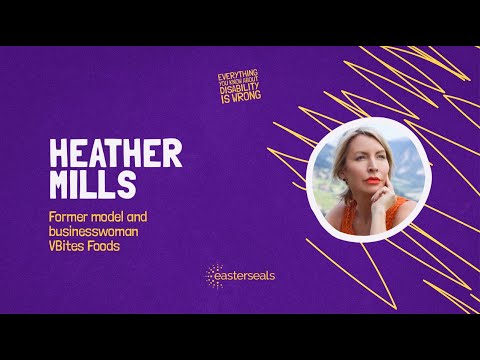
Heather Mills, world-record-breaking Paralympic skier and founder of VBites Foods, joins Lily and Erin for a conversation that spans business, resilience, and the power of purpose. From surviving a life-changing accident to building one of the largest plant-based food companies in the world, Heather shares how every setback became a reason to innovate.
She recalls turning personal tragedy into global advocacy, developing new prosthetics, founding support networks for amputees, and creating opportunities for others to regain independence. With humor and insight, Heather reflects on what true confidence looks like, the importance of empathy in leadership, and why helping others is the most rewarding kind of “selfishness.”
Heather also discusses entrepreneurship through a values-driven lens, balancing profit with purpose, leading with compassion, and using success to make a difference. Her message is bold yet simple: face challenges head-on, stay curious, and use your energy to build solutions instead of problems.
Connect with Heather Mills on her website, LinkedIn, Facebook, X, and Instagram.
Transcript
Lily Newton [00:00:38]:
Hey listeners, welcome to another episode of Everything You Know About Disability is Wrong. Today on the show we have Heather Mills, an advocate who has built a remarkable career across several fields.
Erin Hawley [00:00:49]:
Heather Mills is the founder and owner of VBites Foods, a plant based manufacturer producing more than 140 products worldwide.
Lily Newton [00:01:06]:
And beyond her businesswear. Heather is a world record breaking Paralympic skier and has competed professionally in multiple winter sports as an amputee.
Erin Hawley [00:01:15]:
She's also spent decades advocating for amputees globally and distributed thousands of prosthetics and supporting accessible technology.
Lily Newton [00:01:30]:
And listeners, you're hearing all of this correctly. We did just go from food to Olympic sport to advocacy. Heather has done so much. It was so fun prepping for this interview because she is just a phenomenal advocate. And we are so excited to have her here to discuss food, disability, entrepreneurship and advocacy. So welcome to the show, Heather Mills. We're so happy to have you.
Heather Mills [00:01:53]:
Thank you so much for inviting me on. I'm really looking forward to it. Thank you to both of you. Excited. Thank you.
Lily Newton [00:01:59]:
This is going to be great. Before we dive into the interview, let's go ahead and do audio descriptions. This is Lily speaking. I am a half Indian, half white person with short brown hair with some blonde highlights in it. I have a little bit of a dark lipstick color on today which I normally do not. And I'm wearing a very cool shirt that I got while I was visiting Coca Cola headquarters for National Disability Employment Awareness Month. And it has the given sign name that Coca Cola was given by Gallaudet University. So I thought it would be a fun one to wear on the show.
And I am wearing the necklace that I wear every day that I will fidget with throughout the episode. Go ahead, Aaron, take it away.
Erin Hawley [00:02:43]:
Hello, this is Erin speaking. I'm a white woman with red hair and blue eyes and I have an orange shirt on and I'm sitting in my chair in my bedroom and I'll pass it to Heather.
Heather Mills [00:03:01]:
Hi, I'm Heather Mills. I'm five foot seven. I have mousy Hair that I put highlights through myself with a seven dollar vegan hair color. But it works out great. I just rub it together and put it through and hope for the best. I have my own lipstick company on which has no animal cruelty attached to it called Be at one. So be at One with yourself, the planet. And I'm wearing red because I love Christmas, even though it's not Christmas yet. I'm one of those great crazy people that starts Christmas the second it gets dark in the winter. And yeah, I'm arguably got green eyes, I think, but some people think I've got blue eyes.
So I think it depends what's going on with the sky color. And I'm a white Geordie, I'm called, which is the north of England. So if I speak really fast like that, you won't understand what I'm talking about. So that's my dialect, but I've got a mixed accent because I've traveled all over the world so it's quite hard to place.
Lily Newton [00:04:09]:
I love your accent and that's really gorgeous. Wonderful. We're all like matching beautifully today. I. I literally never wear red. And Aaron, I feel like you don't wear orange that often. But today we're all like, we were all in sync. So I love that were meant to record today.
Heather Mills [00:04:27]:
That's great, that's great. I love bright colors.
Erin Hawley [00:04:32]:
Yeah, red is my favorite color.
Lily Newton [00:04:36]:
Well, we wore it just for you then, Erin.
Heather Mills [00:04:38]:
Yeah, I like yellow and red.
Lily Newton [00:04:42]:
All right, Erin, you want to take us away?
Erin Hawley [00:04:45]:
The first question that we always ask is the name of our show is everything you know about disability is wrong and what do people get wrong about you?
Heather Mills [00:04:59]:
Oh, wow. All sorts. And I have a lot of fun with it as well. So when I go through the airport, I wear 5 inch heels and like a jumpsuit and they start shouting at me rather than say, excuse me, can you take your shoes off? And then I say, I have a prosthetic leg and prosthetic legs are made for high heels or flats. So if you've got high heels on, you can't take your shoe off because you've got to walk on your tiptoes and it's dangerous and it's slippy, so you need to keep your shoe on. So I've had this for 30 years and I end up saying, excuse me, can I explain? And I stay very calm. But about three months ago I thought, let's have some fun with this and let's teach them some lessons and. And not just presume you can see a disability.
So I had my jumpsuit on, and I said to my boyfriend, be ready for me to throw my leg at you when they shout at me. And then I'm just going to hop through the X ray machine. And so I went up and they started going, shake. Take your shoes off. Take your shoes off. I said, I have a prosthetic leg. And they just ignored me and kept shouting at me. And it happens in certain countries.
And so I just said, I can't take my shoes off, but I can take my leg off. So I just pulled my leg off, threw it to my boyfriend behind and said, throw that through the X ray machine, and then hopped through. And they just sat and stood aghast and horrified. Why didn't you tell us? Why didn't you tell us? We would have took you into a room. I said, I'm not going in a room like a drug dealer. You know, I literally just want to get through here, and I'm comfortable with my disability, so just throw it through the machine. So I tend to do that as soon as they start shouting at me, and it's happening less and less in Heathrow Airport in England, they're going, oh, God, here she comes. We know she's got one leg.
I understand that they need to check and test legs, because if you think about it, in a prosthetic leg, you could hide things. So I get that. But the standard procedures, like swab tests, things like that. But now I just put. Pull my leg off. So everything you know about disability is wrong is basically true, because the most important thing is not to judge what you think disability looks like. So, yeah, I've had lots of moments like that, and then moments when I was skiing, sometimes my leg would fly off because I hadn't designed a leg to stay on, so it would just fly off down the mountain. And.
One time I had a big crash after a ski race training, and a fellow skier came by and said, are you okay? And my prosthetic leg had snapped. So the ski boot was up by my ear, and it looked like I had broken my own leg and was super flexible. And I was like, the guy nearly had a heart attack. And I said, no, no, no, it hasn't just snapped. It's not my rear leg. So usually in situations, I try and bring some humor into it because people generally don't always feel comfortable with what they don't know. And I think when you're comfortable with yourself, everybody else becomes comfortable around it. So I feel it's our job and why we've.
Been bestowed with disability to actually educate people who live in fear of what a disability might be or don't understand or have presumptions. And you see, people change. And I'm really comfortable with my disability, and that makes everybody around me comfortable. You know, if I go on a first date, I don't sit there thinking, oh, what if we end up in the bedroom and I'm going to take my leg off? What's he going to think? I just sit down and take my leg off while I'm talking to him and say, will he give my leg a rub? And then they're like, oh, my goodness. And I say, you know, it feels like a mushy piece of bread before you cook it because it's all soft on the end. And I've been with my partner now seven years, and he always forgets that I've got one leg when I take it off at night. He goes, oh, my God. I always forget because he doesn't focus on my disability, because I don't.
So I know there's all forms of different disabilities, and some are more obvious than others. But unfortunately, to make life more comfortable for everyone around us, we need to bring humor into it to make them feel comfortable. Not everybody, but I find it helps a lot of people.
Lily Newton [00:09:47]:
Definitely. We were actually. We just had an interview with some people that we were talking about the, like, spoonful of sugar effect that humor can have in, like, helping people to just better understand disability. Because you're right, there is this kind of, like, fear of the unknown, and humor can definitely bridge that gap. And I think it. You know, this. The two stories you show or you told show so much about the presumptions people have about disability, especially. I mean, you're a literal model.
You're a gorgeous woman, and you walk through the airport and, like, high heels and a gorgeous outfit, that's a lot of people. That's not their vision of disability. But the fact is there are tons of disabled models. There are tons of disabled people who love fashion and heels and this, but it's just not people's necessary. It's not like the thing they think of. So when you can, you know, use a little fun to remind people disability might not be what you think it is, that's doing really good. So I love that you do that.
I think you have an interesting perspective on this.
Heather Mills [00:10:53]:
I think it's really important. Yeah, sorry. I just think it's really important.
To just focus on being able to do what you can do and asking for support where you can. Because with or without a disability, I mean, what is a disability really? You've got somebody fully able bodied, two arms, two legs, high education, and having mental disabilities, you know, and you can't see them. Everybody in, in some way has abilities and disabilities. When you analyze individuals, insecurities, you know, I worked in the modeling industry. I've never met so many insecure people in my life because they.
Are always compared to the next beautiful person over and over and over again. And I know that happens in general now we've got social media and the Internet. But when you're at that level where your whole livelihood depends on what you look at, then that creates a lot of insecurities in a lot of models that other people would look and go, is she crazy? And that's why you get all sorts of eating disorders and all sorts of things. So I think understanding humor, empathy for all is the most important thing. And kindness.
And not focusing on the negative, because I really believe that the negative receptors, when you switch them on in your brain and you start your sentence with, well, the problem is, I never allow that in my businesses. I always say, we have this issue and what I think the solution is, because if you start a sentence with, well, the problem is, well, no, you've already created the problem. So it's really.
It'S difficult. You know, when we fought, I was patron of the Queen Elizabeth for the disabled for many, many, many years before Queen Elizabeth the mother, not King Charles's mother, but the mother, so his grandmother. And we used to focus on what we can do to make more accessibility and all these kind of things, and used to create events where we would educate and discuss, but also understand the financial issues of changing a really old building. You know, we have a lot of them in England and trying to get a lift in, which was absolutely necessary, but the landlord couldn't afford to put a lift in. So I think whenever you've got a personal issue with a disability, you have to understand it holistically. Are you really being ignored? Are you really not getting the best care or the things that you need, or is it a much bigger issue? And I found that by finding out what's stopping you, get what you want or what's stopping you, get what you want. It's important to understand everything. And I think that's, that's really, really key.
And it's interesting. When someone has never had to overcome adversity and face these things, you've got to remember it's very hard for them to ever understand what it's like. So it's up to us to educate people patiently to help them understand what it's like and also come up with solutions. You know, I developed probably 32 different prosthetic limbs. And when I lost my limb, I'd been working in the war in the former Yugoslavia, helping clear landmines and aid, but ironically came back to England and crossed the street in a police motorcycle, chopped my leg off, crushed my pelvis, punctured my lung. Now why didn't that happen in the war zone? Everybody was being blown up. I was around landmines. So obviously happened for a reason, so that I could then think, well, what can I do with my new disability in 1993 to help others that I'd seen blown up and didn't have the capability and the access to the kind of prosthetic limbs that were required.
So instead of lying in my hospital bed for five months because my biggest injury was the crushed pelvis, which was worse than losing the leg, I started to think, okay, the media is circulating, let's maximize that. Let's draw attention to landmines, let's draw attention to disability, to prosthetics, let's use that media to raise funds. And, you know, it took probably about five or six years, but once we got it going, we created the largest landmine clearing charity in the world. And it sounds, oh, well, that's, you know, how did you do that? But it was getting a like minded group of people together. And I think that's really important in the disabled community. And I had no one when I was in hospital. I didn't know anyone that had lost a leg. My mother had lost a leg at the same age as me, but she was dead.
She died when she was 47 from complications later and they'd reattached her leg. So I didn't have anyone to talk to. There was nobody I knew. So I set up the amputee forum and I went to counsel people. Whether it was from a terrorist atrocity or diabetes was very common. And then I made them promise that they had to go on and help counsel somebody else. And we ended up with 250,000 people. Because I was on the phone all day, I thought, you know, when the ferry disaster happened in New York, we had a mother and son who lost their limbs. So I immediately knew somebody five streets from them that could go straight to the hospital, walk in and show, just because you've lost your leg doesn't mean you're gonna, you know, be, be the End of the world. And it's finding solutions. And what's really healing and cathartic about that, when you have a recent disability or any period of time is going on to help others just makes you really happy.
And once you get that helping drug.
It just makes you feel. Everyone says, why you spend all your time doing charity work. Why do you this? Because I'm selfish. Because I feel great helping others, because it helps me. So I think that's really important, you know, with. If you're able or disabled, whatever you want to label it with.
Lily Newton [00:17:34]:
I completely agree. And I love what that everything you just said started with your. Like that you don't start things with, well, the problem is, and I think that that's like a common shared trait within our community because there is this layer of like, well, we'll get told that we can't do things and we're constantly innovating ways that we can. So there's kind of a refusal of like, no, I'm not going to just be told that's not going to work. I'm going to be the person to figure out how to fix it. And I completely agree on that. Like, finding your people who you can relate to is so important in feeling connected and understanding your disabilities. And then also, I'm just like you, Heather, in that, like the giving drug, the helping drug is addictive in that, like I've told Aaron, you know, things can feel hopeless, but I wake up in the morning and it's like, well, I work for a great organization that's doing great things.
It's. It's selfish. It helps me get out of bed. And I appreciate you saying that. Yeah, I think you have an interesting perspective too, of this that you, I mean, still wild, the through line of your life, the connection of this, like working in. Working with these landmines, which presumably, you know, brings the world of amputation into your life and then that happens in your home country. And I had no idea that your mother was also an amputee. And that's just such a through line through your life.
You're clearly, like, doing what you're supposed to be doing.
Heather Mills [00:19:00]:
Yeah, she was. She. Yeah, she lost her leg and then they reattached it and then that was the worst thing that they could have done because she just suffered for many years and then eventually died from blood clots because of all the problems with the situation. But that was in the day where surgeons just always tried to keep the leg. As time has evolved, they realize that when the leg is so destroyed. It's way better to amputate it because we've developed prosthetics so far now. When I lost my leg, they were horrible. They were like cumbersome.
And that's why I worked to develop running legs and swimming legs and skiing legs. I thought, it's not there so I better develop them myself. And then those went into the Paralympics and then I was, oh, I want to do this now, so let's develop this.
So it's always important to work out. Everything happens to you for a reason, whether you like it or not. It will evolve and come clear eventually. And it can take, you know, when I lost my leg, the only thing I could heal myself with was healthy vegan food. It was five months in hospital, no medication, no drugs. They kept chopping the leg off more and more because of infection. And in hospitals they feed you pretty horrific food until more recently. And that doesn't heal you, it keeps you in hospital longer.
But you know, they, they operate in the dinosaur era that, okay, you've just had a heart attack, let's give you some more steak and chips and ice cream and jelly. In the hospital, it's like, let's just give you another heart attack. It's just like nonsensical. So once I realized that, I then created my own healthy foods knowing I needed to take people from fast food addiction to vegan fast food addiction. So it like taking someone off heroin to the methadone. You don't want to stay on methadone your whole life. You want to then move on. So the methadone would be the vegan alternate, still a million times better than a burger.
And then they would move on to more plant based quinoa, kales, lentils. And I learned that from healing myself. So and then that became a huge company where all our profits go to charity. So it's healing people and helping the planet and the animals and everything else. But again, I wasn't vegan before. I had to heal myself and my leg. I was, you know, a full on carnivore and didn't understand nutrition. So I think that happened to me to be able to go and do that. So. And I could give you 10 million other stories. It's just endless, endless thing happened.
But I take a breath rather than pull all my hair out and say, okay, is this what's meant to happen? We've had our factories destroyed, we've had, you know, I've been in, I don't know, four or five war zones.
Lost a lot of people I Love. But we could sit and just slump and feel sorry for ourselves. We could say, okay, this has happened. What am I going to do in honor of that person? Or what am I going to do to leave a legacy with these finite amount of minutes that we've got left on the planet? We don't know. We could be a banana skin away from death or disability. So what are we going to do with that time? And I think that's really, really important, is to get out of your own head.
The more you're out of your own head and being involved in helping others, the happier your life becomes, I believe.
Lily Newton [00:22:36]:
I totally agree. There's something so connective about helping others. You've shared a few stories already that answer this, but I'm looking for a few more on that. So you became disabled in 1993. The world has changed. The world and views on disability have changed so much. And as someone who acquired their disability, are there any standout moments in your career or your advocacy work where you've really had your perspective on disability shifted or challenged, or you've really changed? Like, oh, I think I'm thinking about disability differently now.
Heather Mills [00:23:19]:
I think not really, to be honest. I mean, I became. I fought more to raise awareness and make people more aware when I became disabled, obviously.
But when I was in hospital I had a woman come in and she said, you need therapy. And I was like, okay, I'm up for anything. Said, you've lost your leg, you've been through a huge trauma, so we're going to send a therapist in. I was like, okay. So the therapist came in the next day and said, you know, how do you feel? And I was like, I'm okay. I've seen worse in the war zone, and I just need to get a leg fitted and get out of here. I said, I'm in a lot of pain because I punctured my lung and crushed my pelvis as well. But, yeah, I'll just get on with it.
And she said, oh, you're in complete s=denial. You're going to crash. And I was like, okay. And then she come back the next week and the next week and the next week. And I was there for five months, and I was too busy getting on with organizing. What are we going to do around this? And eventually she got so frustrated because I wasn't following her textbook reaction to losing my leg. She said, you know, you won't be as attractive as you were before.
And I looked at this woman and I was like, well, I think I'm always Gonna be more attractive than you. So I think you should leave this room and think before you say that to somebody, because what if I wasn't confident? Yeah, you could have just broken me, you silly woman. And she just, like, slammed a pen on her pad and wandered out. And I said to the nurse, I said, you know, you shouldn't let that lady near anyone. She's obviously got issues and needs counseling herself. Because who tells somebody who's just lost a leg at age 25, in the prime of her dating period that she's not going to be attractive to men anymore? And only because I have an innate confidence that I was born with, was I fine about it. Otherwise, that could have traumatized me. And I thought, how many other people is she traumatized? And it's obviously just her own textbook and her own insecurities that made her say something like that.
So I think that lit a fire in me to go, okay, like, let's do this. And when I went vegan, everyone said, oh, where are you gonna get your muscles, your protein, your this, you're that. And that's why I said, right, I'm gonna age 42, become a world skiing champion. Because I was on holiday and the Icelandic volcano went off and the planes wouldn't fly. And I thought, okay, I'll try skiing with one leg. And somebody said, you're really fast. Why don't you become a racer? And I went, well, I'm 42. It's a bit late.
I'd done a bit of recreational skiing, but then that light bulb went off when people were always saying, oh, you know, you're older and you're disabled and you're vegan, so you can't possibly be healthy. And so I thought, okay. And I went to be all the young kids. And then I went on to do the Guinness World Record in speed skiing against all the men with two legs and got the fastest time. So everything is possible that when someone tells you it's not. There is always a way to make something happen, you know? And I was the first person to do a world record in ski jumping, which with one leg had never been done. And then skeleton, and then bobsleigh, and then ski jumping, bag jumping. And the reason I kept pushing that was to try and get more events in the Paralympics, in the Winter Paralympics.
So I have a lot of friends that were blown up in the war who have two arms and two legs missing, but they still can hold their neck up. And so I would strap them into a skeleton tray. I don't know if you know what skeleton is, but it's where you go down head first on a, on a tray. There was a, like an ice track. You probably heard of cool run ins, probably. It's like Bobsley and your chin's just five inches off the ground and all you need is neck control because you can strap somebody in. If you've been blown up in a war zone in your 20s and 30s, you miss adrenaline, you miss the camaraderie, the team. So that's why a lot of veterans go into post traumatic stress disorder.
So I thought if we can show that these great big lumps of men and women, we could just throw them down the track and that could become part of the Paralympics. And the joy that my friends get going down there is unbelievable. But people just presume, well, you've got no arms and legs, there's no way you could go on a skeleton track. You, it's hard enough with two arms and legs, but I just said no, why not? We can just strap the body on and they can fly faster than they'll ever, you know, feel again. And it's just a wonderful, wonderful feeling. So when I was patron of the Calvert Trust in my 20s, I wanted to allow families to go on holiday together to do activities. So we set up a system where we would.
Put the so called able bodied brother down abseiling, but then we would wheel his brother in a wheelchair down the mountain at the same time so they could enjoy that together. And things like that never used to happen back then it was the disabled person in the wheelchair was sent to that special home and the rest of the family went on holiday to do their activities. So I was like, no, no, no, no, no. A family should all stay together wherever possible. And we created all these inclusive activities between families so that they can enjoy things together. But it wasn't easy. A lot of people, you know, pushed against it and said, it's not possible, it's too dangerous, we can't get insurance. And da, da.
And we did. So that's what I always believe. Every time someone tells you something's not possible, I can promise you, with ease.
Erin Hawley [00:29:28]:
I do think a lot of people who have a disability are very driven. And I think part of that is that all this feedback you get your whole life that you can't do something and it's like, guess what? I'm gonna show you that I can and I will and I'll keep doing it. And I think that makes you a stronger person, even though at the same time it can Be exhausting. So finding that balance is really important.
Heather Mills [00:30:16]:
Yeah, really important. And that's why you.
Lily Newton [00:30:18]:
Yeah, I always.
Heather Mills [00:30:19]:
That's why you've got to touch base with yourself because. And have the right friends around you. And this is probably the biggest lesson I learned in my life is don't be a people pleaser. Be kind and be thoughtful but don't be a people pleaser. Because what happens is you have to put yourself in a bubble, disability or not in life to protect yourself. And then all the negative leeches and naysayers and negative, you know, statements and just let it bounce off you and keep those people away and be really selective about who you let into your life. Because when I was younger people used to say, oh, you can count your friends on one hand. And I was like, no, I've got loads of friends, 22 people, all girls, we all come round every month and.
And then slowly, one by one, you know, they let you down. And it's not a two way street friendship because that's what's really important. If your friendship friends doing something for you, what are you doing for them? And it has to be this ying and yang. And if you find that it's just one way, one way get rid. That's all I want to say. Life is too short and just have select people around you that are bringing something to the relationship. And always remember you need to bring something to the relationship as well. And when that happens and you have that support network between each other and then you get in areas in life where you can't control it because it might be work and you can't just tell your boss where to go even though I would but because I have a nightmare.
But then it's a matter of using your energy where you have to at those times where you're just exhausted in saying I can and I will. And then you don't need to say it with the people in your social life and in your friendship life and you save it for the work side of your life. And that's where you get that energy balance between you've got the whole cup and they've sucked out half of it, but you've still got just over half of it left.
And it's those days you have to take a big breath and say okay and touch base with yourself where your head is.
I find some days that if I'm. Because I work like 4am to midnight six days a week like crazy silly. So sometimes I'm really exhausted and I just see somebody do something selfish and thoughtless and unkind. And I have to take a deep breath and say, okay, I need to deal with this tomorrow because I'm probably going to, you know, chuck that person off the side of a cliff for being rude to someone within our business who's got a disability or whatever, someone arrogant. So I just think it's touching base with yourself, taking a deep breath, walking away or moving away or asking to be moved away from a situation that's really distressing you and centering yourself again and saying, okay, I'm ready to go back into that situation and try and handle this. And also get your one liners because you know by now the kind of things people can say, the ignorant things. If you can come back with wisecracks and one liners that literally are harder than a punch.
Then that's what surprises people when you, you've got to learn to be able to articulate things in such a way. And I'm saying this to everybody that might be listening with a disability who's feeling, you know, vulnerable in any way.
Get centered, get the right people around you and have your one liners ready. Because most of the public are not particularly smart and usually the ones that aren't smart say the stupid things and make the stupid comments.
So you need to have those wisecracks to defend yourself and stand up for yourself and stand up for those around you. You know, it could be your so called able bodied friend being picked on by somebody and you end up having to stick up for them. And I've seen that in many situations.
Commercial [00:34:52]:
This podcast is brought to you by Easterseals. Easterseals empowers people to live independent, full lives. And we've been doing it for over 100 years. We're in communities nationwide providing support at every age and stage of life. Whether you need employment services, mental health support, or want to find a welcoming community, we've got you covered. Visit easterseals.com to learn more.
Lily Newton [00:35:15]:
Yeah, I think that is, I mean that whole everything you just said, like, especially for the young disabled women who are listening to this episode, I think that that is such a powerful message on how to be resilient without becoming just a people pleaser. Because there, when you do deal with just like everyday ableism or people underestimating you constantly, it can be very easy to fall into people pleasing patterns because you think, well, you know, I'm disabled, I'm lucky to even be in the room. Like I should just do what everyone else thinks. And it's like, no, no, no, actually like you can be resilient without completely letting people walk all over you. And I think it's very important for, I mean all people listening, non disabled and disabled alike, but especially that demographic of young disabled women. I think it can be very easy to take on that like need to make other people feel comfortable. That's just the thing that I think women get placed on them a lot.
Heather Mills [00:36:21]:
And I think you're right. But I also feel that there's a lot of men that are disabled who internalize their feelings and their thoughts and are also in really difficult situations. So I think most women are much stronger than men. I mean I've counseled hundreds of thousands of people with disabilities and the ones that find it the hardest to cope when they lose their limbs for many months, 90% of the time are the men and the boys. It's really bizarre the self pitying that comes in and then you get that 10% that are just super resilient and say, yeah, I'm going to ski, I'm going to do this. But there's something emasculating in their psyche about suddenly being disabled and suddenly being in a wheelchair amongst their male friends. So I think they also need a lot of friendship and support. And it's not just women. We are so resilient. You know, we were made to breed and have periods and just deal with so much menopause and this and that. We're made of pretty tough stuff. And I find it's harder for the guys, but they need to be pushed. And I'm generalizing here.
There's loads of guys that I know that have moved on pretty quickly. But I work with a lot of veterans as well and it is amazing how the women a higher percentage of coping skills than the guys. So that just makes me think the men need a lot of support as well. That was my only comment.
Lily Newton [00:38:07]:
That's such a important comment to make. And I think that you bring up something that doesn't get discussed very often. It is very important, which is the, the way that the pressures of masculinity can play into especially like internalized ableism, this feeling of like well I have a disability so I'm not man enough or something like that. And for people just listening to this, I used air quotes for that because I don't think that man enough is a real statement. But I think that, that yeah, I appreciate you saying that. And I think that the real solution there, whether you're a man or woman listening and being like, but what do I do? How do I gain that confidence or resilience. I think it's what Heather said about surrounding yourself with the right people. And I completely agree that having a few people who get you and accommodate you and accept you is crucial and I think more important than having a giant network that looks good on social media.
Heather Mills [00:39:06]:
Yeah, exactly, exactly. And also having a multitude range of people. It's not about the them and us, you know, we're disabled and they're not. It's like having, you know, it's like having mixed cultures is having everybody in your life and just making sure they're good people and that they're useful. You know, I might be able to come up with something brilliant for my girlfriend, but if my leg's hurting and I've got a. I've done too much and my stump's covered in blisters, I'll be like, well, you're useful. You just carry me out the car and stick me in the trolley because I can't put my leg on because it's too blistered. I can't attach the leg and I can't carry my shopping bags with my crutches. I've worked out different ways. So we always joke with each other that I'll help her with one thing and she helps me with another. So it's finding out what your capabilities are and then expanding on them and then sharing them and, and taking care of each other, whether you've got a disability or not. That's just so, so key. We need a kinder world. You know, I've worked in too many war zones to see they don't amount to anything.
They're a waste of time. And if we actually started being kinder to each other and stop looking at it as separate religions and separate countries and actually realize we're just this tiny little planet in the atmosphere that we're probably going to destroy. And if you're lucky, you've got a rocket to take you away to another planet and they'll probably go and destroy that. But while we're here, why don't we just take care of each other, the planet and everything on it? And that's where we have to change the mindset. I think we should start genetically growing kind human beings and then get rid of the rest of us. Because. Because kindness is what will save the planet and make people have happy lives. It's really that simple.
But we have to get rid of a lot of certain DNA of not very nice people before that happens. And we've got to live in that environment. So it's put that bubble around yourself and choose who you spend your time with. That's really important.
Lily Newton [00:41:30]:
Yes. And if kindness is something you struggle with, may I suggest starting with yourself? You can learn to be kind to yourself. You can usually learn to apply that to the rest of the world. I think that a lot of people who are cruel and othering and tend to be like them versus me are people who are at, at war with themselves in their own minds. So if you can wake up and be nice to yourself, it's a great way to start.
Heather Mills [00:41:57]:
Very good point.
Lily Newton [00:42:00]:
I'm curious about. As such a accomplished entrepreneur, I think that some people kind of view entrepreneurship and advocacy as two separate lanes because there's people who are focused on like growth and business and new. And I think people assume that that is, is not. Doesn't pair well with advocacy and trying to make a world, the world, a better place. And, and you completely are like the embodiment of that. You can do both, actually. So I'm wondering, how do you balance your entrepreneurial drive and like business goals with advocacy goals?
Heather Mills [00:42:37]:
I separate the two to make them work. So my business head is, is this going to work? How can we make this work? It has to be operating efficiently with the right margins, with the right people. And then I personally choose that my profits go to my charities. So if somebody else is making profits within the group, they can choose to do whatever they want. So I make it work as a business and then I choose that. I don't want to die on a tomb of. I would never want to be a billionaire. You know, I don't want to die on a tomb of dollars and pounds that I could actually have changed millions of lives with. And I don't understand people that do. I just think that there's an unhealthy amount of money in the top 10 richest people in the world. And I find it vulgar. I think it's really important that you build your nest egg so that you can, you know, reap the rewards of your hard work and be able to have a nest egg that if somebody you love is in trouble, you can help them out or you need some medical thing. I think that's important. But past that, like vulgar excess billionaire wealth, it's just unnecessary and you could actually help really vulnerable people.
I don't ever knock how much hard work people have done to create their wealth, because it is a lot of work. And I'll tell you a perfect example. I was in the factory and I don't look like this in the factory, I've had a blue hair net on because you have to wear them. And I've got like a white coat because it's all high food risk and a pair of white wellies. And people don't always recognize me because my hair's all covered and half my face. And I was working on the machine, just checking the lines were working correctly and this new girl came in and she said, oh, so what's our boss like? And people were saying, oh, yeah, and didn't really say much because they could see me standing there, but they were trying not to laugh and they thought, let's see what she says. And she said, oh, it's all right for her, she's loaded.
You know, she probably just goes on holiday all the time and I just let her waffle on and waffle on. And then when it came to lunchtime, I took my blue hair net off and she nearly had a heart attack and then recognized me. And I just took her quietly into a room and I said, would you like to spend a week with me, just ghosting me, not doing what I'm doing? But yes, I do travel a lot. Yes, I go between the factories. She's like, oh, that would be amazing. She lasted 48 hours. She couldn't wake up at 4 o' clock and go to bed at midnight, even though all she was doing was making notes. She couldn't be in three countries in a week.
And she just literally said, oh my God, I'm going to go, I want to go back to the factory. And I said, that's what it takes to run your own business and be an entrepreneur. And that's why you become successful, because you have to decide, are you someone that works for a company or are you somebody and can you cope with the stresses and strains of running your own business? So I highly recommend to everybody, if you ever want to run your own business, go and work in that business for 10 to 20 years before you ever think you can do it yourself, because you won't know if you are capable of just sleeping four hours a night for most of your life. So it was a good lesson for her. And then, since then, she's become one of our best workers. But she came in with a, a presumptive attitude of what it's like to be a boss.
Oh, they've got this huge factory, you know, they must just walk around. Well, it didn't just appear from nowhere. So I think we need to appreciate and understand those around us on all levels, which is why my team have been with me in the different factories between 10 and 30 years. And we're like a family business. We look after each other.
And certain people work nine to five and that's what they like and that's what they're good at. So to work out what you're good at is to try and find something you're passionate about, Learn everything you can about it before you ever start a business. Because it's really, really a lot, a lot of work. So, yeah, understand and having compassion for everyone around you and the stresses and pressures that they're under. Because when you don't get a reaction quick enough, you think, oh, why aren't they coming back to me? Well, you're not the only person on the planet that's contacting them and needs something urgently. And that could be for your health, it could be for business, it could be for any reason. It's, like, good to stop and think what's going on with the other person.
When I'm in a traffic jam and I hear people honking and speeding by and everybody gets aggressive, I'm the most relaxed in the car because all I put in my head is that person could be rushing to hospital, that person who just cut me up could be desperately trying to get to school because their kids injured themselves. So it's always easy to jump to a conclusion in a negative thought rather than. And it also makes you feel better and gives you a clearer head that you're not stressing yourself out screaming and shouting in the car. However, I did have a funny story because I had an assistant for 15 years, and she was the calmest, calmest assistant, and I'd never been in a car with her and my tire had gone flat. To me, she said, oh, don't worry, I'll drop you at home. So I said, okay. I saw the devil come out of this woman. She literally was screaming at everybody driving by going, you effing this, you stupid.
And I was like, sonia, who are you? And she went, oh, it's just how I get my stress out. Swearing away to myself in the car at everybody that goes by. Because she's so calm with all of the customer questions all day. I just couldn't stop laughing because I'd never seen her like that at all. I said, you're one of those secret serial killers. I think now I've never seen that side of you, but, yeah, she's great. Absolutely brilliant.
Lily Newton [00:49:24]:
That's incredible. I love. I love both sides of the. Finding what you need to do with your car time that works for you to manage the stress of traffic. Because living in Chicago, I understand that I must go back and just, just amplify the fact that you just had such a gorgeous statement on the value of hard work and the fact that not everyone can be an entrepreneur, not everyone can run their own business and that money is hard to make and takes a lot of work to gain. And in the same breath had already said, I don't want to be a billionaire. I think that is an incredible perspective that I wish I could broadcast from Times Square right now. Because so many people think when we have conversations about like, do people need that much wealth is, you know, people think that that conversation is then attacking like entrepreneurs and people who are leaders and it's like, no, no, no, we're talking about the difference between millions and billions and this is very different.
So I really appreciate you saying that because I think that exactly what you said is, is true that you know, not everyone needs to work the same amount. Some people want to live that high, fast paced life and some people want to show up and do their shift and leave. Both are totally fine.
Heather Mills [00:50:50]:
And also you can't have a business without both. I couldn't have my success without the people that want to go in a factory and work nine to five. It's a team effort and that's why they are really rewarded. And there's nothing wrong with making a billion, but please give most of it away. Who wants to sit on that kind of money? Make 2 billion but give most of it away. You know, make whatever you can to, to make a difference rather than just buy another yacht or you know, make a big phallic symbol that goes up to space to throw on tv. You know, it's like, it's absolutely ridiculous. So I just think that.
The insecurity of mainly men and some women, but mainly men that they're brought up to believe that the more money they have, the more status they have and the more power they have. For me, the fact that they have it and don't do enough with it puts them on the bottom of the pile, the absolute bottom of the pile. You know.
I think get addicted to giving. It's what changes your life and changes the world and you leave a real legacy. When you look at people that set up foundations and they've still got billions, that means you're only giving away 1 or 2%. You should be given at least 70% when you're at that level away. As long as your companies can still operate I'm talking about your net profit, I'm not talking about, you know, the whole thing because you could give it away and then your company can't survive. But too many people have too much money while too many really vulnerable people are suffering. And I mean really vulnerable people, I don't mean lazy people that are claiming benefits that shouldn't be and they could actually do some form of work. That all also drives me nuts.
We've got people in England, fully able bodied, who go around in a scooter and claim they've got a disability and go down the pub, smoke cigarettes, their scooters are sitting outside and then they just head home. I did some documentaries exposing benefit seekers that didn't deserve it. So they. That really lazy people also drive me nuts as well. Don't be lazy. It doesn't make you feel good and it not trying to achieve something is very unhealthy for mental health. Really unhealthy and will spiral you down even more.
Lily Newton [00:53:36]:
Absolutely. And there are so many people who want to work and want to have meaningful employment and want to find those like accessible workplaces and things. So I think that it's, it's important that we lift up those people who are, you know, doing the work because there's definitely people in all forms of life doing the work.
Erin Hawley [00:53:58]:
I also think, at least in the us, like being disabled and also working is penalized because if you work and you're disabled and you get services, those services can be cut entirely for any income that you get.
Heather Mills [00:54:27]:
And I think that's crazy.
Erin Hawley [00:54:29]:
Messed up.
Heather Mills [00:54:29]:
And that's crazy. Yeah, that's crazy because that must be in America because in England what happens is it's encouraged to work, you keep your benefits that are essential and then your work is top up until you earn at a much higher level. So it's based on what the overall income would become, but you would get that support to take it to somewhere. So for example, we're now living in a very technical AI world, which is horrific for some professions, but it can actually be really helpful on the disability side in an incredible way.
So we are encouraging groups of people with disabilities to come together and create businesses of their own that are very tech based that can be done from home and that they can receive support and grants for because there's not the requirement to, you know, have to leave and, you know, get around a factory and have accessibility in difficult places. And we're seeing a lot of success from it because if you've got that creative idea, it can be AI can now help you create that into a brilliant presentation. You can then apply for grants. And interestingly, there are a lot more grants in the UK that are not. People are not even made aware of or available. And a percentage of them have to be. You have to have a disability to claim them. So I don't know in America from that side.
And I think mainly help is coming from different charities, especially with what's going on with your government at the moment. But you can also find corporate companies that have grants that might not be American based, but they are international.
That you can do research in to find out, you know, if you've come up with a brilliant idea for something that's adaptive or visually creative or tech. I'm the worst tech people. I just blow everything up. And I don't mean literally, I mean everything just breaks down. I'm really happy that this is working today. But yeah, it's doing a lot of research to find out what loophole you can get in. And that's been the life for most people trying to get any kind of support in any business in any way. But I think now with AI and technology.
A lot more things will come to people with disabilities to be able to maximize those that are genius.
With fantastic entrepreneur skills, but previous restrictions, so we're still going to have to battle through. But you know, I think there was a guy, I'm trying to remember his name, who was just brilliant at accounts and became the FD of a tech business remotely. And no one ever met him for four years because we had Covid and so he worked and always said his video screen wasn't working and he was in a wheelchair with a microphone and they never knew. And he eventually came to the Christmas party and he'd literally just knew that he'd have some prejudice, so he just hid it, which is unfortunate, but it was a massive lesson. And what he then did was created a situation where 25% of the workforce employed had to have a disability. And that started to spread through different companies. So I think there's also clever ways of doing things as well, because people who are employers live in fear. And it happens with women a lot. If they're still of the childbirthing age, they are prejudiced against because they go, oh, she's 26.
We know she's suddenly gonna be with us two years and then she's gonna be claiming maternity leave and then we're, you know, down financially and we've gotta, you know, hire somebody else. So we're paying time and a half so it can happen, you know, because they count, you know, women of childbirth and age on the same line as they would with the disability because it's to them, a disability to the, to the company. So there's a lot of challenges. And when you mentioned women in that way, there's a lot of challenges. You know, wages for the same job still are higher for. For guys in general. You know what the highest paid wages.
Sorry, do you know which industry women are paid higher than men and always have been the only industry. What do you think it is?
Lily Newton [00:59:53]:
No, I don't.
Heather Mills [00:59:54]:
You got any idea? You want to know?
Erin Hawley [00:59:59]:
Sorry. Caretaking.
Heather Mills [01:00:03]:
It's modeling. Modeling. Modeling. .
Lily Newton [01:00:06]:
That makes sense.
Heather Mills [01:00:07]:
That's what used to make us laugh because they used to say, oh, those dumb models, those stupid models. And we always used to laugh and say, yeah, we're really stupid because we get paid more than the guys. And it's the only industry. And it literally is the only industry. And it's ridiculous, but it's true. So it's quite a oxymoron, modeling and dumb. So, yeah, a lot of challenges, but it's our job to keep coming up with solutions and working with others to do the same.
Lily Newton [01:00:40]:
Yeah. This has been such a wonderful conversation on, like, just the premise of, well, why don't we just try. Let's just try, like, let's try to make change. Let's try to do things. And I think that that's certainly what I'm going to take away from this conversation is anytime I hear that, anytime I get that little voice in my head that's saying, like, I don't think you can do this. I'm just going to say, well, why don't I just try? Because there are people who are innovating all over the world. I find many of them are disabled people. We are a spectacularly innovative community, and Heather, you are a shining example of that.
So thank you so much for all of the work you have done for our community, all of the advocacy, all of the minds. You have changed. I think you have changed so many people's minds about what disability is and what disabled people can do. So thank you for all of your work and thank you for coming on our show today. This has been such a joy and I feel so honored to have gotten to talk to you.
Heather Mills [01:01:38]:
It's been a real pleasure to see both of you.
Erin Hawley [01:01:41]:
Yes, thank you.
Heather Mills [01:01:41]:
Really great.
Erin Hawley [01:01:42]:
This is great.
Heather Mills [01:01:43]:
I love it. I love talking to you both.
Lily Newton [01:01:45]:
Really great. , love talking to you as well, Heather. Thank you so much. And listeners, thank you for tuning in. We always appreciate you having you here. Erin, I love you. I love hosting this show with you. I love being best friends with you.
As this episode revealed, having disabled best friends who get you, it's just so crucial. And Erin, you are such a major part of my bubble of protection against the bad people in the world.
Heather Mills [01:02:13]:
Well, I'm coming out. I'm coming out for the Easterseals gala on the 1st of December. So are you guys going to be there? If you're not, then we should meet for.
Lily Newton [01:02:23]:
I would love that. Yes. We'll be in touch. I think that would be wonderful. And I'm so glad you're going to be there at an Easterseals Gala. Thank you so much for all of the work you do for our community and specifically supporting Easterseals and listeners. Easterseals is a great way to get started if you want to. If you want to join us in our giving addictions that we talked about this episode supporting Easterseals.
Whether it's the national office or your local Easterseals affiliate who is on the ground doing disability supports and services.
A quick donation there can be a great way to revamp some hope in your life. So I hope some of you will take me up on that. Thank you for tuning in and we will see you next time on another episode of everything you know about disability is wrong.
Erin Hawley [01:03:16]:
If you like what you heard, go ahead and subscribe and leave us a review wherever you get your podcasts.
Lily Newton [01:03:24]:
Thank you to our listeners and and as always, thank you to Easterseals for giving us the space and resources to share such authentic conversations from within the disability community to our listeners.
Erin Hawley [01:03:35]:
And I'll see you next time for another episode of Everything You Know About Disability is Wrong.
Legal
Sign up for Emails from Easterseals
Get exciting news, helpful resources, & inspiring stories delivered to your inbox each month.