


Episode 48: Rewriting the System: Dr. Destiny Huff on Parenting, Practice, and Advocacy
Dr. Destiny Huff shares how neuroaffirming advocacy, late diagnosis, and empowering IEP guidance transform support for neurodivergent learners and families.
Listen Now
Published on December 11, 2025.
Watch Video
Episode 48 Show Notes
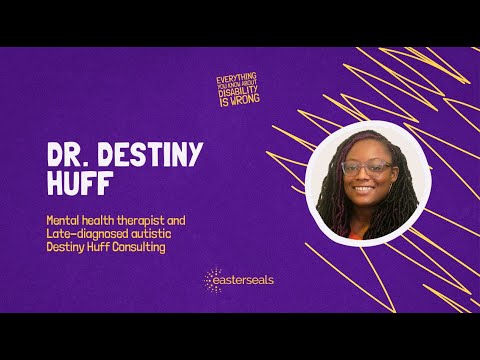
Dr. Destiny Huff, a late-diagnosed autistic and ADHD military spouse, therapist, and special education advocate, joins Lily and Erin for a powerful conversation on parenthood, identity, and reimagining advocacy. As the founder of Destiny Huff Consulting, she works with families across the U.S. to make education systems more responsive, compassionate, and effective for neurodivergent learners.
In this episode, Destiny shares how her own diagnosis transformed the way she supports families and children. She explains what it means to build neuroaffirming practices, from presuming competence and honoring autonomy to designing goals that match real learner needs.
Destiny also breaks down what an IEP really is; a program, not a plan, and how parents can ask for meetings, request changes, and find collaboration instead of conflict. The discussion explores bias in diagnosis, barriers faced by Black and Brown families, and how educators can check their assumptions to better support every student.
Connect with Dr. Destiny Huff on her website, LinkedIn, Instagram, and Facebook.
Resource: HRG Counseling
Transcript
Erin Hawley:
Hey, listeners, welcome to another episode of Everything you Know About Disability Is Wrong. Today on the show we have Dr. Destiny Huff.
Lily Newton:
Dr. Destiny Huff, LPC, is a late diagnosed autistic and ADHD military spouse, mental health therapist and non attorney special education advocate. She's a mother of two neurodivergent children and serves on the boards of PDA North America and Sisters With Awesome Children. Welcome to the show, Dr. Huff. We're so happy to have you.
Dr. Destiny Huff [00:01:10]:
Hi, thank you for having me.
Lily Newton [00:01:12]:
I'm so excited for this interview because I feel like sometimes on the show, you know, we're speaking to people about one certain identity, but you have so many different identities that like will be so interesting for our audience. And I feel like as not only the parent of neurodivergent kids, but someone who advocates for neurodivergent people and is neurodivergent herself, I think is just really in my mind is the future of advocacy. Right. Because that's, that's true advocacy. When you have self, family and general public, like, that's really incredible. So I'm really happy to have you on the show. Before we go into the interviews, let's start with our audio descriptions. This is Lily speaking.
Lily Newton [00:01:53]:
I am a half Indian, half white person with sort of half and half blonde and brown hair. But it's pretty grown out because recession indicator. And I'm wearing a sweatshirt that you might be able to see throughout the recording that says disability rights are human rights. And I am not in my usual office slash special interest room. I am in a hotel room today. So I have a big curtain behind me. It looks way fancier than it is and I'll pass it. Erin.
Erin Hawley [00:02:24]:
Hi, this is Erin. I'm a white woman with red hair and blue eyes and I'm wearing a fluffy sweater and I'm sitting in my chair in my bedroom. I'll pass it to Dr. Destiny.
Dr. Destiny Huff [00:02:40]:
Hi, I'm Dr. Destiny. I am a black female. I have black curly natural hair. I have glasses, a nose piercing brown eyes and I have on some I Think they're gold earrings today. I don't even remember what I put on. And then I have. I am in my office, which is in my home, and I also am wearing a shirt that you might see.
Dr. Destiny Huff [00:03:04]:
This is Neurodiversity Affirm Parent, which is from a autistic owned business.
Lily Newton [00:03:10]:
Love it. Before we started the recording, Dr. Destiny is also talking to us about her calendar system because in the background you can see that there are three calendars and I, as a neurodivergent person, I'm going to steal that. The three month out planning is incredible. So love it. Erin, you want to take us away with our first question? Sure.
Erin Hawley [00:03:34]:
So we always ask our guests on our podcast, is Everything You Know About Disability is Wrong and what do people get wrong about you?
Dr. Destiny Huff [00:03:48]:
I laugh because I think they get a lot of things wrong. Like at first I think they don't believe or are not quite sure when they've heard that I'm autistic and ADHD. Because when I come in, it's like, it's Dr. Destiny. I'm a mental health therapist. I'm licensed. So I think that what they really get wrong initially is just the perception of disabled individuals and how it truly is a special spectrum. That would be the biggest thing, I would say.
Lily Newton [00:04:22]:
Totally. That makes total sense. And it also, like, just shows so much about assumption in that, like, people see doctor and make so many assumptions. But we talk a lot on this podcast about how what we desperately need is more disabled people in all healthcare spaces. So that's. Yeah, that makes a lot of sense. When you meet new people that you're working with, do you immediately disclose that you are neurodivergent or you assume that they've seen that from your, like, website?
Dr. Destiny Huff [00:04:55]:
I immediately disclose it. I've come across a lot of clients that I have now that have found me on like, podcasts and things like that. So when I think my website has so much information, I feel like they read it and what they really look for is like, how can you support my child? Right. So they're like, oh, she's a mental health professional, like, or she has children in special education. So a lot of times I kind of can see a little bit of the shock in their eyes because I think they skip past that piece. Excuse me. But then it also opens the door to where after I do my whole spiel through the consult and at the end they feel comfortable to ask me a question, not because I'm a parent, but because I am autistic. And ADHD of like, hey, could you tell me a little bit more about this? So, But I always disclose, even when I go into IEP meetings.
Dr. Destiny Huff [00:05:52]:
So I support families at IEP meetings. When I do my introduction, I'm like, I'm Dr. Destiny Huff. I'm the family advocate. And then depending on why the family hired me, I will either add, I'm late diagnosed autistic adhd. I'm always going to say that. But I also might add that I have a mental health professional that's worked in the schools, because if it's a mental health concern or there's barriers around mental health, that really helps them understand I'm speaking from a professional place as well.
Lily Newton [00:06:23]:
Yeah, that makes I, I, I think that's a great approach. And it makes total sense that when parents especially are in that kind of, like, confusing time, they're looking for such a specific thing. I, it makes sense that people might skip over the information about, not them. But I think that from the perspective of, like, working with parents, I think it's so beautiful for you to disclose that, because I've noticed sometimes in my work at Easter Seals, there will be times that I get to be, like, speaking in a room or whether I'm in front of parents or whatever it is where I'll mention that I'm autistic. And I don't know how. Maybe I'm projecting, but I believe this is the case, that you can kind of sense that there's this feeling of, like, okay, well, she's autistic, but not like, not like that. Not like my kid's autistic or not like this. Because clearly, and if you are someone who is high masking, you know, obviously it's a spectrum.
There are different support needs across the spectrum. But I think that sometimes people see us as we are right now and make a lot of assumptions about where we were. So one thing I've started adding when I'm doing that disclosure, especially if I'm talking to other parents, is like, I'll say yes. And I'm autistic myself. And I was a teenager who deeply, deeply concerned her parents. Like, I. And now I'm. And I'm doing all right. Like, my parents were deeply worried and concerned about my mental health, and it wasn't like, oh, like, she's just got the easy autism.
Like, no, it's, it's that I have a lot of ongoing support, and I try to always say that. So I think that that's really cool to get to see, like, a successful person and a doctor who maybe will change some parents opinions of what is possible. So I really appreciate that. I want to shift gears a tiny bit because you're releasing a book soon. Does it have a release date yet?
Dr. Destiny Huff [00:08:19]:
So the electronic version of it is already released. We're working on the hard copy version. But yeah, it's a neurofirming special education handbook. And essentially what I did was I looked at the federal special education laws and I included that in there. And it's for parents, educators, administrators, related service providers. But then I also added in this neuroaffirming component piece. So you know, how do you make goals neuro affirming? How you address supporting AAC user from a neurofirming way? What is gestalt language processing? How do you make a neurofirming parent input? And then I had like how do related service providers operate in a neurofirming manner? So I kind of been doing all this stuff through social media and then I was like, I would like all this collected in one place. So that's how this book came about.
And just me like going into a deep dive and editing and doing all these things. So yeah, I'm really proud of it.
Lily Newton [00:09:23]:
Yeah, obviously it's an entire book. So this is a condensing question but for our listeners who maybe are like what the heck does neurodiversity affirming mean? What does that look like kind of in practice?
Dr. Destiny Huff [00:09:43]:
So neurodiversity affirming in practice just looks like honoring autonomy, respecting choices. But I really think a big piece of it is presuming competency. So there's several core components and core tenets when we talk about being neurodiversity affirming or neuroaffirming. And part of that goes into like honor and communication. But I think looking at intersectionality, but in practice what that looks like is recognizing that the disability and diagnosis doesn't define the learner. It is a piece of a whole, you know, person. It's a piece of the picture. And then looking at they have a say in doing things, you know, so like if they.
Dr. Destiny Huff [00:10:31]:
Unless they're moving your hand to do hand over hand, don't do hand over hand. I was actually reading something and Aaron's chair reminded me of this. I was actually reading something where someone had said before they were in a motorized wheelchair. They were like whenever somebody felt like they wanted to go somewhere the purse, they would just move their wheelchair. And they said finally one day they were like, don't do that. If I don't ask you to move my wheelchair if I don't tell you I want to go over there just because you think I want to be over there with everyone else. Don't do that. And I was like, that's part of being neurodiversity affirming is recognizing that, like, I'm not incapable of making decisions and choices or even I'm not incapable of having a say.
Like, I can have a say, and the say might be no. And then you need to honor that.
Lily Newton [00:11:24]:
Yes. So, so, so important. And I think that, like, in the world of 2025, where we are having great conversations that are led by autistic people, I think it is so important to lead with that assuming or presuming competence when you're working with autistic people who have many different support needs. Because I think that there are. It's like an easy trap for society to fall into and be like, okay, got it. Yeah, this person seems like they would be competent, so I'll presume competence. But it's like, no, no, no. What we're saying is actually that person that you, as someone who has a lot of learned ableism, because that's the world we live in, when you start to be like, I don't know if that person can make the decision for themselves, that's exactly when you need to say, no, this is an autonomous human.
I should see what they want. I think that that is so important. And I always. Well, I recently have tried to be a little bit more vocal about that because I love that we're leading the conversation around autism, like autistic advocates ourselves. But I also want to always keep the conversation centering those who maybe are not able to do online advocacy or write a book about it, but still deserve that same presumption of competence. So I really appreciate you saying that. And I think, parents, if this is sparking anything in, you get that handbook. Because I think that there's a lot of stuff that Dr.
Destiny just explained that can take a really long time to learn. And I think having it all in one place would be really helpful for some people.
Erin Hawley [00:12:54]:
Totally. So I wanted to ask, you know, like, having these affirming practices, I think part of it, too, is understanding that disability is not an monolith and everyone is different. So, like, even somebody who has autism is autistic, and everyone's different.
Each, you know, from therapy to accessibility in the classroom, at jobs, it looks so different for everybody. And I feel like that's something that not a lot of people Fully understand. So can you tell me, like, how do you. Do you express that to the people that you worked with? And what is there? Do you see that a lot, like, people assume that everyone's the same?
Dr. Destiny Huff [00:14:01]:
Yeah, I mean, that's, I mean, the way that you said it is so accurate because I think I, I could say was lucky in the sense of like, by time I received my diagnosis, I was already working for myself. But that came out of necessity because my son was diagnosed when he first started in the public school system. And it was a horrendous experience for us. And so he got his diagnosis and then we moved because we were a military family. And then I was like, hey, me and him are the same. So I sought my diagnosis. And so by that point, my husband being an active duty soldier, we had already decided that someone needed to have a more flexible schedule. And so I was doing my mental health practice, like part time after my full time job.
And then I was like, I'm just going to have to transition that to full time. At the same time, I really dove into what would advocacy work look like, because I was trying to make sure I was fully prepared to advocate for my son. And so. And his brother would be coming soon after him and he already had a speech delay. So I was like, I knew he would need some support too. So I've never had to advocate in the workspace for any accommodations. I was able to implement those working for myself along the way. That being said, I can look back on being in the workspace and getting my performance evaluations, and part of my performance evaluation was saying essentially I didn't play well with others that weren't on my team.
And it was because I was very direct and I was very like, they're not going to do it, so my department will just do it and it'll be fine. It's like, well, that's not nice to say. It's like, but we all know it's true. So looking back, there were little things like that. But when I am like, definitely accommodating myself, and then when I'm definitely advocating for my different learners. So I have learners that are non speaking or minimally speaking that predominantly use AAC devices as their preferred mode of communication. I have learners that are like me, that are very verbal, that are autistic. I have learners that are ADHD with anxiety and they're not autistic.
And so what I do find when you talk about that accommodating and the disability and not being a monolith is I do find myself having to explain that in IEP and 504 meetings, I find myself having to say, okay, like, just because you worked with this ADHD learner doesn't mean they're the same as this ADHD learner. And when you talk about neuro affirming practices, that's where that intersect intersectionality tenant comes in, right? So that intersectionality tenant says, again, look at the whole learner. So I myself am a black female who is autistic and adhd. I am also. I also have fibromyalgia. I also have anxiety. Like, I have, you know, I'm a mother, I'm a wife, I'm a daughter, I'm a sister. Right.
And then you have my son, who is a black male. He is autistic. He has no other diagnoses that we know of. He's never had any health issues or concerns. Right? So, you know, you know, and then you have his best friend who is a white male who is autistic. Like, so it's taking in the fact that, like, you meet one autistic, you've met one autistic, you meet one person in a wheelchair, you've met one person in wheelchair. That doesn't mean that you know what they need. And so going back to that neuroaffirmic practice, too, is like me saying, hey, Aaron, do you want me to help you with this? Would you, like, help with this instead of just a assuming and overriding what, you know, you're.
And you're like, no, I can do that myself. It's like, okay, cool. And you can say it like that, you know, so that's. That is part of it. But you really covered it really well in that beginning with that piece of like, we're not a monolith, right?
Erin Hawley [00:18:11]:
Totally.
Lily Newton [00:18:12]:
Yeah. You mentioned IEPs in 504 meetings, which I'm sure a lot of people tuning in have heard of, but some people maybe have not. So could you explain a little bit about especially that iep? What is an IEP supposed to do? And then in your experience, because you've worked with families all over the country navigating the process, what is some advice you would offer to parents who are walking into their first IEP meeting?
Dr. Destiny Huff [00:18:39]:
Yeah. So IEP is an individualized education program. And I always specify it's program, not plan. And the reason for that is because it is an entire program. It is built to support disabled learners that need specifically designed instruction. And so what specifically designed instruction typically looks like is goals that they're working on not just accommodations. And so when we're talking about an iep, what it's supposed to look like is really emphasizing that individualized. Right.
So it's supposed to say a special education evaluation is done, and we determine that this is what Destiny needs to be safe, supported, and successful in her educational environment. And now we're going to create this program that is, you know, around that. And when we talk about the neuroaffirming side of it, it is asking Destiny's parents, what do you feel like would support her. Asking the school team members, what do you feel like will support her and your setting? And then asking Destiny, what do you think will support you? And then it's always okay to come back to the table if something's not working. And that's where a lot of parents don't realize is that they're like, well, my annual is in May, you know, which is the end of the school year. But I'm seeing some issues, so I kind of wanted to meet before May. You can request an IEP meeting at any time. Like, you don't have to wait till the annual.
The annual is your state's and district's federal requirement. They have to hold an IEP meeting at least once a year to go through everything and make sure it's accurate. But you can request an IEP meeting at any time.
Lily Newton [00:20:30]:
That is such an important piece of information and I think is so empowering to parents because there is. I mean, the. There's a lot when you, like, are trying to support your child and then also trying to not, like, make your child stick out or be, you know, like, we're the needy family, like, we're. We're asking too much, whatever. But that's actually very empowering to know. Like, you can. You can make change at any point. And man, I am going to think about that program not bland forever, because that is so important.
And it's. You said it so simply, but that's. That's it. It's a, like, it has to be this ongoing, fully fledged out thing versus a piece of paper that people kind of look at and reference and don't like. I think that's very, very important. And I hope someday you sell shirts because it's really, really great. I really like that it's a program. So as we're talking about empowering parents, I think that especially right now with conversations happening around autism and neurodivergence and disability in general, there are a lot of parents who are feeling blame or shame, and whether that is about how the diagnosis came about or how they supported their child.
What would you say to those parents who are feeling just kind of unheard, Whether it's in the special education system or in the way greater societies talking about neurodivergence, really the big thing is.
Dr. Destiny Huff [00:22:11]:
That a lot of the, I call it noise. A lot of the noise out there about autism currently is not even from professionals. It's not from individuals that have lived experience as an autistic individual or as a parent of an autistic individual. And so I think from the beginning of time, in my opinion and what I've read and what I've seen, right, Disability was kind of given this taboo connotation, right? Like, it was like if somebody was disabled, you didn't talk about it, you didn't, you know, make other people know. Or it was kind of like, oh, yeah, they are, but don't say anything about it. Like, don't. That's not nice. Like, and, you know, and then over the past few years, outside of the disability advocacy movement itself, it's kind of been like, you know, it's okay to use the term disability and it's okay to, you know, say that it's okay to wear a shirt that says, I'm proud of my autistic grandchild.
And like, that's okay. And so I really want parents to push out the noise and really focus on, you know, the progress that was made previous to this year, the support that's been put in place, the wins that have been coming, and then most importantly, educate yourself. A lot of your family members and friends, you know, and coworkers are well meaning and well intentioned. I always like to say, I like to start with saying people are well intentioned. They don't mean to be malicious or mean spirited, but they're just going, oh, Destiny has an autistic child. Like, so let me send her this. Not knowing that you're like, you don't know that. I've pored over this.
I have, I have read this, or I'm feeling guilt about this or so I think block out the noise and you know, do your own research and then just like, enjoy your child. Like, I was just like laughing hysterically with my son yesterday because we were talking about Pokemon and it was just like, you sometimes have to do those things to remember, like, my child's autistic and that's okay.
Lily Newton [00:24:30]:
Yeah, no, I think that's so important. And I think that goes back to the not a monolith conversation we're having. Because kids in general are not a monolith. And I think we have these ideas about when things are supposed to happen and how they're supposed to happen. And it's like, we've only had, like, mass and global communication for so long. We. We don't necessarily know that every kid by four is doing this. And I think that there's, like, you know, I.
I always think about this when I'm talking about social media, but I think in a parenting sense, it's important to remember that, like, comparison is the thief of joy. Like, enjoy the progress your child has made, even if it's not what other people expected or what you're seeing other people's kids do. Like, I think that that is so important to, like, stay present in that, because there's, like, you said, a lot of noise, and it could be really easy to be, like, not very present in what's happening. And I think. I know, like, and I think my parents would feel comfortable with me talking about this. Like, when I was younger, it was very much before I was diagnosed with autism. It was a lot of, like, mental health challenges. And I think that they were so, like, worried about what they had done that had caused it, that it started to kind of create this cycle where then I was like, well, now I'm disappointing my parents.
And then they're saying, well, she seems disappointed. And it just created this really ongoing, like, they were so concerned with, especially my mother, like, the thought of me having these mental health issues and wanting to help me, that it. I think that there were times that she kind of missed out on, like, the joy I was experiencing. And now, much further down the line, my mom and I have gotten to a place where, like, I can be having a really, really hard time, and she'll just sit with me in it, you know, like, she's experienced me having really intense meltdowns and things like that. And, you know, she'll just be there because she's also there for my really, really joyful moments. So I think when you, like, allow yourself to be present for it all, it can make those harder times a little bit easier. Because if you're so concerned about the bad stuff that could happen, you might miss out on the really cool stuff that happens along the way, like having an awesome conversation about Pokemon.
Dr. Destiny Huff [00:26:56]:
Well, and I want to. And I. And I, you know, and I haven't. This just recently happened, and I don't share it on a lot of podcasts, but I want to share it because it's something I would share I just don't think about it, usually with the topics I'm talking about. But I very much still have moments where I, like, I will break down and cry as an autistic person raising an autistic child who I believe that's where he got his autism from. And so when he's having struggles or challenges, I will, like, sometimes cry and just be like, you know, I'm the reason why he's struggling, you know, and my husband, his adhd, he is very, you know, quick to be like, you know, no, don't be like that. Like, he's like, if you're going to look. And he's very good at that.
Like, if you're going to look at the quote, unquote, negative side, right? Like, the disregulation side of it. He's like, you need to take credit for the positive, too. He's like, you need to take credit for, you know, all the compliments we get about him. And he actually is. He is very excited. We were like, okay, let's see how it goes. But he was very excited. He.
He's ungifted. He started that this year and he tested on the state testing for his school. School, the highest score in his entire grade. So he was super excited so about that and was like, I'm doing gifted. And we're like, okay. Because we wanted to, like, talk to him and see, like, would that be too much? Or I'm doing it. We're like, okay. But like, my husband's like, if you're going to.
And so that's another thing I would say to parents, like, if you're going to fault yourself, right? Because I think mom blame is very real. Even when it's not hereditary or genetic. Moms are just typically going to be the default ones that are blamed. Like, your kid got a cold. If you didn't put them in a jacket, you wouldn't have this problem, right? So, like, if you're going to take responsibility for that, then take responsibility, too, for all the happiness and the joy, too.
Lily Newton [00:28:52]:
This podcast is brought to you by Easter Seals. Easter Seals empowers people to live independent, full lives. And we've been doing it for over 100 years. We're in communities nationwide providing support at every age and stage of life. Whether you need employment services, mental health support, or want to find a welcoming community, we've got you covered. Visit easterseals.com to learn more. I love that. And I think also I'd add to take this might be.
This might sound odd, but when I'M like, really, really in the depths of my worst feelings. It has been helpful for me to kind of run this second train of thought of, like, wow, what a unique and special and, like, beautiful thing to be feeling this sad. Like, to have access to this depth is something that not everyone has. And yes, it can be really, really hard.
But to feel deeply is actually an experience, and it's a very human experience. So even when I'm so, so, so angry, I try to remind myself that, like, look at how much I'm feeling. I'm feeling so much in a world where some people are very numb. And I. I've talked to my mom about that, too. Like, just this, you know, if. If it is genetics or whatever that gave me this ability to feel, I'm happy to feel it. And you mentioned fibromyalgia.
My mother and myself deal with chronic pain in different ways and same thing.
You know, pain is a lot harder to be. Like, well, look at the positive side because it's just like, I'm in pain. Actually, it hurts. But at the same time, it's an experience. We're experiencing it. And it's like, well, now I have a whole understanding for other people, and pain is a part of human life, and I can handle it. Like, I can handle a lot of stuff. And I think that, yeah, because there's so much.
There's just so much pressure on parents and like you said, especially mothers. And I think that any. Any ways you can tell yourself like this, their experience is real, which means it's a human experience and it matters, is really important. Even if the experience doesn't seem happy or fun, it's still a human experience. And someone who lives a very. Like, everyone's life matters whether it's happy or not. So I think that that's really important, 100%. I wanted to ask about this.
You know, you started doing advocacy for your son and then helping other parents. And I think that some people have this idea that, like, to be a good parent of a disabled child, I have to, like, fight the school system. And you have talked about shifting to, like, it doesn't have to be a fight. It could just be an effective. We could just be effective at advocating. So what does that kind of shift look like? And how do you encourage real collaboration with educators rather than resistance?
Dr. Destiny Huff [00:32:17]:
So I think being a mental health professional before I became an advocate gave me, you know, space from education and not being jaded. So my mother and sister educators. So when I. I was kind of always taught like, you work with them, right? You support. And then as a mental health professional, I worked in a school setting. I worked in the early childhood setting as well. And so I've always come into spaces where people are.
Erin Hawley [00:32:52]:
For better.
Dr. Destiny Huff [00:32:53]:
Like, where they're like, this is my territory and you're coming into my space. Are you going to judge me? Are you going to. Like, what are you. You say you're here to help, but are you going to overtake? Right. So for. Early on in my career, I learned the importance of collaboration and communication. So when it came to becoming an advocate, I just use that same skill set. And what that looks like is you recognize that, like, you're going into other people's spaces, right? So you're going into this meeting and you're basically saying, what are you doing with this learner? When you're with them and they feel like you're coming to be like, you're not doing it right.
And I am coming to actually say, no, I really want to know. And I've had to say that before. Like, no, genuinely tell me what is going on. Walk me through it. And then I'm able to say, okay, so it sounds like this is happening and you feel like this is the issue and this is where support is needed now. This is how we would provide that. So in order to make it a collaborative process, you don't come in the room. And I've always said, I hate the term expert.
You don't come in the room. Like, I know everything because you don't. You come into the space of, I'm here to make this enjoyable for everyone. And so when anyone's looked at any of my social media content, I always play out like, if you support the learner, you then support the staff and you support their peers. This is not about a giving in or doing whatever they want or them getting their way, which comes from a compliance view. When you come from a neuroaffirming view, you're like, support helps everyone. And so I always tell my parents and I had this conversation with an attorney on Live on Instagram once, and we were laughing. She's like, I'm going to let you have it.
But I say you bring in an advocate. If you want to build the bridge, you bring in an attorney to burn it. And the reason why I say that is because some attorneys are like, you know, we don't give them anything beforehand. Like, we. They're not going to know until we come in there. We're not, you know, like, we're a b C, D and E advocates should be coming from the standpoint of how do we build a collaborative relationship? How do we support this learner and make everyone feel like all the concerns are being addressed? And so I've had many meetings where at the end of the meeting, the school staff are like, thank you so much. Because they had this perception when I came in of like, she's going to come in and tell us that we're all horrible and we're not doing our job. And I'm like, no, that is not my intent.
But that also doesn't mean too. I'm also not coming in there messing around either. Like, I'm coming in there, like, no, this is what we need to talk about. And we're not going to steer into ableism and we're not going to steer off track because there's this compliance lens when it's clearly not benefiting the learner.
Lily Newton [00:35:50]:
Yeah. I think that that everything you just said applies so much to disability accessibility in general, of that moving from, like, compliance to, like, oh, yeah, this. This is an ADA accessible building. There's a ramp in the back by the dumpster, like, to a. No, actually, access helps for everyone. Because, like, we're running our campaign right now, our Know the Facts campaign, which is all about how disability is connection and relatable, actually. Because when you design or do anything for disability access and inclusion in mind, it always benefits the greater public. Because, you know, the obvious one is that the curb cut effect.
Dr. Destiny Huff [00:36:32]:
Yeah. No, 100%. I know that. I always. People are always surprised, and I think that's very interesting. Like, I am. I get very upset when you have the disability parking for the wheelchairs, and it's like, don't go over the line. Don't do this.
And people do that. And then I always kind of get these weird looks, like they're like, okay, I'm looking at you and I don't see that you're in a wheelchair. And I'm like, besides being a decent person, that actually comes from. I had a roommate in college and she was in a wheelchair, and she drove like, she drove us everywhere. She had her van and she drove us everywhere. And like that. She loved to drive. And we went somewhere and we went in the store or went in to eat, and we came out and somebody had parked and where her ramp would need to go for her to get back in her vehicle.
And she was just like, oh, here we go again. She said, I have to wait till they come out. And I was like, no, we're Not. I walked right back in the establishment, and I went to their management. I was like, hey, there's a such and such vehicle. They did such and such, and my friend cannot get in her vehicle. And so they went and they, like, had to announce on the speaker the person, kayla, we need you to move the vehicle. And of course, they came out, like, 50 shades of red.
They're like, oh, I'm so like. And I was like, but there's a sign right there. Like, you're only sorry because you got called out.
Erin Hawley [00:38:03]:
Right. And I think a lot of people who do park over those lines don't understand that that means I can't get in or I can't get out. It's not just like, oh, it's in a way, a little bit, right? It's now I'm stuck, and I have to wait for you to get out. And eventually I'm always with somebody else, so they'll back out and then I'll get in. But, like, if you're by yourself, forget it. You can't. You're stuck.
Dr. Destiny Huff [00:38:37]:
And that's what she says.
Lily Newton [00:38:38]:
Yeah, it just. It really shows how.
Dr. Destiny Huff [00:38:41]:
Oh, sorry. That's what she said. Like, normally, she was like, if I'm by myself, she's like, I just wait until they come out. And I was like, oh. I was like, yeah, now, well, you're not by yourself. So I went in there and I made a scene.
Lily Newton [00:38:58]:
Making a scene is important to be a good friend, I think, to disabled people in general. Because when you do start out, like, as a child having these, like, IEP meetings or all this stuff, even it. I mean, advocating for yourself can feel like, I'm always making a fuss. Like, it's. I don't want to be that person. So if you can make a fuss for your friend, do it. I think it's important. And I love the phrase making a fuss because that's what Judy Human used to say a lot.
But I think that it's. It's a very important conversation, just in general, about, like, we have to stop thinking about disability as this, like, compliance box. We check and start thinking about disability as the human experience. And the more we design everything for everyone, the more it benefits everyone. And I think that's just so important. And we talk about that a lot. But a lens for that is that intersectionality component we started this interview with. So we got a bit of.
A little bit of time left. I want to shift to something really important, which is I want to talk about the stigma and misinformation around adult diagnosis. And I would love if you're willing to speak especially for, from the perspective of a black woman, because I think that black men experience a lot of stigma and misinformation as well, and black women even more. So I think that it's just a really important conversation to have. So I'm wondering, what are some of those barriers to getting identified later in life, and what can we do to change narratives so that we're not, you know, misidentifying and putting harmful labels on kids who are already marginalized?
Dr. Destiny Huff [00:40:40]:
Yeah, I mean, I think, you know, first of all, in the black and brown community, there is a, you know, fear and a struggle. There's a fear and a struggle, two separate pieces when it comes to diagnoses. Right. Because historically, we have a history of being experimented on. We also have a history of diagnoses being used against us. Right. So are you capable of, you know, taking care of your children if you have this diagnoses? And I would say, like, entering into the space of being diagnosed, I've come across two things. I've come across families I support and advocate for being weary of disclosing their learner's diagnoses.
So let's say the school has said, oh, they meet other health impairment, which, you know, a lot of learners who are ADHD typically. And then also, if there's, like, anxiety or autism diagnoses, they'll meet the criteria with the school for other health impairment. And so the parents will suspect there's more going on, and they'll go seek, like, a private medical diagnosis and find out if their learner's autistic. But they'll be like, I don't know if I want to disclose that to the school, because I don't know if that'll be used against them. So I come across that quite often. The other side is I've had black and brown parents ask me, do what made you seek out a diagnosis for yourself? And they'll ask that, and they'll say, because I'm concerned about possibly my parenting being questioned or excusing my ability to care for my children being questioned if I have a diagnosis. So I have seen where they're fearful of getting a diagnosis for themselves as well as they're fearful of their child getting a diagnosis and what that means. And so what I always say is that you can only do what you're comfortable with, but always when it comes to your child, lean towards support, and when it comes to yourself, lean towards support.
And what I mean by that Is that with our son, we actually never suspected that he was autistic. I always say we had a stereotypical view of what autism looks like and he didn't check those boxes. And so when he did get his diagnosis and when we did fill out the paperwork, I always say the first start of the paperwork, I was like, no, no, no, no, no, no, no. Then I got towards that lower support needs side of the paperwork. And I was like, yes, yes, yes, yes, yes, yes. And I was like, but also that's yes for me too. What does that mean? And so I do tell a lot of my black and brown families. I would rather my child get the right label than the wrong label.
I don't care about a label as long as it's correct. And so unfortunately a lot of black and brown learners are labeled as bad. Instead, I'm getting an accurate label. And so I definitely am like, if there is, you know, they suspect that there's a disability and it's impacting them and their educational environment, a lot of times that's due to lack of support. And so take that leap to support them. The other side is, for you personally, I believe in self diagnosis. So I also say like, you don't have to go get a formal diagnosis to accommodate and support yourself. So if you're like, you know, I feel like I check all the boxes for autism or ADHD and I need these accommodations, then do them.
But for me, I had similar to you, Lily, I had once I entered college and I'd had anxiety throughout. But once I entered college I really had anxiety and depression and I internalized a lot of things. And so I was on anti anxiety and antidepressants and they always helped with that like so serotonin part. Right. But they still never quite helped for the full range of what I was experiencing. And then I that's cause I learned later I was also sick and adhd and that's why. So I was thinking it was like a depressive episode and it was really burnout. So for me it really gave me answers I needed and clarity I needed to support myself.
And so for me it was necessary. But I always say like, you don't need the diagnosis to support yourself, but you may need diagnosis to support your learner.
Lily Newton [00:45:36]:
Yeah, that's really important. That like understanding what is necessary for getting the proper support within the system and being able to have advocacy and when necessary, legal help is. Is very, very important. But I think that that the self diagnosis aspect is. I agree. I also really believe in that and I think that there's the. I. I see, like, a new kind of thing happening in the neurodivergence world of this, like, understanding of that, like, I don't necessarily need the diagnosis to allow myself to use the coping skills.
So, like, for. I was talking to a friend recently, and he's diagnosed with OCD and suspects he might be autistic. And I am autistic, and I suspect I might have some OCD tendencies. And I. Like, I have some. Some things that I've been suspecting lately. And we were just having a conversation, and it was like, well, what do you do to deal with it? Like, what are some things you do? Whether it's the three calendars on the wall or, like, what. What are your actual tools? Because that's what I need.
I don't need any more letters at this point. I know that this isn't going to fit into what is, like, the. This is how you organize your life. It's never going to work for me. It never has. So I'm just willing to kind of look into the toolbox of neurodivergence in general, look into the skills that my friend was using to cope with the intrusive thoughts and these kind of, like, compulsions and things. And I really don't feel the need to pursue that diagnosis right now because I feel very like I'm pursuing coping, and I think that's really important. And then at the end of the conversation, my friend was like, but there are some medications that can be really helpful specifically for OCD that you will not be able to be prescribed without that.
So if you need to do it. And it was just such a great, like, reminder that there's no right way to handle any of this. And there's no, like, I checked all the boxes. I'm a good parent of a disabled person or I'm a good disabled person. It's actually just, are you seeing where you need tools and implementing them? Are you building your toolbox for your child or for yourself that allows you to say, like, I can't do this. I need this support? I think that's really, really important because it's obviously amazing that so many people are pursuing and understanding their own labels. But, yeah, as the daughter of an immigrant, I understand that for some cultures, those letters are much scarier than saying, hey, I need to, like, turn off the music while we're eating dinner, because it's just too much for me. Like, that is really, you know, I think that it can be.
I think you said this earlier when talking about parents who don't necessarily want to disclose, you can only do what you're comfortable with and find what supports you. Like, I think that's really, really important.
Dr. Destiny Huff [00:48:35]:
Well, and the other thing too is that with black and brown learners too, sometimes their parents first exposure to a possible disability label or diagnosis, even though schools don't diagnose, is the school's category of eligibility for IEPs because the wait list is so long or due to lack of insurance, whatever it may be. And so sometimes our first exposure to my child might be XYZ is the school. And so sometimes I walk to talk to parents and say, okay, the school says that they qualify for the autism category or they qualify other health impairment category, but that's not a medical diagnosis. So like, once they're out of school, that doesn't hold weight. Like, so if you're looking at like long term support or Social Security or things like that, I'm like, you have to go to a medical professional, psychologist, psychiatrist to look further into that. So, you know, that's the other side too, is that sometimes that's their first exposure to even like, what's going on with my child. And so on the other side of that, I always tell practitioners and school psychologists and educators and administrators like, you need to check your bias and your prejudice. Because what I'll see as well is a lot of black and brown learners qualifying for the emotional behavior disturbance category or the emotional behavior category.
And it's only because in their white peers they're seeing ADHD and autism and the black peers they're seeing odd. And so it's like, no, you need to check that. And so I always tell parents, and I have no learners that, that they're under that category. I will not let them qualify under that category.
Lily Newton [00:50:14]:
So I appreciate that you don't let anyone qualify in that category. And I wish that more people saw the patterns of like, huh, weird that all of the kids diagnosed with this look a certain way. I think that, and you had mentioned, you know, why a lot of black and brown families are scared to use.
These kind of labels, who, because there has been weaponization of labels. I, I recently was learning about the way psychosis was weaponized against the black community who were doing like, social justice advocacy to basically be like, these people are in psychosis, like. And I think that that is really important to, you know, if you're entering the world of disability or entering the world of advocacy to ensure that you are not just learning the, like, diagnostic criteria for things. But Also the way that certain communities have experienced diagnosis and what things feel like. So I think that that's very important, and I think. So you've said that that's a diagnosis you don't use. I want to talk a little bit about quickly.
Do you have any advice for educators who might be sitting here listening to this and going, I don't even know if I have a bias towards that, like how someone can clock their bias.
Dr. Destiny Huff [00:51:44]:
So first, I just want to clarify the. That odd is a diagnosis I don't use. EBD is a category of eligibility. I don't allow for my learners because the school doesn't diagnose. They categorize based on the IPA's 13 categories of eligibility. And so what I say is that, you know, and there is actually, I had this conversation with an administrator where their school district actually will pull their special education files. They'll pull their files and they'll say, the no name, no race or ethnicity or culture, and go, what category do you believe based on this, that this learner goes into? And what they found is that a lot of their black and brown learners are going into that emotional disturbance category. And so when you're looking and you're like, I don't have bias, I would ask myself, you know what? When you see a behavior in this child and you see a behavior in this child, if they were different races, are you categorizing the behavior as something different? And how we came about with this bias is that in a research study conducted, that is what was found is that when educators read something, if it said, this is a white male or a white female versus a black or brown male and black or brown female, they were putting them in different categories.
And so you have to challenge whether or not, you know, if I see this behavior in this learner, am I saying it's aggressive, but in this line or I don't, you know, what is the difference? And so asking yourself, and that takes a lot of work because you're having to challenge yourself because people like to default to, I'm not prejudice, I'm not racist. I'm not, and I don't have bias. Everyone has bias. So you have to. And be willing to confront it.
Lily Newton [00:53:36]:
I appreciate that. Thank you for saying all of that. This has been such a wonderful interview. I have one final question, which is, is there something that you have learned from your children that has changed the way you think about your own neurodivergence?
Dr. Destiny Huff [00:53:55]:
Oh, wow. Is there something I've learned from my children that's changed how time. You might own your. Huh. I think what I've learned from my children that shaped how I view my neurodivergence is that life goes on. And what I mean by that is because they are children, right? We know children are so resilient. Something will happen, and I still will very much, with my autism, get stuck. I will just, like, ruminate, and I will struggle emotionally to move past, you know, because it didn't go the way I thought it was going to go, or I don't feel like there's a way to, you know, find a solution to it.
And my children are very much like, oh, well. So I. I've taken that to and applied that and kind of just realized, okay, I don't have to stay stuck because in their world, they're not allowed to stay stuck. Right? Because kids kind of like, we're like, you're sad. Like, I know. I hear that. Okay. But, like, I still need you to, like, go to school.
I still need you to, like, go get in the bathtub. Like, I still need. Right? And so, you know, they've kind of taught me, one to, like, be able to move past being stuck. But they also taught me, too, that I need to rest. And I think that's a big piece I didn't have before. And I know that sounds strange to my parents listening are probably like, what is rest? But my kids have actually told me, like, when I'm, like, going, going, going, and they're like, mommy, like, you haven't laid down, or like, it's late and you're still not in the bed, or I think you need rest, or they'll tell my husband, same thing. Daddy, I think you need to rest. And so it taught me the importance of, like, moving forward so not staying stuck, but also the importance of needing to rest.
Lily Newton [00:56:05]:
That's so beautiful. I love that. I think that's so wonderful. Thank you so much for coming on our show. This was such a great conversation. I think it's going to be a really helpful one for a lot of parents and just listeners in general to hear. So thank you so much. Dr.
Destiny Huff. We are so happy to have had you on the show, and I really hope we get to work together again, because I think you have just. I think you are a wealth of knowledge and resources that could really help a lot of parents and in general, just neurodivergent people out there. So I really appreciate you. It's always wonderful to get to talk to such a fierce advocate for our community. So really grateful. Erin, I love hosting this show with you. I love you.
Also, I love your nails. I didn't say that earlier.
Dr. Destiny Huff [00:56:53]:
I was gonna say that. I saw them. I love them.
Erin Hawley [00:56:57]:
I gotta redo it.
Lily Newton [00:57:00]:
They look so good.
Dr. Destiny Huff [00:57:02]:
They do look good.
Lily Newton [00:57:02]:
They don't look grown out on camera. They look amazing.
Erin Hawley [00:57:06]:
Well, before we hop off. Yes, I know I was, like, kind of quiet today, but I was just, like, taking everything in and learning so much. So I really appreciate everything that you shared today.
Dr. Destiny Huff [00:57:22]:
Thank you.
Lily Newton [00:57:23]:
We are a come as we are a come as you are podcast. Erin, you know that if you want to take a quiet listen day, do that. Listeners, thank you for being here. If you're on YouTube, thanks for watching. I couldn't stop touching my hair today. And we'll see you next time for another episode of everything you know about disability is wrong.
Erin Hawley [00:57:52]:
If you like what you heard, go ahead and subscribe and leave us a review wherever you get your podcasts.
Lily Newton [00:58:00]:
Thank you to our listeners. And as always, thank you to Easterseals for giving us the space and resources to share such authentic conversations from within the disability community to our listeners.
Erin Hawley [00:58:12]:
And I'll see you next time for another episode of everything you know about disability is wrong.
Legal
Sign up for Emails from Easterseals
Get exciting news, helpful resources, & inspiring stories delivered to your inbox each month.