


Episode 47: Gaming with Purpose: ChiChi White on Soft Content, Mental Health, and Connection
Discover how soft content, cozy gaming, and disability-led community building empower creators. ChiChi shares joy-first play, mindfulness, and authentic connection
Listen Now
Published on November 28, 2025.
Watch Video
Episode 47 Show Notes
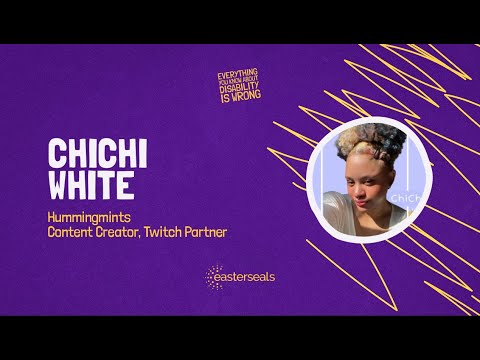
ChiChi White, a content creator, therapist, and social advocate, joins Lily and Erin to explore the world of cozy gaming, mindful streaming, and collective care. Known online as HummingMints, ChiChi plays games like Stardew Valley and Animal Crossing, combining sensory-friendly gameplay with open conversations about neurodiversity, mental health, and authentic connection.
In this episode, ChiChi breaks down the meaning of soft content from creating relaxing, sensory-friendly gaming experiences that prioritize comfort, accessibility, and community over competition. They share how mindfulness shows up in gaming, how cozy spaces allow for meaningful conversation, and why it’s okay to play for joy rather than mastery.
ChiChi also opens up about founding the Disabled Content Creators Collective (DC3), a growing hub for disabled streamers and creators. Through DC3, he organizes raid trains, charity events, and collaborative streams that help disabled creators connect, share resources, and grow their audiences.
From discussions on masking and authenticity to harm reduction and self-acceptance, this conversation offers a grounded look at how online spaces can become real sources of healing, joy, and purpose.
Connect with ChiChi White on LinkedIn, Twitch, YouTube, TikTok, and Instagram.
Transcript
Lily Newton:
Hey, listeners, and welcome to another episode of Everything youg Know About Disability Is Wrong. Today on the show, we have Chi Chi White.
Erin Hawley:
ChiChi is a soft content creator and social justice Advocate on Twitch, TikTok and YouTube.
Lily Newton:
He plays cozy games, creates pixel art, and streams regularly while chatting about neurodiversity and mental health.
Erin Hawley:
Chichi worked to educate others on the intersections of social justice in an easy-to-understand way. He also established the Disabled Content Creators Collective, a team for disabled creatives to connect, build community, and discuss accessibility on Twitch.
Lily Newton:
We are so excited to have them joining us. Welcome to the show, ChiChi.
ChiChi White:
Thank you so much. I'm so excited to be here.
Lily Newton:
Yay. Well, I can't wait to get into the interview, but before we dive in, let's go ahead and do our audio descriptions. This is Lily speaking. I am a half white, half Indian person with green eyes and barely any bit of my dyed blonde hair left in my short brown bob. I'm wearing an Easterseals sweatshirt because I love to rep the brand. And I am sitting in my desk, which is a bed with a table next to it so I can stay comfortable during the interview. Erin, you want to do yours?
Erin Hawley:
Hi, this is Erin Hawley. I have red hair that I haven't washed in five days. I have blue eyes and I'm sitting in a wheelchair in my bedroom. And I'll pass it to Chichi.
ChiChi White:
Yes, I'm Chi. This is Chi Chi speaking. I'm a light skinned black person with curly blue, purple and pink hair. I'm wearing a burgundy shirt, sitting at my desk, and in my background you can see a shelf with books and plushies and you can see some of my chair behind me as well.
Lily Newton:
Yeah, it's an awesome setup. I love that you get your vibe right away.
ChiChi White:
Thank you. I appreciate it.
Lily Newton:
I feel like that's something that I have found with a lot of, like, neurodivergent people. As we meet each other online, there's a sense of, like, immediate. This is my space. This is what my brain looks like. On me. But I've put it onto this room, which is always fun.
Erin Hawley:
All right, so our first question that we always ask our guests is this podcast is called everything you know about disability is wrong, and what do people get wrong about you?
ChiChi White:
I think the biggest thing that people get wrong about me is that I'm, like, a mean person. And that's partially because being autistic, I tend to say things pretty straightforward. And so I think that's probably the biggest thing, is that I'm, like, this kind of mean or harsh person. It's probably the biggest thing that people get get wrong about me.
Lily Newton:
I definitely relate. And it's. It's such, like, a common experience, and I hope as more people talk about it, there's, like, more understanding of that. Directness doesn't have to always equal mean. And I saw a really cool advocacy campaign. I can't remember who was doing it, but it was basically saying, like, hear what I say. Like, not reading into tone and things like that. And I thought that was really interesting.
So I think, yeah, I think that's a pretty common neurodivergent in general. But specifically as an autistic person, I totally relate where I've said things that I thought I was saying, so kind, kindly, and then been met with like, I don't know why you're asking that. And I'm like, oh, oh, no. Yeah, I don't know what I did.
Erin Hawley:
But I did it.
Lily Newton:
Do you find that that is, like, amplified in streaming situations where, like, you're. You're live and kind of reacting? Like, do you feel like you're kind of get stuck tone watching during situations like that?
ChiChi White:
I think that I've gotten like, a little bit better at masking during streams, which I know generally people think that masking is probably a negative thing, but I think there are some situations in which masking is necessary, and my job is one of them. My job as a content creator and my job as a therapist, those are both situations in which masking is highly necessary. And. And so I do try to watch, like, my facial expressions and my tone a little bit more, but I also try to be my authentic self in both of those situations. So while I do, like, mask a little bit, and I do find myself, like, trying to smile a little bit more, trying to watch my tone a little bit more when I'm saying certain things or just working on my phrasing even a little bit more, I do still try to, like, be my authentic self at the same time. So I think that it's like a kind of trying to find a balance between the two, which I'm sure both of you could probably relate to. Trying to find that balance between being your authentic self while also trying to portray, like, I guess, the best version of yourself when you're engaging with other people socially.
Lily Newton:
Yeah, absolutely. I think so many things I want to say in reply to that, because I really. And I think it's just...It's a really important perspective that I think that, you know, sometimes our world loves binaries and loves to be able to be, like, masking is good or bad, but it's. It's not necessarily that. And I think that there. I completely agree and appreciate you saying that, like, 1. Masking can be very necessary to get by, especially in a capitalist world, like, where, you know, you gotta go to work some days and. But at the same time, I do think it's possible to, like, have a mask that feels authentic. And I definitely think. Yeah, exactly what you said.
Like, this podcast. You know, I. I love doing this podcast, but there are certainly days that, like, even today, Erin and I were like, man, all right, recording this kind of towards the end of the day, a little sleepy. Gotta, like, gotta get the energy up. And like, that's. There's still authenticity in, like, our curiosity and who we wanna be. But there is a. Like, everyone does that to a certain extent.
So I. I appreciate that. And yeah, I think that makes sense. Erin, I wanted to ask you on that. I feel like the way that you relate into the masking topic a lot is the, like, pressure to represent disability sometimes in always, like, a positive light.
Erin Hawley:
Yeah.
ChiChi White:
Yeah.
Erin Hawley:
Not really on my own. Twitch.
Lily Newton:
No, you don't give into that, is what I'm saying. You're so.
Erin Hawley:
I don't. I was like, do I do okay? Yes.
Lily Newton:
No. You're very good at being like, no, I'm not gonna change my opinion to fit some stereotype.
Erin Hawley:
No, like, for me, I'm very introverted. I don't like chatting to people. To people. But I have a podcast and I stream, and both of those things require interacting with people. And I've gotten used to it. But it still is hard for me as like, an anxious introvert to be extroverted in this instance. And it's like, I have to talk, make myself talk, because my general state is just sit quiet and take everything in and not say something.
Lily Newton:
Yeah, I think there's a level of. In, like, the very little I know about streaming because I. All of. All of everything I know about streaming Is Erin bringing me into the world of gaming and streaming. And there is a level of like a place for introverts where like you're still kind of connected, whether you're someone who wants to like respond to every single comment or just play your game and know that you're with other people. And that that kind of brings us into the next topic I want to talk about. Because as we were writing questions for this episode, ChiChi we wanted to be like, well, you know, we want to ask him questions that are both going to be good for listeners who know nothing about video games and who know everything about video games. We're like, well, that kind of works because that's basically Erin and I.
So like, you know, some people I think have very stereotypical views of video games and they think about like video game means like Call of Duty, intensity, violence. You are a soft content creator who plays cozy games for someone who has no idea what that means because that's totally different to what they think of as video games. Can you talk a little bit about what type of games you like to play and what that kind of feels like?
ChiChi White:
Yeah, for sure. So when we think of like soft content, we're thinking a lot about like sensory friendly content. So that like some examples of that might be like Stardew Valley, Animal Crossing, maybe Pokemon. So the things that are like really low paced story based games, but they can also be chaotic kind of in their own way. For instance, the way I play Stardew Valley is very like Min Max style. So although like it's sensory friendly, I am making so much money in a day that a person who's very beginner at Stardew Valley might come into my streams and be like, oh my gosh, I would never make that much money in a single day of Stardew Valley. So it's. Although it's sensory friendly, it's very fun and chaotic in its own way.
And I think sensory friendly and soft gaming extends a little bit even beyond the type of games that you play because there are some sensory friendly gamers that do play those more I guess, common games that you might think of when you think of like gaming in general. So like Call of Duty, Dead by Daylight and the more like, I guess almost like masculine games. So like you might find a sensory friendly streamer who does play those types of games, but, but they're able to make them a little bit more comfortable. So you might tune into my streams and see me playing Fortnite here and there. But the way that I play fortnite is still cozy because I don't have blasting alerts. I have my sound mixed so that it's not so overwhelming for the viewers that do come in. And again, it's more. I guess soft gaming is more about the sensory experience of gaming and taking away the pressure of having to be so good at gaming.
You don't have to be good. You can enjoy gaming for what it is and enjoy the experience of gaming without feeling the pressure of having to be so good at it all of the time. And I think that's a little bit different than what you see from a lot of, like, the pro gamers. You know, they're. They're really pushing that, okay, we need to be good at the game, we need to be professional at the game, which is totally fine. And I think that's a wonderful thing. I watch those kinds of streams, but. But it's also good to just be able to relax and enjoy, like, the mindful kind of experience of gaming.
Like, I'm here in the moment and I'm enjoying the experience for what it is, whether I'm good at it or not.
Erin Hawley:
I love that because there's, like, this belief in a lot of gamers that you're not a gamer unless you're really good at it and unless you play specific games. And I think you get into the whole topic of, like, what is a game, what is considered a game. Is Candy Crush a game? It is, but people don't think of that as, like, gaming, which is, I think, really ridiculous and also tied with that belief system that certain things are games is tied, I think, also to sexism. Because whenever, like, a femme or a woman or, like, plays any type of cozy game or like, a mobile game, it's like, not real unless you're playing Call of Duty or, like, something like that. It's just a lot of tied into that too.
Lily Newton:
Yeah, you guys are kind of blowing my minds and, like, reshaping the way I'm thinking about it. Because I was sitting here listening and I was like, oh, man. That, like, perfectionism of, like, not wanting to be bad at a game is totally a barrier to entry for me. Of, like, when I want to. Whenever I think about playing video games, I'm like, but I'm going to be so bad at it. And I kind of think that that takes the whole game and play aspect out of what you're doing, because, you know, it comes up a lot, actually, on this podcast for different reasons. But there is kind of a, like, people aren't necessarily willing to do things just for pleasure. And I think that that is.
I love that you bring up mindfulness and like enjoying playing the game. The way you were describing playing both, like the cozy games and Fortnite feels very autonomous. Like you're going to play in the way that feels good to you, that feels fun, not that feels like you're the right way. You're beating the game. Because the one game I have ever really gotten into is Skyrim. And it's because I never played the main game. I just like walked around and loved it and thought it was so fun to be in this, like fantasy world. And now I'm thinking about it and I'm like, oh, I was just cozy playing it.
I love that. Yeah, that's so fun.
ChiChi White:
And that's what like is really wonderful about getting into cozy gaming, is that the mindset of cozy gaming is like, at its core, mindfulness. And for anyone who might be listening and they're like, mindfulness, what does that mean? Mindfulness is all about staying right where you are in the moment. Because I'm of course a therapist, like I mentioned before, and part of what kind of gets in the way of mental health and what has helped me integrate like mental health into gaming is that when you're thinking of the future, that's where a lot of anxiety comes from. When you're thinking of the past, that's where a lot of depression comes from. And what stops people kind of like what you said, Lily, is that you didn't want to play because you were kind of feeling anxiety about were you going to have like a good experience or were you going to be good at the game? And then some people have like the depression of, you know, they might have experienced some type of trauma related to the game or they might have had like, like a negative experience with the game in the past. And that might lead to some type of depression linked to the game. And so if we, if we in the moment and we just experience the game, where it's at, however you want to experience it, that can totally reshape your whole experience with the game and create like a whole new attachment to that game because you're engaging with that game mindfully. And I think that's what makes cozy gaming a little bit differently or a little bit different than that.
More high intensity, professional style of gameplay.
Lily Newton:
Yeah, that makes total sense. And I think also, well, I wonder if the cozy style of gaming allows for a little bit more like community building within the streaming community or streaming slash audience community.
ChiChi White:
I think it does just because you're able to kind of take those breaks. And you know, I find that for instance, like I play Stardew Valley and I play Pokemon. Pokemon has. Pokemon, for instance, has like a competitive side. And then you have like the kind of cozy side where you do like the story based side or maybe the shiny hunting part of Pokemon. And so if you're doing like more of the shiny hunting stuff or you're doing more of the story based stuff, then you're able to like stop and people can share their experiences with you. Whereas when you're doing like more of the competitive stuff, you do have to be kind of more engaged with what you're doing in that moment or else you can kind of fail. And so I think it's easier to engage with your community a little bit more when you are doing cozy gaming.
I know there are some people who are super talented and they can engage with their community while doing the competitive stuff. I'm not quite there yet, but hopefully maybe one day I can be to that level where I can do the competitive stuff. Because again, I think the competitive stuff is really fun and valuable, especially to the gaming space. But I also think the cozier side is a really good entry level for people that want to just start getting into some of this gaming stuff.
Lily Newton:
Totally. And sometimes you do just chatting streams where you're just kind of talking with your audience. What's that kind of experience like for people who don't, who've never been on like that kind of streaming?
ChiChi White:
It. It really just depends. Sometimes I do just chatting social justice streams where I'm talking about like specific experiences with disability or sociopolitical issues such as like race and gender and stuff like that. Or I'll do like more laid back kind of streams where I'll do like skin care or hair care and things like that. I really love doing social justice dreams though, because I think that I'm a 13 plus streamer. And I think that it's really important for teenagers to see adults. Especially like I'm 30. For teenagers to see someone who's like my age and exploring their gender still I think is pretty important for teenagers to see someone who's my age and is a therapist and who's disabled, I think is also really important because I think there's not that many adults who allow teenagers in their space for good reason.
I have the capacity to mindfully engage with teenagers because I have that experience with doing my job. And I think that it's really important for some teenagers to, you know, Be able to have a space where they can engage with adults and learn about certain things such as gender, such as disability, such as, you know, sexuality in an age appropriate manner. So I love having those kinds of conversations. And then I also love doing skincare because skincare is like a really big passion of mine. I love doing skincare, I love doing hair care. And so those streams are really, really fun for me. And I think the just chatting like realm on Twitch is growing a lot now. So it's been really nice to see it grow, especially as someone who started off only gaming.
And then I'm able to like dive into that, be able to connect with my community even more on that front. And then they're able to like ask more of those questions because it's a little bit awkward when I'm like playing a video game and then someone comes in and they're like, well, how are you disabled? And it's like, I don't know if I want to answer that while I'm playing like Pokemon, but maybe you can ask that when I do like my stream specifically about disability or specifically about neurodiversity, then that's a space where everyone can get all of those questions out.
Erin Hawley:
I love that and I love how you said that they're just chatting is really growing because I think a lot of people are realizing that you don't have to be a dreamer to have a stream. And there's all these amazing outlets that are great for building a community and just really, I think having that community is great for mental health too.
Lily Newton:
Absolutely. And you know, I like, I love that you're making that space for teenagers to be welcome and using that, the fact that you have the skill to engage with them mindfully, like, that's it makes my inner teen so happy because I know that, I know that when I, I wasn't diagnosed until my early 20s, I was, had the common experience of just like being a teenager going through every single mental health diagnosis because they couldn't figure out what was going on. And I am so grateful to the content creators that just made me feel like safe, you know, I was, I loved YouTube so much and I now when I look back, I think about like, man, I was really mitigating meltdowns with like, oh, I'm, I'm getting overstimulated. Things are, I need to go watch my comfort. Content creators. Obviously I didn't really use those words in like 2011, but yeah, I think that that space is really important. And a lot of times disabled teens, especially get kind of left out of conversations because we think about like disabled kids, we think about disabled adults, but that like puberty and youth and like exploring gender and sexuality and all these things. That is something that gets kind of almost stripped from disabled teenagers identities, but that, you know, a disabled teenager is going through all of the same hormonal changes and understanding of the world that a non disabled teen is going through.
So I think that's a really important space and you're doing a lot with disabled content creators in general and community building. Which brings us to. Can you talk about Disabled Content Creators Collective, which is such a cool thing that you've done?
ChiChi White:
Yeah, I mean that's my baby right there. The DC3. I founded the DC3 back in 2022, just a little bit over a year into me streaming and the DC3, or the disabled Content Creators Collective, which is definitely a mouthful, so we do shorten it to the DC3 just for accessibility purposes, is a BIPOC Forward streaming organization that we've kind of expanded now to just a general content creation collective. Whereas before it was primarily a stream team, now it's become kind of a hub for all types of creators, whether that be YouTubers, artists, writers, all types of folks have kind of joined our space and that is our, our organization that is dedicated to creators who are disabled. And right now we have about 300 of our space, which is. I never thought, I never thought that this, this kind of project that I started because I felt like there were not that many spaces for disabled folks on Twitch. I never thought that this project that I started just for us would grow to something so big. And you know, we were officially recognized by Twitch just this past July for Disability Pride Month.
And we've been hosting RAID trains, we've been hosting charity events, we've recently raised funds for Easter Seals and we'll be raising funds for Easter Seals again in December, which I'm super excited about and hopefully I'll get a chance to talk about a little bit later. But to kind of talk about what the DC3 does, we provide a lot of opportunities and resources and just share information with each other while also being a hub for collaborations with disabled creators and their viewers. So if you're not a creator, you can also join the space just to find a bunch of other disabled creators. And then we also have an official Twitch Stream team so that you can find other disabled streamers. We do have a BIPOC Forward orientation. So what that means is that we have a special initiative to make sure that BIPOC black people, indigenous people and people of color are especially represented in our leadership and in our team orientation, so that we make sure that we have intersectionality in mind. The majority of our team is queer as well, which is really nice, but was completely happenstance. But yeah, the majority of us are queer and I'm just really proud of all that we've done.
We're also hosting an award show, which has been really exciting. And we're just always doing something because I'm always doing something. So I'm very proud just to host this space and to be the founder of the DC3.
Erin Hawley:
That is amazing. I found out about the DC3 back when we did the brake train for Easter Seals and I was just literally blown away that there was this amazing community that it felt really supportive and everyone was so nice and I just loved being a part of that. And I have to say that the December RAID train. Can you tell our listeners what is a RAID train and why is it really especially important and helpful for disabled content trainers?
ChiChi White:
Yeah, so a RAID train is a streaming event. So especially on like Twitch, a raid is basically where you take your community and you kind of push them onto another streamer's stream. So it's as you schedule, you put yourself on a schedule. And for our retrain we have two hour slots. You can start before your slots, but you have two hours for which you're slotted to stream. And then after your two hours are up, you take whoever's watching you at that time and then you push them to the next person on the schedule. And what's great about this is that it allows you to introduce your community to another person's community. And that means that viewers get to connect.
And that also means that you're getting to connect with another disabled creator and you're getting to collaborate with them in a very low pressure, low effort way. I think these are rate trains are especially important for disabled creators because it's very low effort. Like I said, it takes very little scheduling on the disabled creators end because most of the time it's. There's a single organizer or maybe a couple of organizers that are doing a lot of the legwork and we're scheduling people. You can kind of fit in wherever you'd like to fit in and. And you get to reap the benefits of boosted viewership as well. And viewership is very hard to gain as a disabled creator because many disabled creators cannot maintain a schedule. So you're getting the viewership, you're getting the experience of getting rated Some, some creators have never even been rated before until they participate, participate in the RAID train.
And then the people that are participating in the RAID train as viewers, they know, oh, I'm, I'm getting rated into another disabled creator. Let me make sure I follow and support this disabled content creator. And then they tend to stick around because they know that this is, like, valuable for this creator. So it tends to result in a net. Net benefit for both creators that are participating in that specific slots. The person that's rating and the person that's rating into or the person that's being rated into, both tend to benefit from those things. And then especially when you're incorporating like charity and things like that, you're getting even more benefits on top of that.
Erin Hawley:
Yeah, I love that. I'm happy that you mentioned that it's hard to get viewers when you're disabled. I do think it is partially like a scheduled thing, but I also think people are uncomfortable watching disabled people. And I don't mean like in the disability community, I mean like outside of it. Because I also think certain companies, I don't know if Twitch does this. I think YouTube does this, but they don't show your videos because they're afraid you're gonna get, like, bullied. Like, YouTube used to turn off my comments because it said, you're a child. And I'm like, I'm 42 years old, I'm not a child.
It's just like, it's hard to grow because you aren't pushing, pushing against like this Ableist system.
Lily Newton:
Yeah, I mean, any Ableism that exists in the real world is, is like usually amplified in like, algorithmic spaces. And yeah, I think there's like a level of, yeah, just discomfort, I think, with newness. And like, someone who is non disabled might be like, oh, this is a disability related stream. Should I, like, not be a part of it? But I like that the RAID train style is kind of like community building. It's very like, no, come along. Like, you should, you should see this and you should check out this creator. I think that's really cool. And definitely, like, one of the strengths I think, of the disability community that I've experienced is this level of like, well, I'm gonna bring my friends with me.
Like, we're all gonna succeed together. And I think that that's, I mean, even in you creating DC3, like, that's such a spirit of like, I'm helping my community. Like, we're gonna find opportunity together.
Commercial:
This podcast is brought to you by Easterseals. Easterseals empowers people to live independent, full lives. And we've been doing it for over 100 years. We're in communities nationwide providing support at every age and stage of life. Whether you need employment services, mental health support, or want to find a welcoming community, we've got you covered. Visit easterseals.com to learn more.
Lily Newton:
So you mentioned, obviously, you're working with Easter Seals. I think that's pretty common in the streaming world. There's a lot of opportunity to pair with nonprofits and charities that you support. Like, why do you think the world of gaming and that kind of community building works so well with these. More like, supporting these nonprofit missions.
ChiChi White:
I think that the world of gaming works well with charity and mutual aid because we all want to have, like, a purpose, a sense of purpose, and it almost, like, adultifies gaming in a way.
Lily Newton:
No, I totally get what you mean. It's like, instead of just sitting here.
ChiChi White:
Playing my solo games and, like, sometimes that could feel. I guess, I mean, I do get the comments of, like, oh, you're 30 and you're playing, like, Minecraft. So like, sometimes I get those comments. And. And I guess in a way it's like when I. When I attach something that's more purposeful to my. My gaming, then it's like, okay, now I'm. Now I have like, a.
A true, like, adult attachment to whatever I'm doing in the moment. I. I don't think that gaming does have, like, an age related to it. I think anyone of any age can play games. And I do believe that I'll be, you know, 70 years old playing my little games. But I do think that that's part of. Why is that it kind of, like, adultifies it in a sense.
Lily Newton:
Yeah, that makes. That makes complete sense. And like, there's kind of, you know, the, like. Like, we'll show you of, like, what we can accomplish together and be like, when people are underestimated, I feel like that's a really great driving force, but also, like, kind of the. It's like, proof of how powerful joy is and how powerful, like, connection. And, you know, we talked about it earlier, like, doing something for the sake of enjoying yourself is really powerful and is a great way to connect people. So I think that it's really cool anytime that the joy of just playing a game or watching someone play a game can be harnessed for, like, great missions that people support. I think that's really cool.
And like, maybe that's the more, like, optimistic view. We don't have to prove that gaming is Anything. It's really proof of how powerful joy is.
ChiChi White:
Yeah, I would agree there too. Like, I think it's wonderful to be able to. I think that one of the. I know this is kind of backtracking a little bit, but one of the, like, stereotypes of cozy gaming is that you're not supposed to be political when you're a cozy gamer, but a way for us to be political in a sense. One, all gaming is political. I think we should say that just the very act of having the privilege of being able to game is at its core political because it's a privilege. And I think that has to be said. But being able to attach myself to Easter Seals, for instance, Easter Seals means a lot to me as a therapist because I've personally recommended people to Easterseals and been able to get them help through Easter Seals.
And so being able to attach myself to Easterseals and raise money for Easter Seals is like a political statement in a sense. And I think that that's like a wonderful thing to do as a cozy gamer. So maybe if a cozy gamer doesn't want to be like explicitly political, then they can raise money for charity and they can make their statements that way. I think it can sometimes be a little bit scary for some gamers to make like an explicit political statement. Me personally, I'm not too worried about those types of things, but I know some people are a little bit worried about, you know, how they can be perceived. And so they get to do that through mutual aid, or they get to do that through charity. They get to do that through attaching themselves to nonprofits fits. And I think that's like a wonderful way to make a sociopolitical statement without saying too much.
And I think that's a wonderful thing as well.
Lily Newton:
Yeah, I love that you said that. Because I think that especially in any kind of content creating or any kind of space where you're making yourself highly visible, there can be a lot of pressure to like, well, what's your personal opinions? In a way that I think, you know, there's obviously benefits to that and it's important. And like, I'm much like you. Like, it's not very hard for me to be vocal about my opinions. That might be the autism, but like, I want to say what I want to say, but I get that there are a lot of people who like, that just feels like a lot of pressure. Or maybe it's a privacy thing or just, you know, if you're in a public, highly visible space, it can be scary to like, well, I don't want to say the wrong thing. So that's why it is beneficial to be like, I'm just gonna. I trust this organization.
Or this is an organization whose mission I really believe in. And you know, we're literally running a campaign right now where we're talking about disability is not. Disability is nonpartisan. It's not some like thing that one side should leverage against the other. Disability affects everyone. So maybe you don't want to make such like a this or that statement. You just want to say, hey, people with disabilities need supports and services. So I would like to support this organization.
I think that that's a. I'm just happy you said that because I think that it can. The world online can sometimes make us focus on like personal opinion instead of impacts and outcomes. And I think absolutely that it makes sense that you are. I mean, I think there's something so powerful about the work you're doing as this content creator who is also a mental health practitioner who is also disabled themselves. I think that, that there are a lot of silos where someone's organizing something for disabled people, but maybe they themselves do not identify as disabled. I think that you at the helm of DC3 is like, why it must be is why it's awesome because you get it. And that's just really great.
ChiChi White:
Thank you. I appreciate that so much.
Lily Newton:
I think we have time. I want to. I want to dive into something because so you are really great at taking difficult topics on your stream and just breaking them down in like easy to understand ways. So I wanted to talk about. There are like three terms that come up when I'm looking up up your. Like the things you talk about talking about harm reduction, self acceptance, and collaborative approaches to wellness. Now, as someone who's been steeped in mental health my whole life, all three of those terms I feel like I hear all the time. But I understand there are a lot of people who might be like, what the heck do those three things have to do with gaming or mental health? Like, what's going on there? So would you be willing to give us a crash course in those three terms? Just like basic understanding for someone who's, who's like, what.
What the heck is self acceptance?
ChiChi White:
Yeah, I think so. I'll probably need you to repeat them for me totally. Because I'm. I'm probably gonna yap a lot, but I'll try to keep it short. That way I don't take up too much, too much time. But the first one, harm reduction. Harm reduction is probably one of the largest Facets of what I do as a, as a mental health coach, clinician, but also what I do in my, in the space as like a social justice advocate and like a cozy gamer. So when we're thinking about harm reduction, we're thinking about kind of at its core, reducing harm, but empowering people to make decisions for themselves, increase their autonomy and, and help themselves to make better decisions for themselves.
So in a mental health aspect, harm reduction mostly applies to things like self harm and you know, suicidal ideation and substance use. Those are the realms in which we would mostly refer to harm reduction. When we're thinking about harm reduction from a social justice advocate standpoint, we're thinking about how people engage interpersonally. So like racism, sexism, things like that. So we want to increase people's like, appropriate decision making so that they can make better decisions with each other interpersonally to decrease the harm that they cause other people. Hopefully. That's a good introduction, inter, introductory explanation of what harm reduction would be in both of those realms. As far as what I would do, totally.
Lily Newton:
I think that's a really great introduction and I, I think there will be some people who are like, I'm gonna look up more on that. The next one was self acceptance, which I think seems like obvious, but maybe isn't necessarily, because sometimes that's one of those words that you hear, but you don't necessarily like, think. But wait, what does that actually look like? What does that mean?
ChiChi White:
I think that self acceptance is like a really interesting thing because it's like a, it's like a never ending journey. And I feel like people hear self acceptance and they think that there's like almost like a finish line, but it's really like almost like a cycle. This is so metaphorical, but like an eternal spiral. Like an eternal, eternal inward spiral. And then maybe at some point you get to this point where you're like, yes, I, I feel comfortable with myself. But for the most part you're, you're constantly cycling through like periods in which you feel almost like triggered about. Are you actually improving? Are you regressing in some way? And you have to do like a lot of introspection. So a lot of self.
At least how I perceive self acceptance. You have to do like a lot of introspection. You have to do a lot of like hard work to think about where you're at in your life. And it's always like an ongoing journey of, of where you are and who you want to be in the future, but it never ends.
Lily Newton:
Yeah, I think that's, that was a wise nugget of information listeners. I hope you let that hit you the way it just hit me because that's a good. That's a big one. That's. Acceptance is for me like this ever enticing finish line that I feel should be a finish line. And then every time I cross it, I'm like, wait, what's, what's that checkered flag way down the road? And I. Yeah, I like the way you describe that as. It's almost like really thinking about self acceptance in the sense of like to accept is a verb.
Like there is a very active part of self acceptance. It's not just like a state of being that you reach. I like that. And you know, it goes back to started this interview talking about the way that you play games, the way you want to play the game. Like, you're going to make Stardew Valley chaotic and you're going to make Fortnite calm and that's the way you want to do it. Like, that's. There's something I think about, like letting yourself play and enjoy things that is like almost like the gym for the muscle of self acceptance and self love is like, I'm gonna go play. Or for like, for me personally, it's, it's coloring.
I love coloring Halloween coloring books all year round. It's just the thing I, it's like my favorite thing to do. I love cute little ghosts and animals in costumes. And when I sit down to do it, it is like a ritualistic act of like, I like to do this thing. So I'm going to do this thing. That's a moment I will never forget in therapy, like my therapist unlocking within me that like, to enjoy my life I have to do things I enjoy.
ChiChi White:
Exactly.
Erin Hawley:
Wild.
ChiChi White:
Wild. That's like, that's what I'm saying about like the triggers is that I think a lot of people forget that you're going. When it comes to self acceptance, you're going to have these constant kind of triggers that are telling you to like not accept yourself. And those can be like internal triggers that come from your trauma or they can be external triggers that come from society. But you're going to always have those triggers that either regress you or sometimes can progress you. They can reinforce you that you deserve to accept yourself, that you know what you're going through in the moment you are worthy of self acceptance. And some, sometimes you, again, you do regress, which in some ways I think regression is also progress because you learn something from it. If you take the time to do some introspection, you can learn from it.
But you know, those are those moments where you either move forward and you start to accept yourself a little bit more or you move backwards and you have to think about why did I move backwards? Why, why did I allow that trigger to take me backwards?
Lily Newton:
Wow, what a like way to allow the realities of life without like shaming yourself. I love that. I think that was a beautiful breakdown of self acceptance. And I hope listeners, you took a lot from that. The third one is collective approaches to wellness.
ChiChi White:
I think this is an interesting one because I don't think I've ever been asked about collective approaches to wellness. So I guess my question is like, are you thinking about in the context of like community?
Lily Newton:
Yeah, I think so. Or in the context of that, you know, wellness doesn't have to happen by yourself. You don't have to like fix yourself in a silo and like having these kind of community spaces where people can heal or grow together. What does that kind of look like?
ChiChi White:
I think that I've always said, and I think this is why I founded the DC3 in the first place. And I always said, I say that I founded the DC3, but really it was me and the leads which shout out to my needs. They are all so wonderful. And it's majority bipoc leads. But without community, disabled people do not survive. Without community, people don't survive. In general, I would argue humanity does not survive. And so when we're thinking about concepts of wellness, we're thinking about like actually persevering.
We're thinking about thriving as humanity. There's no way you can do that without community. Because we don't exist in a void. We don't exist within just ourselves. We exist as experiences within society, experiences within the world. And we need community for that to happen. And so the collective is so important. And so I think that, I think that community is just like so, so valuable, especially for disabled people.
And that's why we have to have spaces, we have to take up space. If we don't have our own spaces, we have to make them at every turn that we can. We have to demand from companies and other organizations that they give us space when we have the capacity to do so. When we stream, we create these spaces for either ourselves or for other disabled people. And I think that that's where the wellness starts to come in. When we have our disabled joy and we share moments of joy together, that boosts our wellness. When we even share sadness together, we relieve Some of that, some of that pressure, especially that societal pressure of ableism and frustration that produces wellness. All of that within community, I think is really important.
And that would be examples of collective wellness to me.
Lily Newton:
Well, I love that so much. And it, you know, kind of wraps us perfectly, too. We spoke about it earlier, but want to fully plug the upcoming tournament or the Raid Train that we're going to be doing together. I think that, you know, this episode's going to come out November 2025. It's been a year. You know, we've had a lot of stuff going on and it hasn't been super easy for our community. So I know that I have experienced some, like, feelings of hopelessness, which I try not to let in very often, but I've experienced some of them. And working for Easter Seals and getting to do this podcast, it really helps me be reminded that there's really great people doing really great things and there are.
There's community building happening at all times. So if you are listening to this and you're feeling any of that hopelessness I referenced, I really encourage you to join this Raid train that's coming up. I'm, as you can tell from this episode, not a gamer. I love watching any Easter Seals gaming things because it's just the sense of community and camaraderie is so fun. So, Erin, can you give us the details on that event?
Erin Hawley:
Yes, it'll be the weekend of December 6th and 7th. We don't have all the details yet, but definitely check out our esgging website, esgging GG and we'll put the link to the DC3 in our show notes so everyone can check it out.
Lily Newton:
And yeah, yeah, if you look in our show notes below, that's coming to you from the future because we're recording from the past. Because we're recording this a bit ago to when you're listening to it listeners. So we will have the details all figured out by the time you're listening. So Lily that is recording right now does not know, but the Lily that's putting out the episode, put it in the show notes. So look in the show notes. It'll give you everything you need to know to get to be a part of that. Because I don't know about you, but I, after recording this episode, I'm like, well, how can I spend more time with Chi Chi? So join this. Join this Raid Train.
That's how you can. ChiChi, thank you so much for coming on our show. This has been such a wonderful episode to record.
Erin Hawley:
Yes, thank you so much. Thank you.
ChiChi White:
Thank you. I'm so happy to be here and I appreciate you both so very much. Thank you so much.
Lily Newton:
And where can listeners, if they want to just find your stuff, where can they find you?
ChiChi White:
You can find me pretty much everywhere as humming mints or humming Mints tv and I'm pretty much on all socials as humming mints or humming mints tv.
Lily Newton:
Awesome. And we'll have those in the description as well, so give them a follow. He's great to watch. And this has been just so such a wonderful conversation. I feel like it is such a privilege to get to talk to mental health clinicians who are disabled and get it. And just like I can tell just from one conversation that so much of your view on the world I align with and this has just been so wonderful. So thank you so much for coming on the episode. Erin, I love you.
Lily Newton:
Thank you for hosting this show with me. It's my favorite thing ever.
Erin Hawley:
Totally. I love it.
Lily Newton:
Listeners, we'll see you next time for the next episode of Everything you Know About Disability Is Wrong.
Erin Hawley:
If you like what your heard, throw a hand and subscribe and leave us a review wherever you get your podcasts.
Lily Newton:
Thank you to our listeners. And as always, thank you to Easterseals for giving us the space and resources to share such authentic conversations from within the disability community to our listeners.
Erin Hawley:
And I'll see you next time for another episode of Everything you know about Disability is Wrong.
Legal
Sign up for Emails from Easterseals
Get exciting news, helpful resources, & inspiring stories delivered to your inbox each month.