


Episode 46: Dance Through It: The Story Behind “Disabled” and a New Era of Disabled Joy
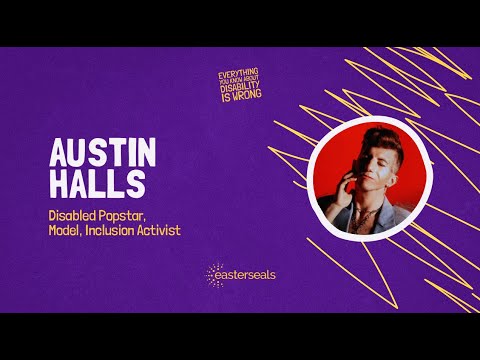
Austin Halls talks music, face difference, and fashion—sharing how art and access fuel confidence and reshape disability narratives in pop culture.
Listen Now
Published on November 13, 2025.
Watch Video
Episode 46 Show Notes
Pop artist and model Austin Halls joins Lily and Erin for a funny, candid conversation about music, face difference, and building a career that actually works. Born with Möbius syndrome (complete facial paralysis at birth), Austin talks about growing up with media that coded face differences as villainy, and how that shaped first impressions, assumptions, and everyday interactions.
Austin’s answer is art and access. His dance-pop track “Disabled” flips the script with a hook that invites everyone onto the floor, shifting from pity narratives to unapologetic confidence. He shares how fashion and stagecraft became tools of self-expression, why “success ≠ cured,” and how to handle lateral ableism when visibility rises.
From Runway of Dreams and New York Fashion Week to mentorship with RAMPD and a seat at the GRAMMYs (now a Recording Academy voting member), Austin shows what practical pathways look like: make the room workable, choose teams who get it, and insist on authentic casting rather than performances of disability.
Connect with Austin Halls on his website, LinkedIn, Instagram, TikTok, YouTube, and Spotify.
Transcript
Lily Newton:
Hey, listeners, welcome to another episode of Everything You Know About Disability is Wrong.
Erin Hawley:
Today on the show, we have Austin Halls.
Austin Halls:
Hello, Austin.
Lily Newton:
Hi, Austin. Thanks for being on our show. Austin is a pop star, model, and disability activist who has built a career at the intersection of music, fashion, and advocacy.
Erin Hawley:
Austin challenges stereotypes and expands visibility, and he leverages his platform to promote disability inclusion across creative industries.
Lily Newton:
Through performance, public presence, and campaigns, Austin transforms personal experience into cultural impact, making space for authentic representation of disabled talent in mainstream media.
Erin Hawley:
Yes. So exciting to have you.
Austin Halls:
Yeah.
Lily Newton:
Welcome to the show.
Austin Halls:
Can you, like, just follow me around and just tell everyone that when I walk into a room, I'm like, who is that? Is that me? Oh, my gosh.
Lily Newton:
When we were, like, typing up bios and things, I was like, I just want to start with, you know, that meme that's like, she's an icon, a legend. Like, that's.
Austin Halls:
That's how I feel. She is the moment. Come on now.
Lily Newton:
She is the moment. That's how I feel. Listeners, Austin is and icon. He is the moment. So this is gonna be a really fun episode. Before we get into the whole meat of the episode, let's do our audio descriptions. I can start. This is Lily speaking.
Lily Newton:
I am a mixed race, white passing woman with big green eyes and half blonde, half brown hair. I am in my office, which is decorated like the teenage girl bedroom of my dreams. You'll see a little bit of a Jonas Brooks Brothers poster behind me. And I'm wearing my usual necklace, which is a pendant of the Hindu goddess Lakshmi, and stating that this time because I think this episode is going to come out around Diwali, so. And I'll fidget with it throughout the entire episode as I usually do. Take it away, Erin.
Erin Hawley:
Hi, this is Erin speaking. I'm a white woman with red hair and blue eyes, and I'm wearing a black and white striped T shirt. Your shirt. And I'm sitting in my chair in my bedroom and.
Austin Halls:
Hello, this is Austin speaking. I'm a white male with reddish brown hair and a blurred Background because you can't see my messy studio apartment, thank God. And I'm wearing a blue and white striped sweater that says Dallas. Because everyone, when they say Austin, they're like, oh, my gosh, Austin, Texas. So I literally bought that to help them out.
Lily Newton:
I love that. That's incredible. Well, we're so excited to have you today. Erin and I just recently had a team meeting in person, and we made our whole team listen to your song Disabled, and we jammed to it, so we'll talk about that for sure. But this is a geek out moment for me specifically. I'm sure Erin, too. Like, we're so excited.
Erin Hawley:
Yes. I love that song.
Austin Halls:
I mean, literally, it's so crazy. Cause, like, you know when you have, like, those, like, 2:00am thoughts, like, and you're just like, wouldn't this be, like, so, like, to me, it was like, crazy funny. Like, I really didn't know, like, the impact that it would have. Like, it was just like, I was making music, I was finding beats with my producer, and I was like, I love this beat so much. And I was just like, you know, really leaning into, like, you know, coming to terms with the identity of disability disabled. Like, we can talk about that for hours. That is like, a really, really, you know, intricate conversation. And, you know, if you don't know, I was born my face completely paralyzed.
It was called Mobius syndrome, and it's a really rare syndrome having a disability on your face. It's such a complex thing, which I'm sure we'll get into later as well. So the past, like, five years, I've been just learning to accept the word disabled and really be in community. And the past couple years, I've been in a lot of events and just community bonding and building. And I didn't realize how much I needed the disability community in my life and how much unconditional love there is in the community. And so I was, like, just talking about, like, you know, like, being disabled is, like, so fun and beautiful and, like, powerful. And these are conversations that we've never had in, you know, a lot of media. And I was like, what? What if I took this, like, club dance beat and just, like, rewrote the identity of disability through song as I never heard it and I still have not heard it.
And so I think I'm, like, one of the first people to write a dance pop hit, being like, yeah, I'm disabled, and so what? I'm hot, I'm sexy, and I'm powerful, and it's. It's a crazy Thing.
Lily Newton:
Yes, listeners, we're talking about Austin's song Disabled, which is incredible. And it is. Yeah, it's exactly as Austin just described. It's such a fun song. Like, whenever I'm feeling down, I like hype myself up. I'm like, disability, show me what you see. I'm like, I'm in it. Like, I.
I love it so much. So, like, yeah, we'll link the song below because I want everyone who listens to this episode to save the song and to jam to it after they finish this episode because it's so good.
Austin Halls:
Thank you.
Erin Hawley:
Yeah, I totally love that song. I have it. So sometimes in the middle of the day, I'm just like, it'll randomly get stuck in my head and it's amazing.
Lily Newton:
Is that empowering? Like, it really is.
Austin Halls:
It's my favorite thing, like having non disabled people listen to it. And then they're like, I just been like saying, disability, tell me, what do you see? And it's just like, it's just a fun way, you know, because you hope to, you know, I don't need to educate disabled people on what it's like having a disability, you know, like, so it's so cool to like break the fourth wall and to like, get to the non disabled side and be like, here's a song about being disabled. And, you know, also talk about like just disability culture and media that we've seen. Everything that we see is inspiration for disabled people. And it's like, woe is me. And all the things that I saw was just so sad and, you know, like, pity me, look at me. And I'm like, this is not the life that we have to live. You know, we don't have to choose to be this.
You know, like, my life is this way. So it's just so cool to. And that's. I know why I wanted to do this as well. Like social media and advocacy as it's like we only see disabilities and facial differences and so many other disabilities in one way. Why don't we show it in a positive, fun, empowering way? And it's so cool to see people who are non disabled be like, whoa, I never even thought this was a possible thing. And yeah, I feel very blessed and so very grateful.
Lily Newton:
Yeah. I mean, because that's like the power of music, right? And sometimes you a song when it's so catchy, you don't even necessarily know what the per. The experience the person is singing about is, but the music is what kind of moves through you, you know, one of our in, like, season one of this show, we had Lachi on the show, and she was one of the first musicians we had on, and she was talking about how, like, you know, there's lots of other cultures. She was, of course, talking from the perspective of a black woman. So she was saying, like, you know, as a community, we have used music to talk about so many different cultural identities, but we haven't really done that with disability. And I think it is because of that, like, undertone of negativity that people still have around disability. So. Which makes it even more important for you to be doing a song like this, especially dance pop.
Austin Halls:
Thank you.
Erin Hawley:
Yeah, it is a bop. It's so good. I need to ask you a question. So our podcast is called everything you know about disability is wrong, and what do people get wrong about you?
Austin Halls:
So I feel like the biggest misconception about facial differences is that the only thing that we see in the media is evil villains. And that has been a really strong theme in my life. Representation was not there until a couple of years ago for me. And when I was growing up, I was watching, you know, the Lion King and the evil villain. His name was Scar, and he had a scar on his face. And, you know, like, Scarface and just so many, like, horror movies, they represented people like me with facial differences as evil and bad. And growing up, I was like, I don't feel evil, and if I am, maybe in the best way, but, like, I don't feel evil, I don't feel bad. And I already have this kind of stigma already against me.
So, you know, it's just so interesting trying to rewrite the narrative that has already been painted upon you and you. You know, even with, you know, having a speech difference, having your face be paralyzed, you know, like, there's a lot of cues that people miss. You know, I can't smile. I couldn't smile for the first 17 years of my life. I had to have sore surgeries just to be able to smile. So I feel. I feel like people don't get that there could be differences in this world. And so people automatically assume that I'm unintelligent, I'm incapable, I'm not worthy.
So just trying to paint facial differences as a positive thing. And, you know, beauty is face value. What we see on the face is really, really like, the first impression of someone. And it is really, really challenging to go into a world where, you know, you have to look a certain type of way. You can't hide. I can't hide my disability. You know, so it's. It's been very, very challenging.
So just trying to repaint that narrative of what people think of when they see a facial difference or a disability on their face, that has been kind of like a lot of misconceptions, and it's an everyday battle.
Erin Hawley:
Yeah, I totally understand that. Because when you enter a room, there's automatically a judgment on you and your life, and it's often the wrong judgment, and that is hard to get used to. But a friend of mine did say, like, when you're disabled and it's really obvious you do command the room, you get that attention right away, and then you can use that to your advantage. So I always learned that from her. And I thought it was a really interesting way to think about it.
Austin Halls:
And it's all about perspective as well. And that is like, I. I actually was not trying to be advocate. You know, I wanted to be a therapist. I graduated with a degree in psychology, and I was going to get my master's. It was during the pandemic. Life was crazy, and the universe was kind of shifting me towards advocacy. But, like, I would never, ever take my psychology degree and change it for anything else, because the knowledge that I have learned from myself has been just, like, life changing.
And like you said, it's like you literally command the stage whether you like it or not. And, you know, there are days that you wake up and you're like, I just want to get my matcha latte from, you know, whatever store. And I don't want to think about what's wrong with me. I don't want to ask. I don't want people to ask me questions. But it really is like, we are undeniable. We are incomparable. And there really is no one like us doing what we're doing.
So it really is such a positive thing. I know people that will see me for the first time and they'll remember my face. So, like, we are very, like, unforgettable. And I think that's what a lot of people try to strive for, to be different and quirky and unique. And we have that. We don't even have to try to do that. So I think you're right. It is really cool.
Erin Hawley:
It is. Although sometimes it can be awkward because I live in a small town and I grew up with the same people my whole life. And I'll be out shopping downtown or something, and people will come up to me, oh, I remember you. I was your teacher in kindergarten. I'm like, okay, I don't know you but that happens all the time. But still, it's just like, yeah, you do command that attention. And like you said, it can be annoying sometimes, a lot of times.
Lily Newton:
But yeah, yeah, it's just a lot of pressure for you both to like, have that added external feeling every time you're going to leave this space. I want to go back to you mentioning horror films because I think that, that, like, you're touching on the deeper level than just, you know, we hear, like, representation is so important all the time. But I think that that phrase needs, like, the backing of what you just said because people don't understand, like, how important that kind of representation is. Because when we're talking about the fact that, like, facial and body differences get used to equate, like evil or villainy, like, that is a cultural feeling, whether we wanted it to be or not, when that happens over and over again, like, the result of that is, you know, then you have children who like, naturally feel scared when they see disability. I want to be clear that, like, that doesn't happen on its own. Like, because humans in. In no matter what, like, we all look different. We all feel like we all.
We're not a certain looking way as humans. Kids don't learn that, like, different should be scary or kids aren't born feeling that different is scary. They learn that. And even if kids aren't watching horror films, it. It permeates that cultural idea goes into the rest of the world and it'll be like in a children's cartoon, there will be like a joke that gets made or something. So I just want to reiterate that, like, this representation thing is more than just like, oh, I want to see myself. It's. We want to write our own narratives, actually, because the narrative is taken when you just equate something about disability as one thing.
Austin Halls:
And I kind of learned this in multicultural psychology as well. Like, our brains are kind of like a computer hard drive. You know, we love to folder things and have things kind of labeled and compartmentalized. And when we see something that is not kind of fitting in those folders, it's very uncomfortable. And, you know, subconscious kind of bias is so real. And I learned a lot through my background with that, like, knowing that, like, you literally, what you said, like, you literally can have something that you don't know and you kind of get a fear for it. You are afraid of it. And the more that you educate on it, the more you knowledge yourself, the more you expose yourself, you know, exposure therapy.
It's funny that we talk about exposure therapy with disabled people. Because we're talking about, like, this. Oh, my God, disabled people are so crazy. But that's really what non disabled people kind of feel when they talk to us. It's that unknown of, like, we've never had any education. Especially talking about anyone with a visible difference. You know, every. Every day I go out and I get stared at.
There's no. Like, I go to the grocery store. I know that at least three. Three people will look at me. And this is where the perspective comes in. Is it because I'm wearing couture and amazing outfits, or is it because my face is different? And we still have not had any conversations that are widespread of like, hey, here is how you talk to a disabled person. This is how you talk to a disabled person. This is how you sit, say, hey, can I ask, like, what happened to you? Even though, you know, there's so many, I don't think, like, what happened to you? Because it's just, what's wrong with you? Those are so many, like, negative kind of twisting things.
So I. I do believe that, like, we need to just showcase disabled people in crimes, you know, doing what they love being successful. And that was, like, really my goal for social media as well is like, I have never seen anyone with a facial difference, with a visible difference that was really being successful and being successful for being talented and not being idolized just because they're disabled. Because there's so many things of like, oh, they went to college, you know, inspiration porn. They went to college and they're in a wheelchair. Okay, cool. How does that affect anything? It literally doesn't make. So I just want to be infiltrating and Lachi and so many other musicians with disabilities shout out to ramped because they're amazing, but we just need to be in our primes and we need to be at the table.
And it feels very good to be opening the doors for so many other people so that we don't have to fight so hard to be seen at the table.
Lily Newton:
Absolutely. And I think it's interesting that you wanted, like, before you got into advocacy and making music, you were on this track to becoming a therapist. Because I think musicians are a form of, like, mental health worker. Like, I really, really do. Because for me, like, I literally just this morning was woke up kind of on the wrong side of the bed and took myself outside for a little while. And while I was outside, I texted my fiance and I was like, can you turn on some music? It'll help my nervous system when I get in the apartment. Like, music can be so regulating but also so empowering. So I love that, you know, you kind of shifted from like a micro level of one on one therapy to this, like, macro level of releasing a song, like Disabled.
That can be someone's therapy, can be someone's church, to dance to a beautiful song that makes you feel, like, empowered and good. I think that that, like, it. It makes complete sense to me how your path went, where it did. How did you find music specifically?
Austin Halls:
I always have been obsessed with music and, you know, like, nonverbal communication is, like, about. I think it's about 60% of how we communicate. So being born with your face completely paralyzed, I had to learn very quickly other ways to express myself. And I was always into music. I have a VHS tape of me singing karaoke at, like, 3 years old with my mom and my family. And I learned that, like, through music, it was undeniable what the emotion was in the song. So I knew that, like, I didn't know songwriting was going to be in my journey, but I just knew it was always going to be an outlet for me. And, like, even with this whole month and the transitions between summer and fall, I just heavily relied on music for my coping mechanisms.
Then I was actually introduced to a family with a baby with the same syndrome that I have. They saw my covers that I was posting on YouTube and Facebook and all over, and they were like, he needs to get into the studio.
Lily Newton:
So.
Austin Halls:
So it's so crazy as they actually knew Gavin DeGraw's producer, and he heard all about my story. He was like, they lived in Nashville, so I'm in New York, so New Jersey. And they were like, austin doesn't have to pay a dime. He's such a cool teen. He has a great story. Like, he just is, like, in it for the music. So, like, just as long as he can get to Nashville, Tennessee, Then we make him, you know, have a week in the studio. So at 15 years old, they're like, write a song.
Write as many songs as you can and come to Nashville, Tennessee. And at that time, I started my advocacy, you know, on social media. I was trying to get on, you know, TV shows. And it was kind of the awakening of, like, I met people with my syndrome at 14 for the first time. A lot of people were bullied and, like, kind of bullied into silence. I realized that I had a lot more confidence than I thought I had, you know, and so I said, I have to write inspirational music as everyone does in the disability like, we just get pinned to this inspiration, and we're like, we have to write it. So I wrote this awful, terrible song called Take a Stand. It is so cheesy, but that got me into, like, songwriting and, like, being able to kind of emulate what I'm thinking in my brain and how I'm feeling and put it into a song.
And so started writing at 15. I had two albums before this new upcoming album, and the second album was, like, kind of getting into music that I really loved. Like, I love pop. I'm always going to be a pop person. And I think the second album was, like, a shift of, like, I'm gonna make music that sells, but also stuff that I listen to and I enjoy. And I kind of lean into what you were saying of, like, music is so powerful. Music makes you. It shifts your perspective, it shifts your mood and your everything.
And the past kind of two years, three years have been me showing how much of a boss I am and how many doors I can open. And I. I wanted to do that with dance kind of pop music. I wanted people to kind of dance through the pain, dance through the trauma. And I'm a sad boy at heart. Like, I love my Adele. I love my Emmy Winehouse, but I was like, I want to make people feel the way that I'm trying to emulate through my social media and leading by example. So this new album, it's coming out hopefully next year, it's called Disability, which is spilling the tea on disability joy.
And I just want people to put it on, dance for, like, 45 minutes and forget about life. And I don't know how people can. Like, it's crazy when you make something that you love and you just put it out for yourselves. And it's, like, literally so beautiful seeing people, like, turn on your music and, like, text you and be like, hey, I was just shaking my butt to disabled. And like, that to me, that is, like. That is, like, the ultimate win.
Lily Newton:
Like, seriously, it is the ultimate win. Because, like, even. Yeah, this idea of, like, that we're going to only listen to, like, sad songs or inspirational, like, please care about us song is so ridiculous. And, like, I love that you brought up. I think you said it earlier that, like, you can feel sexy listening to your music. And, like, even that in itself is such important advocacy. Because people, when they hear the word disability, like, they don't picture us shaking our ass at the club, but guess what? We can do that. Like, and it's fun.
And, like, I think that that is just so so, so important, because joy is super important. Also, I love that you mentioned self expression and, like, how you had to find music because it was difficult for you to express yourself without use of your face. I think that self expression is, like, incredibly important to disabled people specifically. I would love to hear your thoughts on that and, like, what self expression means to you and why you think it's important for our community.
Austin Halls:
I just think that we are, like, you know, being in so many different minorities, being queer and disabled, and there's, like, you know, a lot. She talks about being a black woman with a disability, like, just being a woman in general, you know, I feel like we have so much pinned against us when you walk into the door. And I actually wanted to make a video today about, like, compensation with the disability community and how we kind of are forced to, you know, not forced, but feel that pressure to compensate in so many different ways. And I felt that with fashion, and, you know, I love fashion, and it's opened so many doors for me, you know, Fashion Week and stuff like that. I just feel like it was my way to walk into the space and not have my face be the center of attention, you know? And also, too, there's so many stigmas on my facial difference that I was like, I'm going to dress so goddamn good that you literally can't even undermine how amazing and powerful I am. So, like, I know fashion is really, really, really a way that disabled people are able to express themselves. Which let me state that disabled people can be beautiful and sexy and wear amazing clothes. Like, I don't know why adaptive clothing is, you know, one way, one size fits all.
And I'm happy that we're getting out of it, but just to clock that adaptive fashion can be beautiful and sexy. So, you know, I really think that we tattoos as well. Like, hair color. Like, I feel like there's so many ways that I've learned that, like, you know, there's going to be people. There's going to be people that just think of you differently, so. And they're going to stare, so why not give them something to look at, you know?
Erin Hawley:
I love that so much. Yeah. Speaking of fashion, I met you in person in New York City during the Runway of Dreams events. Can you tell us about that?
Austin Halls:
Oh, my gosh. Well, Runway of Dreams have changed my life in so many different ways. And I never thought, like, I never was like, you know what? Like, maybe modeling is gonna be something that I picked up. Like, hell no. I was always just like, I'm gonna do Fashion. I'm gonna post my sets on social media because I love dressing up. I love it heals my soul. And the fact that it could impact other people is just a benefit on top of that.
But, yeah, Mindy is just. She's literally my, like, she's mother. She's literally mother. And I met her, I think, two years ago now. I walked in her fashion show at the Tourist Secret headquarters with dateability, and that was my first time ever walking in a catwalk, and it was at Victoria's neutral headquarters, which is literally crazy. And then I met her. I was just obsessed with Runway dreams. And I just.
I never even, like, saw disabled people on the Runway until then. And it really opened my eyes of, like, oh, my gosh. Like, fashion is really something that I love, love, love, and I would love to model more and campaign more and be just seen, you know? So that was two years ago. And then they wrote to me for New York Fashion Week last year, which is literally, like, the fact that I'm the first person with my syndrome to walk in your Fashion Week, like, drop the mic, like, literally crazy. Opening doors. I just feel so freaking blessed, and I'm happy that we can have people like Nikki Lilly. I got a shout out. Nikki Lilly has a facial difference as well.
She's killing it in uk. Adam Pearson. Like, we're finally seeing representation that I never saw growing up. So did Nerd Fashion Week was. I opened the show, which was literally, like, gaggy. And then, yeah, second year at Knit Fashion Week, back with Runway of Dreams, and I was on a panel talking about consumerism and having a disability and the struggles of. There was a lot of different people with disabilities that had mobility issues. It was a really cool.
Hey, I have adaptability issues with these clothes. How would we fit this? Hey, I have a facial difference. And that's the weird part. We talk about this for hours of. I have people in the disability disability community tell me, like, you are actually not disabled. Like, you have no mobility issues. Even though my face is literally paralyzed. And even reclaiming the identity of disability on social media, like, I feel like there's a lot of people that invalidate having a facial difference.
So it's really cool to be seen and heard and talk about, like, fashion and just and his self expression in that way. So love Runway of Dreams. Love Mindy. And I hope my goal this year and next year is to campaign for, like, I don't know, Calvin Klein, Tommy Hilfiger, like, some prestigious male brand to say that people deserve to be seen and we deserve to be seen, you know?
Erin Hawley:
Absolutely. I was like thinking, and you said that there's people in the disability community that say you're not disabled is wild to me. And there's a lot of. Not a lot. There is like lateral ableism. Ableism that everyone has, they don't have it. You can't deny it. It's just how you learn and teach yourself and grow and all of that. But like, ableism is so like horrible that it makes disabled people ableist too. And that's just like, not it.
Lily Newton:
Absolutely.
Austin Halls:
It also comes with like the success as well. Like, it's like people see me on social media being successful and opening doors and they only see. And that's like the toxicity of social media is like, I really strive to kind of emulate who I am on social media. I don't. Like, I've met so many people, especially in the community, that are so vibrant on social media and when you meet them, they're very shy, which is totally fine. But I don't ever want to emulate a person that I'm not. And I think that people only see the happy, successful, powerful side of me. And you don't really get to see like the day to day struggle.
And like, literally it's just like crazy that people can just invalidate that. Like, because you're successful or because you're powerful doesn't mean that your disability doesn't stop you. And it just, it's insane.
Erin Hawley:
This is my belief, I think I mentioned it in the last episode, that like, you have to suffer to be considered disabled, which is ableism, because disability does not equal suffering usually.
Commercial :
This podcast is brought to you by Easterseals. Easterseals empowers people to live independent, full lives. And we've been doing it for over 100 years. We're in communities nationwide providing support at every age and stage of life. Whether you need employment services, mental health support, or want to find a welcoming community, we've got you covered. Visit easterseals.com to learn more.
Austin Halls:
Correct.
Lily Newton:
And it's also like a deep misunderstanding of the human experience because, like, we all suffer. Like, we all suffer, we all feel joy, we all like, there's no, like, end where you reach a point of like, I'm never going to feel suffering again. So to like invalidate the disabled experience you have because it looks fun is just like invalidating your whole humanity. Because, like, having a whole humanity means feeling the ups and downs of life. So I think that's, it's so wild, but also kind of shows like that, you're doing the thing right, because you're not going to do the thing without getting negative comments like that. But it's, you know, I think that the lateral ableism in our community, like, I hypothesize that a lot of it also stems from a lack of resources and the fact that, like, resources for disabled people are still so hard to come by for multiple different disabilities. So there is kind of like a scarcity mindset of, like, well, you're not disabled. Like, you can't be as disabled as I am because I need these services and I can't even get them.
Lily Newton:
But, like, that's not our community's problem. And, like, we should not infight about that because the fact is that, like, all of us should have access to the services we need. And also, like, frankly, the more people that identify as disabled, the better for our community. Like, it's not actually. There is no world where someone else's disability status takes away from mine at all. So us all using the word is actually quite important. And, like, I hope that there are people out there who, you know, some days wake up with back and knee pain that can jam out to Austin's songs and realize that, like, what they're experiencing, whether temporary or permanent, is disability. Like, and disability is such a natural, normal part of the human experience.
It's actually, like, wild that there isn't that much fashion, music, movies about it, because it's to be disabled is to be human.
Austin Halls:
Like, why are we literally the biggest minority? And, like, literally 25% of the people are disabled or will become disabled, and we're like, so hush hush about it. And, you know, I've talked about this with a lot of my, you know, friends who are disabled. I don't think we've had that movement yet. You know, like, we have not had this, like, big push in the mainstream media, saying, like, hey, y', all, like, it's okay to be disabled. It's okay to be different. And I think we're slowly getting there. I think we're taking a few leaps back right now. But I'm very excited for, you know, in a couple years where, like, people with differences are more celebrated than right now, but that's why we kind of push.
And I will never discredit people for not knowing about, like, a facial difference or a disability on their face. Like, my syndrome, Mobley syndrome is like, two people out of a million. Those are the chances of being me. But no, those are, like, the chances of being disabled, like, and having A social difference. And, you know, like, I will never discredit someone for not knowing that because if I didn't have the syndrome, I probably wouldn't have known as well. But the way that we go about that, it just needs to change. And, you know, it's so easy to see people from the outside and think that, like, yeah, that person has it all because they're successful. But, like, it really takes.
And I think just having a. I've been thinking about this a lot. Just having a visible difference takes so much strength. And also invisible as well. There's so many different battles with either. But like, being visibly different takes a lot of courage to wake up every day, be seen by your coworkers. Every place that you go, that's a new place. Like, it's a lot of courage to, you know, one, build up the confidence for yourself, build up the self esteem, and then build up the worth and the self esteem to go into public and say, here I am, here I am for, you know, what I gave you, but here I am for how I look and trying to, you know, just like, hold that power.
I think it's a lot of energy and it is cool. Like, I feel very grateful that, like, I feel like I'm very much in my own lane and I feel very blessed that I don't really feel like as a lot of people compare themselves to so many other people. Like, I don't really feel like there's been someone in that path. So it is really cool to carve out that way, your own way. So there doesn't really feel like there's anyone that I'm competing with or trying to be, which is really powerful. But, yeah, just carving the way for other people and just like having like at the Grammys, when I went to the Grammys, there was not a lot of disabled people. And you feel so like, oh my gosh, this is so crazy that I'm one of one of 30, you know, 40 with a visible difference here. So it just feels very affirming that I can, you know, make other people feel seen and heard and just like, I don't want anyone to go through the stuff that I went through.
And I think that is kind of why we're doing this, you know?
Lily Newton:
Absolutely. And you know, you bring up the 1 in 4, the 25% of Americans have a disability. And I mean, and again, that's not even including the, like, thousands of people who wear glasses who have daily knee pain. Like, all, like, that number is small and it's still huge. And I think that that is so important. And that's, you know, at Easter Seals right now, we're running this campaign called Know the Facts. That's all about really trying to get people to understand that, like, when we're talking about disability, we're not talking about some, like, fringe off group. That's like a little tiny group of people.
We're talking about 70 million people. And, like, even from a, like, business perspective or I think, like, in the music industry, like, why wouldn't you need someone making music if there's 70 million people out there that would want to listen to it and relate to it? Like, that's a huge audience and same thing. You brought up the, like, adaptable fashion. I'm so, like, glad that Runway of Dreams and Mindy are doing what they're doing. And, like, all the other people that are making cool, adaptive wear that's not just, like, gray with ugly buttons. Like, like, there's, you know, there. I think it's really important to understand that, like, the breadth and scope of disability is massive. And there should be no industry where we're not thinking about disability and where we're not, like, considering that consumer base.
But, yeah, you. You brought up going to the Grammys, and I, you know, obviously, yeah, that's a wild experience to be so highly visible. But, like, otherwise, what was that experience? Like, what was it like when you found out you were going to go to the Grammys?
Austin Halls:
Oh, my God. I. I just, like, that's why I'm like, girl, I feel so freaking blessed. And every time I'm an Aries, so I have to say, I'm always trying to, like, one up, not one up, but, like, just be better every single day. I have no end goal because I'm always just, like, tunnel vision. And every time I feel like, am I doing enough? Am I working hard? You know? Like, I remember, oh, my gosh, I went to the Grammys and everything is okay. That's like, my, like, all right, girl, you're good. You don't have to worry about nothing.
But, yeah, I have to do a huge shout out to rant. And because being a disabled musician, I was like, holy cow, this is so intimidating. This is so scary. I never had anyone to kind of talk to about being disabled and, like, having your face be paralyzed. And also being a singer is, like, so crazy. Like, I feel like my people told me that I wouldn't be able to talk. And to be singing and to be making music is just, like, so crazy. So I met Lachi about two, three years ago.
And Lachi has just opened so many doors for disabled musicians. And also, she's a governor for the Grammys, so she's been able to kind of, like, really infiltrate the music industry. So she's been like my mentor and just helping me kind of be in these spaces and be seen, and it feels very validating as she's also an Aries as well. So. An Aries. Seeing another Aries work hard for being hungry and working hard for what you want, she really opened those doors. And I was in the mentorship Grammy U, which is like a mentorship for the Grammys, and I went with Ramped. They got me a ticket, and I was like, oh, my God.
So now I'm in the New York City chapter for the Recording Academy, and. And to be able to buy tickets now to go to the Grammys, like, every year, I literally have a seat at the fricking Grammys with my name on it. Like, it is just so surreal. And I'm doing dreams that I never. I actually did not dream of this. Like, I was like, it would be nice to be there, but, like, it was never in my depth of field, and I just feel so, so blessed, and it just is crazy. We're taking over, you know?
Lily Newton:
Yes, listeners, if you're wondering, we're referencing Ramped a lot. Ramped is recording artists and music professionals with disabilities. It's an incredible organization. If you're like, oh, I'm really interested in this, you should go back and listen to our episode with Blachi. We got. We get into it, but, you know, multiple stories today, I think, have really shown the, like, power of our community and, like, our allies as well, in, like, lifting each other up and pulling each other forward. And that realization, like, the, you know, the family that got you to Nashville because they had a child and they realized how important that representation was going to be, or Lachi going through her experience or even you saying, like, I don't want people to go through the hard parts that I went through. I think that that is, like, one of the most powerful things about our community is I don't really, in my experience, run into that many disabled people who are like, well, I went through it, so everyone else should have to.
It's almost always the opposite is, like, I went through this. I never want any kid, young adult, adult to have to experience that. I want to make it better. And I think that's just because we are, like, forced to be innovators, like, to make an inaccessible world work for Us. So with that in mind, like, we're going to innovate ways for our community to grow and to take over. Like, you know, Lachi did the thing she needed to do to get, you know, that number, like 30 to 40 people with disabilities. Obviously, for us as people in the community, we know that's a very small number, but I think if we look back a few years ago, that number is probably 0 or like 1. Like, and it's very important.
So I think that this episode is just like a testament to our community lifting each other up and the importance of, like, if you know a disabled person and you have a way to help them achieve their dreams, do it. Like it will. The favor will be returned, I promise. Like, and I just think that that's a really powerful story. And of course your name's on a seat at the Grammys. And it was inevitable. Like, it was. That had to happen.
Austin Halls:
It's all about perspective too. Like, it really is. Like, I'm, you know, talking about this as well. Like, I really. Yeah, of course disabled people are not trying to make other people suffer because we've had to learn that empathy. We've had to learn the empathy, we've had to learn the emotional intelligence. Like, we had to grow up. I know I had to grow up so much faster than maybe some other non disabled people that I know.
So I know that I would never take away any of the experiences that I had because I am 27 and I feel like I'm this wise 80 year old man who literally is everyone's therapist and caretaker. And it feels so good having empathy for someone else. To be able to feel something and to put myself in someone else's shoes is a trait that people don't really have anymore. And in the social media days where social interactions are very scarce, I feel so blessed to have the emotional intelligence, to have the wisdom and to have the kind of warmth to care about someone else. And I feel like being, you know, being gay and being disabled, like, you learn quickly what it's like to be an outsider and you never want anyone to go through that, you know, So I feel like it's like having that perspective of like, thank God I'm disabled. Like, thank God I have a disability because I wouldn't be half the person that I am. And you know, people ask, like, what would Austin be without a disability? Austin would be a tornado. Austin would literally just do whatever the hell Austin wanted with his Aries mind and just like, you know, just be selfless, you know, self, be Very selfish, you know, So I feel like it's, like, all about that perspective of, like, knowing your worth, knowing your power, and knowing that, like, everything happens for a reason.
I know some people hate it. I love divine timing. Everything happens for a reason. And, like, you are the person because of the experiences that you have.
Lily Newton:
Yes, absolutely. And I feel like it is important to note in this moment where, like, autism is being discussed in pretty horrific ways, and there's conversation about, like, you know, getting rid of autism and things. And I. I've been asked that, like, what. Who do you think you'd be if you weren't autistic? And my answer is always just like, oh, I wouldn't. Like, it's my brain. Like, that's who I am. Like, there is.
No, I don't. I can't even begin to think about the experience because to do so, I have to think, which uses my autistic brain, actually. So, like, I think that. That there is such a beautiful and necessary, like, worth in saying, like, thank goodness I'm here and thank goodness I'm me, and this is, like, who I am. And I think that you touched on community a little bit. I think the biggest downside to being disabled in this world can be the isolating feeling. Like, it can feel very isolating, especially if, like, you are the only person experience in, like, your grade school, growing up or something like that. Or, Aaron, you mentioned being from a small town.
Like, that can feel isolating if you're one of the only people. But for me, the most empowering thing has been in adulthood to get to meet other cool disabled people. And like, even some of my darkest memories, I've now met other disabled people who experience, like, the same kind of bullying or the same kind of inaccessibility or whatever it is. And now, like, instead of feeling sad about those memories, I feel like in community with people and togetherness. So you. You've mentioned a lot about all the people in the industry, in fashion and music, but, like, as we're running out of time here, what is the power of community to you? And, like, what do you want to say to some maybe disabled listeners out there who haven't quite found their community yet?
Austin Halls:
I literally. I was actually, when I was growing up, I was so against an anti. I don't want to meet anyone with my syndrome. You know, my mom always knew about the Mobley. The foundation, the Mobley Syndrome Foundation. Growing up, I was like, no, I already know what I have. Why the hell would I meet other people that, you know Knows what it's like to go through it. Like, I already know what it's like.
And I feel like you go through that. As you know, I feel like that is a pretty normal, common belief. Like, you know, I already know what I have. Why do I need to meet other people? You know, like, I don't need to have that community. And then when you open the door, you change your mindset just a little bit, like, okay, fine, let me peek inside. Let me see what it's like. You will literally realize that, like, it is, like, literally life changing, you know? The reason that I got into advocacy was because I went to my first ever Mobius syndrome conference. I was 14 years old in the midst of, like, who am I? What kind of person am I? Just like, literally crisis of identity.
And I went to the first ever conference and I was like, oh, my God, these people. I remember the first teen session that I went to, it was like all teenagers, probably 15 teenagers with Mobius syndrome, the exact same syndrome that I have. Put us in a room, was asking us questions, trying to get us to talk. No one talked. No one talked at all. And I was like, wait a minute, like, if anyone was gonna feel safe and seen and heard, it's exactly here. And this whole weekend I realized that, like, a lot of people were so bullied so badly for being different that they were bullied into silence and they didn't even feel safe and seen in the room. So the people with the same exact rare syndrome.
So I learned that, like, hey, actually I have a little bit more confidence than I have and I need to change this narrative. I need to change the way that people feel. And every two years I go to the conference. Being in New York City is such a freaking blessing because there's so many disability events all over. And when you walk into a room full of disabled people, it is the most unconditional love that you ever have. Like, I'm always worried about, like, are people going to understand me? Are people going to, like, think that I have resting bitch face because I have social paralysis? You know, like, are they going to think I'm angry and you don't even think about. And it's crazy because all these people have different disabilities. And you would think that, like, they wouldn't get you, but they just get you.
They understand you. You don't have to explain yourself. And we go through so many similar struggles that it's just love. So if you are at home, you've never met a disabled person. It's actually psychologically Proven. There's an amazing psychologist, her name is Kathleen Bogart. She has Mopius syndrome as well. And she's done social studies on, you know, hanging out with non disabled people versus disabled people.
And even if you don't have the same disability, just interacting with them and hanging out with them and being in their presence makes you have a higher self esteem and a higher just presence of self love. So just reach out to someone and just like, literally indulge yourself. Like, literally, community is just like, so, so important. I would not be half the person that I am. And a lot of what I do is for other people so that they can see themselves in me. And you know, I think the whole disabled umbrella term, disabled is such a powerful kind of reclamation, and we talked about that. Like, I feel like there's no other umbrella term that kind of identifies disabled people except for those awful handicapable and other terms like that. So crazy.
Just say the word disabled. It's not that hard. It's not the hard draw, but. But just literally reach out and just open yourselves up. And it just takes a lot of reframing in the cognition. But once you reframe your brain, tell yourself that you are so lovable, you are so deserving, and you are so beautiful, that is when the universe will open up and you will see and meet the people that you love in your life.
Lily Newton:
Yes, absolutely. I love that so much. And I think, you know, sometimes we get like, nice comments about the podcast and one of the recurring ones we get is people will say, like, it's just such like, warm conversations or it feels so, like, kind and authentic and loving and like, yeah, Aaron and I obviously work hard to make this space like that. But I also do think that what people are feeling is the experience of three disabled people in the same room and how, like, that feels. So, like, every episode we record of this show feels so good to get to just like commune with, with my community for a second. Like, it's so good and it feels so good. So that's what people are feeling when they listen to the show. And like, I don't know if I've ever named that before, but like, the thing that you're feeling is the palpable joy that we're experiencing getting to be with our community.
And like, the three of us have totally different experiences of disability, but that like, core love is there. And I know that like, I would not be who I am without the disabled people in my life. So I appreciate you saying that.
Erin Hawley:
Yes, absolutely. And speaking of community, we Gotta get together endeavor matcha.
Austin Halls:
Girl, you say the word and I'm down. I made my homemade matcha, but nothing beats a store bought matcha. So literally anytime also literally, just the vibes are so good. Erin, you are. I love Erin is like, when you meet her in person, I'm just like, I don't know. Your energy is so powerful in person and I feel like people don't get that. You're so just like. I feel like you're demure on social media, but you're sassy and energetic and I love it.
I'm excited to hang out.
Erin Hawley:
Oh, thank you. I don't think people think the opposite is what I think people think of me. That I'm sassy online and quiet in person.
Austin Halls:
Really? No, I. Witty. You're witty as hell. You're so witty. Yeah.
Lily Newton:
Your sass is palpable. I know it. I love it. I mean, we've only got a minute left of this recording, but I could talk about loving Aaron. I mean, Aaron is like my north star of finding disabled community because like, I met her and was like, wait, this is amazing. Being like being besties with someone who just gets me. Like, this is so good. And like, yeah.
Especially for people who are like, in workplaces, if you have other colleagues that are disabled and you haven't like, connected even just being like, man, being disabled's wild, right? Like, that could start a conversation that could lead to a friendship that changes your life. And like, my friendship with Aaron has certainly changed my life so.
Erin Hawley:
Well, I love you, Lily.
Lily Newton:
I love you and Austin. We love you. Like, we love you. We love you.
Austin Halls:
I'm like, am I interrupting something? Damn.
Lily Newton:
Yeah, we're really besties. It's the truth of the show. But you're part of it whether you want to be or not, because we love you. Yeah. This was so much fun. I. You should come on the show every week and at some point you guys are going to be in New Jersey hanging out and I'm just going to show up and you're going to be like, how'd you get here? And I'm. I sensed it.
I sensed you were together. I just wanted to be a part of it. And yeah. Awesome. We look forward to your just meteoric rise to fame. I know. It's like you're on it. It's beautiful to watch.
And I think like, disability is like potentially song in the summer 2026. I think we make it happen. And you'll definitely be seeing Austin in more upcoming Easter seals stuff. We love working with them. And it's just so wonderful to have such, like a, such an icon representing our community. It's important. And thank you for coming on our show. Thank you for such an incredible conversation.
Austin Halls:
Thank you so much for having me. Y' all both are icons and it's, it's like a kiss the feet, bow down moment as y' all are icons and what you do is so, so powerful. So thank you for having me.
Lily Newton:
Thank you. You're welcome anytime. And thank you so much. And listeners, as always, thank you for tuning in. Whether you watched it or listened to it or read the transcripts, we're happy to have you here. And we'll see you next time for another episode of Everything youg Know About Disability is Wrong.
Erin Hawley:
If you liked what you heard, go ahead and subscribe and leave us a review wherever you get your podcasts.
Lily Newton:
Thank you to our listeners. And as always, thank you to Easter Seals for giving us the space and resources to share such authentic conversations from within the disability community to our listeners.
Erin Hawley:
And we'll see you next time for another episode of Everything you know about Disability is wrong.
Legal
Sign up for Emails from Easterseals
Get exciting news, helpful resources, & inspiring stories delivered to your inbox each month.