


Episode 45: Beyond the Binary: Maria Pendolino on Disability, Fat Liberation, and Voiceover
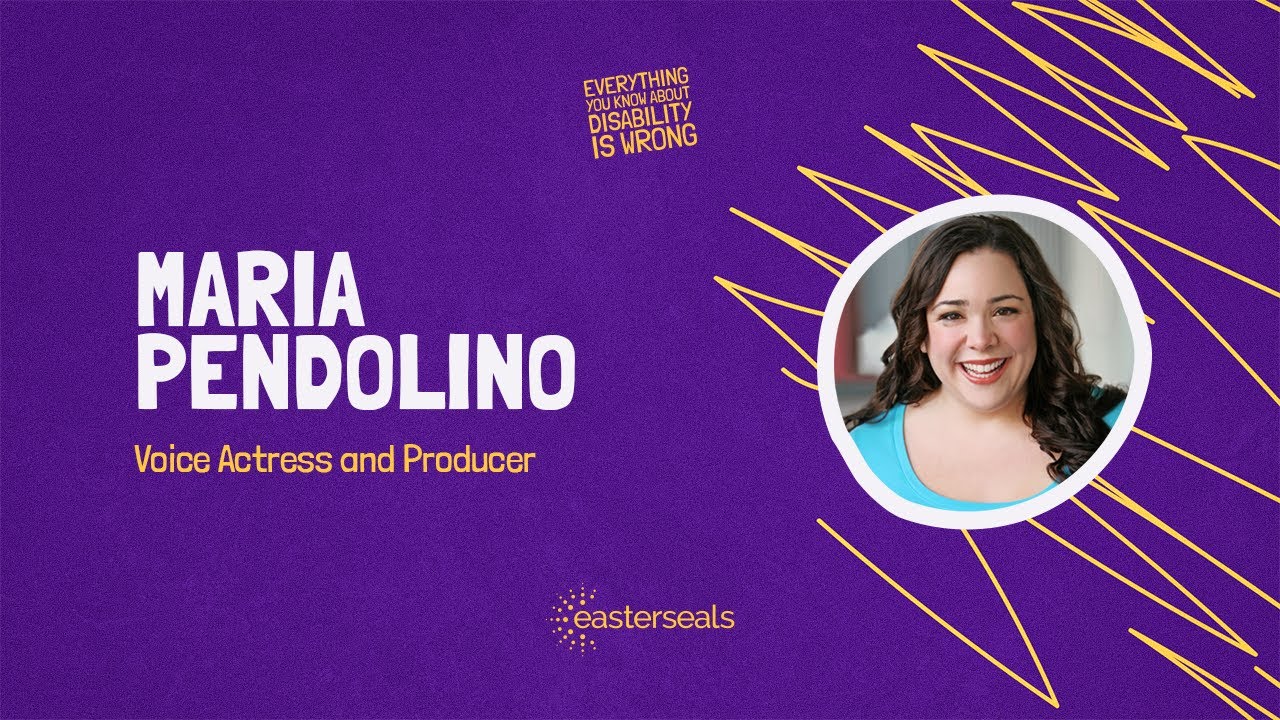
Maria Pendolino joins Lily to unpack mobility aids, fat bias in healthcare, and why authentic disabled voices matter in media and casting.
Listen Now
Published on October 30, 2025.
Watch Video
Episode 45 Show Notes
Voice actor Maria Pendolino joins Lily for an episode that challenges the narrow way society views disability. Maria shares her experiences as an ambulatory mobility-aid user, explaining how fluctuating conditions are often misunderstood or erased in media and medicine. With candid honesty, she connects her journey of psoriatic arthritis, knee replacements, and self-advocacy to building a career that truly works for her body, through voiceover and a fully accessible home studio.
The conversation also takes on fat bias in healthcare, how outdated tools like BMI continue to be used to deny or delay care, and the scripts Maria uses to set boundaries in appointments. Her message: you deserve to be treated as a whole person, not reduced to a number or assumption.
Maria details the creation of the Disabled Voice Actors Directory, now housed under the National Association of Voice Actors, which helps casting directors find authentic talent. It’s a resource born out of a belief that disabled people don’t just deserve representation on-screen, they should be hired behind the microphone, too.
Transcript
Lily Newton:
Hey, listeners, welcome to another episode of Everything You Know about Disability is Wrong. Today on the show we have Maria Pendolino. She's a full-time professional voice actor and voiceover artist who has been providing voiceover services to clients and brands worldwide for over a decade. She's particularly recognized for her political voiceover work with Democratic candidates and has won three Reid awards from campaign and elections for her political voiceover work. Maria is also a member of the Blue Wave Voiceover Collective, which features diverse voices including disabled, LGBTQIA and other underrepresented actors and voiceover artists. She's also involved in a number of cool organizations and activities that we'll get into in the interview. But welcome to the show, Maria. We're so happy to have you.
Maria Pendolino:
Thank you so much for having me.
Lily Newton:
Before we dive into the interview, let's do our audio descriptions. This is Lily speaking. I am a white passing, mixed race person and I have short brown hair with a little bit of blonde that is very grown out in the front. And I am wearing Easter seals merch that says know the facts. Disability is nonpartisan. And I am officially listeners in my new office setup, which I have talked about a little bit on the show. I realize that being someone who lives with chronic pain every day, I don't have to sit in an uncomfortable desk if it hurts my body. So I'm officially, you can kind of see in the background some pillows in my new office setup, which is a bed because that's what works best for me.
And I really am excited to be here and be bringing you podcasts from a space that I have made accessible for myself. So that's my audio description and I'll pass it to Maria.
Maria Pendolino:
I love that for you, Lily. Welcome to your new bed office. Fantastic.
Lily Newton:
Thank you.
Maria Pendolino:
I am Maria Pendolino. I am a white woman. Today I am wearing a fabulous denim top from Eloquii, which is a super accessible plus size clothing retailer. It's got some exaggerated sleeves which I'm feeling very poofy about. I have brown hair with A skunky stripe on the left. I'm wearing tortoiseshell glasses and I popped some Burt's Bees lip gloss on today, so I've got some pink lips going on.
Lily Newton:
Amazing. It is an incredible top. I noticed it right when you joined the call. And listeners, I know you're going, wait, we're missing something. Erin is not with us today. She is booked and busy doing other amazing things for Easter Seals. But fear not, she will be back. I would never do this show without her.
Lily Newton:
And so she'll be back for another episode. Just me and Maria today, which I am very excited about because some listeners you'll know, I come from the theater and film world and Maria is very much in that world. So this is going to be an awesome episode. We always start the show with the same question, which is our podcast is called Everything youg Know About Disability is Wrong. What Do People Get Wrong about yout? Maria?
Maria Pendolino:
So my disability is something that I feel like people get wrong because it's just something that is so misunderstood in the world. And for me, that is being an ambulatory user of mobility devices. So I feel like there is a perception in media and among the non disabled community that disability is such a black and white binary. You are either so disabled that you can't do anything at all or that your body is like completely restricted or you are perfectly fine. And people really do not understand the spectrum of how disability kind of comes in and out of our lives. For those of us living with disability, the idea of like severity and flares and things like that, but in particular the idea of someone choosing to use a mobility device such as a mobility scooter or a wheelchair or a walker and then being able to execute something without that. Right? Like having someone push your wheelchair up to a car and then having you stand up, get out of that wheelchair to get into the car. And I've received comments, I'm sure many of our listeners have received comments about like, oh, I guess you don't really need that or something to that effect.
Right. And just not understanding that spectrum of for me, particular for me in particular, which is mobility. I have psoriatic arthritis and at age 34 I had my knees replaced. And while it certainly improved my pain profile, it still left me with mobility challenges. My left leg is at right now about a 10% differential from what would be considered optimal extension. So I'm left with a little bit of a limb. I, I really struggle with like duration and distance of like standing or like walking far distances. So I choose to use different mobility devices, whether that's a walker, whether that's a wheelchair or a scooter, based on the situation.
Like, I'm. Am I going grocery shopping? Am I at a street fair? Am I at the airport? And there's like a thousand gates between me and my destination, right? And I just feel like I get some comments or looks when I have to transition from using my legs versus using my device. And I feel like it's something that is never shown in media. Like, this idea of people, like, having a disability and navigating the world with that, and, like, picking and choosing the ways to navigate the world, as opposed to someone who is like a paraplegic in a wheelchair and, like, that's their connection to all mobility, all independence, and they don't have the ability to, like, stand up and, like, traverse something else without that device. I remember in particular, I was at a museum in London with my husband, and the museum was not fully accessible. Like, they had an accessible entrance. They had this whole page on their website about being accessible. But so many of the rooms within the museum had a step, like, one step.
And it's like, you know, I was able to get into that room because I would. I would be able to stand up from my mobility device and walk into the room, and then my husband would lift the mobility device into that room. But so many disabled people would not have that option. Right? So I just feel like there's such a misunderstanding about the spectrum of disability and the fact that even a person one day might need to use a device and one day might not need to use a device. So things like arthritis and chronic pain and chronic fatigue were like, you have good days, you know, and you're perhaps able to traverse farther than you would be on a day where you're having a flare or you're having a bad day. I feel like we just don't see that in media. We don't see characters in media or people on TV or even, like, the promotion of different influencers who might have a similar disability. To me.
Like, I just feel like those images and videos and conversations are not getting elevated the same way that the kind of binary of disability, like, again, like, fully disabled, fully perfect, like, that people to understand or that you can recover too, right? Like, disability can also be temporary. And like, is a thing. Like, you could be experiencing a disability and then no longer experiencing that disability. So for me, I think that's one of the things that I just, like, constantly encounter from an ignorance standpoint of people just like, not understanding that that's how it works. And then just, like, you know, just people making stupid comments because they're just so uninformed.
Lily Newton:
Totally. Yeah. I think that this, like, misunderstanding of the spectrum of disability in general does have, like, it really does have to do so much with these people want to be able to put things into nice little boxes, and disability will never fit into a nice little box. And, you know, I have been doing the show long enough with Aaron that I know a point Aaron would make about this, which is, you know, it kind of goes the reverse as well, where people who have these more static mobility disabilities, the spectrum of mental health gets ignored. So, you know, Erin has muscular dystrophy, and that is a bit more obviously presenting than other things. But she also will talk about having, like, a very anxious day and how sometimes her having anxiety gets completely overlooked because she has muscular dystrophy. And I feel similarly on the other side. And I talk so much about being autistic, and that's kind of, you know, kind of constant in somewhat of a way, but my pain levels change every day.
And that the lack of this is who you are, I think is confusing for people. But I do think it's that need for representation. Right. Because there. There are people who think that by, like, oh, I'm calling out this person who's faking needing a disability. I'm doing my part by standing up for disabled people. And it's like, no, you're actually yelling at a disabled person right now.
Maria Pendolino:
You make such a good point. Like, I feel like there are so many disabled folks who really experience some kind of intersectionality, either with additional disabilities or perhaps other challenges or things in their life. And it becomes like, this game where you have to stack things and talk about what's most important to get either the services you need, the medical care you need. I remember about a year and a half ago, I changed primary care doctors, and I went in with, like, a typed list of my various medical concerns. Some of them, like, fully in the column and spectrum of disability, and then others are just in the column of, like, challenging health conditions that maybe don't rise to that occasion. So I did the work of, like, prioritizing them of, like, these are the things that, like, I'm currently spending the majority of my time focusing on. But, like, don't forget that, like, all of these things are here. And she looked at the sheet and she's like, wow, this is really impressive, but we won't have time to talk about all of them today. And I was like, no, no, we will, like, we have to.
I need you to understand because, like, at any time, the one that I have at number seven could rise up and be number one. Like, I, I need you to understand this whole spectrum. I'm not going to leave this office with you not understanding the, like, 100%, like, full view of what my health is. But, like, I feel like her response is such a common one. And honestly, I don't blame her. Like, the doctors are held to such an unreasonable standard when it comes to how much time they're given per patient and what they'll be, you know, reimbursed by insurance for, for discussing and caring for like your. Yeah, your physical can't include diagnostics or else it's like a different code or something.
Right. So, like, I don't necessarily blame her because I feel like this is how, like, they just get coached or, or coerced or forced into, like, patient treatment. But, like, I was like, no, I'm fully going to own my time and let you know that, like, yes, there are like 12 things going on here. And like, I'm as upset as you that there are 12 things going on here. But it such a. I feel like it's just such a common occurrence and common response that like, oh, this is the thing that's the most wrong with you or the most visible or like the most, like, intense. So therefore we're just not going to, like, address the rest of these. And it's like, yeah, but sometimes I wake up and number four is my biggest problem.
So, like, if I'm going to message you on the portal to talk about number four and you don't even remember that, that's like one of the things that's like a challenge for me. Like, that's going to be a problem too.
Lily Newton:
Absolutely. And just that, like, see me as a whole person, whereas people try to, you know, they hear one specific thing. Like, I remember going to the first time I saw. I started seeing like, my rheumatologist about joint pain. And I, like, I don't know why this sticks with me so much, but I, like walked into the office and one of the people who was checking me in was like, you're at a rheumatologist. Like, but you're so young. Like, why are you here? And there was a part of me that was like, I've actually been in pain since I was much, much younger. But I never talked about it because I never got to that part of the Appointment.
This is just when I finally, like, we finally had enough time because I've been stuck in 15 minute doctor's appointments this whole time. And so people have such, I think, thoughts on how like, diagnosis and medical care goes for disabled people. But unless you've lived it, you realize that, you know, our modern medicine is amazing, don't get me wrong. But it is a lot of trial and error with this giant barrier of like, insurance on the way.
Maria Pendolino:
So the assignment of age to health is such a strange, like, common thread through my personal, entire story. I was diagnosed with my psoriatic arthritis at age 22. I probably had problems between 11 and 22 that I just didn't understand and like, it was just not like part of common workups. Like, I just wasn't presenting with enough problems to like, make it to like an endocrinologist or a rheumatologist. As I've been doing, like my archaeological dig. I'm like, trying to figure out like, where things might have started for me. Thank you. Seven years of therapy, I came to realize I was like, actually I think this problem might have started a lot earlier, but like, the signs weren't strong enough for like a yearly pediatrician to be able to like, recognize this stuff.
And like, I don't know, if you're not barfing every day or fainting, I guess they're not going to run blood work. Right? Right. But this, this idea that youth always equals health, I think is obviously something that our culture is like so obsessed with because you've got like the youth and the beauty creams and the fountain of youth and all of this stuff. Right. But in particular, when I got to the point where my arthritis and joint dam progressed so severely that I really believed that knee replacement was the only thing that was going to help me continue to be able to ambulate. I actually went to consultations with seven different orthopedic surgeons, and out of those seven, only one was willing to proceed with a surgery for me. And three out of the seven, like, specifically said they would never do a knee replacement on someone under the age of 50. And that was just like a baseline.
Like, you can't possibly get to a point where your, your joints would be damaged enough to need a replacement. And I was like, look, I'm 30ish, right. These are the years that I would like to be like, young, spry, active, doing things. And like, one of their main chief concerns was like, joint replacements don't necessarily have like a lifelong, like, expiration date. And I Was like, if I need it to happen again, I'll deal with that in my 50s. Or like, if I can't get one again, that's when I'll like, surrender to, like to use a mobility device full time. Like, give me the orange flag and I'll be around the retirement community just zipping around. But I was just like, does no one see my vision that like, I still want to be active, up and moving and there is like this scientific advancement in artificial joints that like, could help me get there.
And like one person looked at my X rays and like, he was looking at it and then he just said like, really aggressive to me. He was like, who in your family has arthritis? And I was like, nobody. He's like, no, who in your family has arthritis? And I was like, buddy, like, I, I know my family. Nobody. Just me. He's like, this is some pretty serious, like, degradation for a 34 year old. I was like, thank you so much. I agree.
I live it, man. And he's like, yeah, I would, I just would never do a joint replacement on someone before the age of 50. And I was like, thanks, I'll take my scans and go. And then the surgeon that I did find, he was like, yeah, he's like, you probably want to walk now. And I was like, he's like, great, let's do.
Lily Newton:
Is such. It is so wild when you've like had such a series of, of like ableist medical experiences and then you finally find like a disability affirming, like, practitioner, and it's such like a shock of like, oh, well, you, yeah, you would like to feel good.
Maria Pendolino:
And it's.
Lily Newton:
Yes, I do, actually. Wow.
Maria Pendolino:
No one's considered that.
Lily Newton:
Yeah, and I just, I think that is such an important point on the age and our like, overall culture's kind of obsession with age. Because I do also think that it, you know, in our love of youth, we also have a culture that does love to kind of invalidate children. And like, I often think about like all of the pains that I had growing up that got called growing pains that now I look back on and I'm like, those were not growing pains. Like, that was, that was Ehler Stanlow syndrome presenting and we weren't noticing it. And yeah, I just, it's interesting because it's like, you're not, it goes into that binary of like, you either are disabled or you're not and kind of same thing. It's like you're either a child and you have no say or you're like very old. So you must have these things. It's just, you know, it kind of always goes back to this idea that we started with.
Just disability is complex and changes all the time. And if there's any point part, if there's any time in your life that you think, I have a full understanding of disability overall, every disability that's wrong.
Maria Pendolino:
I think also when you are younger, the Occam's razor thing comes in where, like, people are more likely to assume that it's not something serious. Like, are more likely to assume that the odds are on your side that it's not one of these more like rare conditions. Or, like, if you like. I. I really didn't have the genetic path for psoriatic arthritis where a lot of people, like, see it. There are people in my family who have had psoriasis, but, like, my mom and dad don't. So the dot. A lot of the doctors were just like, it's probably not something more serious because, you know, you would have this, like, genetic path.
And it's like. But it's not required. Like, right. You can't, like, go to, like, the psoriatic arthritis administration and be like, nope, if she doesn't have a parent with it, then it can't possibly be that. And it's like, yeah, I. I get that you don't want to always jump to a diagnosis like, that makes sense. Like, do the research and, like, figure it out. But also, look at someone in their 30s who has lost more than 40 to 60% of extension inflection in both of their legs, walks like a crab on two legs, and is constantly in pain and shoving fistfuls of Advil.
So, like, maybe it's not just what you think it might be, like, go deeper. But for kids especially, I think it's really hard because I feel like people just do not take kids seriously when they're expressing what's happening. And of course, yes. Do kids make things up? Yes. Do kids exaggerate things? Yes. All of those things are true. But you have to take each individual at face value. And I feel like a lot of times it's just like this aggregate belief that it can't possibly be something more serious because it's strange and rare and whatever.
And I think we just need more individual. Individual kind of like treatment and identification. And, you know, our system in America is really set up in these, like, little specialist bubble bubbles. So, like, you have to, you know, if you're seeing just like your primary care, your family doctor, whatever, if that person hasn't seen what you're dealing with before. They might not even know, like, where the next step is for you. Like, is it blood work? Should you see a rheumatologist or an endocrinologist or someone who has, like, slightly more specialized knowledge? Like, you don't just, like, wake up. Like, I feel like I have such, like, a medical Rolodex now. Of course.
Yeah. Like, you don't just wake up having that. And, you know, if you don't have someone early and the journey to guide you, you could end up like me. And it sounds like what your story was too, Lily. Just, like, years and years and years of just, like, believing that, like, oh, this just is what happens, right?
Lily Newton:
Yeah, just like, oh, pain is something I'm. We all deal with, but it's not. And, you know, I. I want to get into talking about your voiceover work and your career there, but I would be remiss not to bring up the fact that I know you've done work in the fat liberation space. And I do think that it is very hard to have these conversations about the medical experience of disability without. It's just not the full conversation if you don't bring in the full story, which includes that fatphobia is. Is such an insidious form of ableism we have in this world, but especially in our medical world, and that people don't necessarily think about that or don't think of fatphobia as something that is tied to ableism, but it deeply is. And I just think that that is something very important because when we're talking about being kind of, you know, brushed off, I.
I have experienced myself and in my family, people being told, like.
Maria Pendolino:
Well, you just need to lose weight.
Lily Newton:
And then, you know, you lose weight or. And it doesn't get better. And turns out it wasn't related at all. And the losing weight actually caused a problem.
Maria Pendolino:
Now, like, yeah, the. The fatphobia in the medical community is unbelievable. I don't have, like, a statistic, like, at my hand right now, but I think I would just say that people are dying every week from being ignored when it comes to medical concerns because of their fatness. We see exclusion and judgment happening every day, like, right at. Just like the printout that I get when I leave my primary care office. And at the top, it has my B. BMI and it says morbid obesity. And it's like, what a lovely reminder of racism, sexism, ableism, ageism, sizeism.
You know, for those of our listeners who might not know, the BMI was developed in Belgium in the early 1800s by a statistician. The Belgian government wanted to try and figure out how much, like, supplies it needed, how many supplies it needed for its population. So this statistician measured white Belgian men. And that's how the BMI was developed. It did not include any women, it did not include any disabled people, it did not include any people of color. It did not include so many different shapes and sizes that make up the diaspora of America today. And to your point earlier of how people love putting people in boxes, you know, the medical community and the insurance community just wants to be able to group people together. And in the major part, for people who are obese to be able to exclude people and use that BMI number to exclude people from care or tell them that they have to do something before they receive care, and it results in people not getting the care they need.
It results in people dying, it results in people getting sicker. So anytime someone brings up a BMI to me, I'm like, oh, I'm so sorry, that number doesn't include me. And they're like, what do you mean? I was like, the BMI was developed by white men in belgium in the 1830s. So the calculations don't include women or disabled people. So you can't use that number to judge me because it doesn't include me. And they just look at me and just like, you can hear the like cartoon blinking, blink, blink, blink, blink. And it's like, okay, move on. But yeah, I mean, when I talked about those seven surgeons that only one of them wanted to offer care, three of them because of age and three of them because of weight, three of them were like, you would need to lose at least £70 before we'd be able to even consider having a surgery.
And that's all rooted to outcomes. So they want to maintain the perfect outcomes because their salary and compensation and reimbursement and being able to be rated a top tier provider by a health insurance company that they're in network with is all rooted to their outcomes. So if they report that a surgery is unsuccessful, either resulting in patient death or in some sort of patient comorbidity, or in the patient not actually recovering and requiring further treatment, that reduces their outcome score. So they are not going to take on patients that have the ability to affect their outcome score or pull down their averages, and how that is legal, I really will never truly understand. But the idea that we continue to attach size or weight as a marker of health is just unbelievable. We've been shown in studies, time and Time again, that weight is not a marker of health. There are people who carry more weight around their body from a genetic perspective, from a lifestyle perspective, who are healthier than thinner counterparts. Like, it is not just so simple to see and understand.
There are people who are thin who have high cholesterol. There are people who are thin who have high blood pressure and hypertension. There are people who are thin who have autoimmune diseases and problems, and there are people who are fat who do not have any of those things. And yet, when two people walk into a doctor, that fat person who's in perfect health will be treated more poorly than that thin person who is in poor health. It is one of the greatest travesties of our world. We're living through what I think is the second wave of the worst fat phobia that we've seen during my lifetime. The first wave really began at the end of the 90s, going into the 2000s. The Kate Moss, like, nothing tastes as good as thin looks or whatever she said.
I feel like we're seeing it all over again, especially with influencer culture and just the pressing of different fad diets. Just a quick shout out for those people who might be listening who are struggling with fatphobia. There's a podcast called the Maintenance Phase that I cannot recommend more highly. It's hosted by Aubrey Gordon, who blogs as your fat friend, and Michael Hobbs, who is a reporter for the Huffington Post. And they basically, over the last several years, have debunked every single fat phobia, fatphobic diet trend, any kind of snake oil that people have tried to sell to us. And it just made me feel so relieved and to feel not alone. And it really just highlights the enormous, this intersection of capitalism and obesity. And so many folks experience that intersection of capitalism and obesity as a sidecar to disability.
That intersectionality, I think is huge. But I think for me, finding the fat liberation movement, and I found it through a fantastic performer named Tracy Cox. She's on Instagram as Sparkle Jams. She is an extremely talented opera singer in New York City and has been, for me, at the forefront of the fat liberation movement. She was actually one of the people who helped advocate at the New York City Council to have fat discrimination added to the list of things that you cannot be discriminated on when you're applying for and looking for employment in New York City. So they now have that, which is really fantastic. The idea that fat people just are allowed to exist. Like, it could not be simpler.
Fat people are allowed to exist. Fat people are allowed to just be fat. Fat people don't owe you the pursuit of weight loss. Fat people don't owe you anything, really. And just this idea that, like, it's just okay to exist in the body that you have. We've also seen an enormous amount of data come out about the power of diet damage and how much dieting actually contributes as a negative marker of health. If you're interested in learning more about that, I would point you to the podcast Fat Science, which is hosted by Dr. Emily Cooper.
She's a metabolic specialist in Seattle. And the data shows that the repeated pursuit of dieting actually does more damage to your health than not trying to diet at all. So you're actually healthier just being a fat person who's living in a fat body and eating well, treating yourself well. If you want to work out for your cardiovascular health, like, absolutely, exercise is great for that. And just like being a person who takes care of yourself, you are healthier doing that than you are doing a pursuit of intentional weight loss. And then it's those kinds of things. Just constant, like, constant speeches from the medical community and people in your life about, you should really lose weight. You should try this diet.
Have you tried adding more protein? Have you tried keto? Like, all of those things? Every time you try something and try to trick your body into letting go of that excess weight, you're doing more damage. And that's when I feel like people get even more of the intersectionality with disability because you're doing damage to your body that could cause other conditions that then bring you over the bridge to disability. And some things are not reversible. So, yeah, I. We could do an entire podcast on just the fatphobia in this world, especially in the medical community. But I'll just say, for people who are disabled and fat, it is so difficult sometimes to get your providers to talk about anything else other than your body weight. And it's like, yes, do I understand that extra visceral fat contributes to higher inflammation markers? I sure do. But guess what? Extra visceral fat does not change overnight.
What can we do right now to relieve my pain profile? What can we do right now to help me walk better? What can I do right now to improve other things that are not related to that? And it's so hard to steer the conversation. It's so hard to change the direction of how people perceive you. And I have gotten really, really good at just being an absolute, unmitigated terror when I walk into a medical appointment. I do not allow people to Weigh me. I do not allow people to discuss the BMI with me because I know that it is not inclusive of my life. I do not allow people to categorize me as morbidly obese and nothing else. And that took a really long time. It took me writing on index cards, mantras for myself before I walked into offices.
It took having these conversations with the schedulers and the people who check you into appointments and just saying simply and kindly, would you please let the nurse know that I will not be weighed? Would you please let the nurse know that I do not wish to discuss bmi, weight loss, anything like that. And after you do it a few times, they get it. They really do get it. But nobody is going to advocate for you better than you are. And it takes that work. And I just, I apologize to all fat people out there that you have to do that work. But the system is not going to change quickly for sure. So you have to do that work individually to try to make that space safe for yourself.
But it can happen, and I would encourage people to continue trying to do it. This podcast is brought to you by Easter Seals. Easter Seals empowers people to live independent, full lives. And we've been doing it for over 100 years. We're in communities nationwide providing support at every age and stage of life. Whether you need employment services, mental health support, or want to find a welcoming community, we've got you covered. Visit easterseals.com to learn more.
Lily Newton:
Thank you so much for saying all of that. And I think that I have so much I want to say in reply to that. But the really important thing I don't want to forget to say is that. But everything you just said is, is also why it is so important that we don't allow liberation movements to become siloed, because that liberation is intrinsically intertwined with disabled liberation. And I even just, you know, when you think about the fact that there are so many people who believe that a healthy world where people feel good has a bunch of extraordinarily thin people walking around, when in reality a healthy world where people feel good is gonna look like a lot different than what people think. Because people would not let shame stop them from using mobility aids. People would be the shape that in size that their body fits it, it naturally is. And that, that, you know, we talked, Maria mentioned the detrimental effects of dieting on physical health, but also mental health in there like that.
You know, the, this idea of health and the just skewed ideas of what health is in our society. I think are so telling of the way that we, you know, hid disabled people away for so long because the ugly laws, you know, they're, they're still like less than a generation away. And I don't think that the average non disabled person has any idea of like, what that picture of a really inclusive society would look like. Because we have a lot of people who would choose to use mobility aids sometimes if it wasn't the major shame that we started this episode with. You know, I even feel imposter syndrome sometimes when I'm putting on my knee braces. I'm like, well, I didn't wear these yesterday, so is this performative? And I just think that, yeah, I just want to sum that up there with this idea of that the picture of health may not be what you think it is. And also based on everything we, this conversation we just had, I just have to give a little shout out. My sister is a primary care doctor and she actually, through the discussions that the two of us have had, we've had a lot of conversations.
And she, in her hospital had signs put up that say, the scale can only give you a numerical reflection of your relationship with gravity. That's it. And she.
Maria Pendolino:
I love that so much.
Lily Newton:
Isn't that amazing? I like, you know, what we're talking about. We're walking into the doctor's office with like note cards and things, prepping to see such an affirming sign. I'm just so, I'm so proud of my sister. And she's kind of become known as like the doctor that especially neurodivergent people really want to go see because they know she's affirming and all these things. And truly, you know, my sister put in all of the work and all of the effort to become that doctor. But I will say it is having a disabled little sister that has made her like that. Like, that is why she's prioritizing these things. And I think that, you know, I'll end that topic with just, we need more disabled people in every career, in every, in the medical field, in every space.
Maria Pendolino:
You shouldn't have to be born with a disabled little sister to be able to get to that place. Right? That should be in the curriculum, it should be understood, it should be talked about. If you are looking for a medical provider like your sister, there are some websites that focus on the health at every size movement. So that's H A E S is how the acronym is abbreviated. So if you search online, you can just like Google, like H A E S provider Directory. There's a few people who have made websites where folks have added their doctors who have been size and health affirming. Of course, it's not like super complete. And I certainly can't say that you'll be able to find a provider in every specialty or every area, but it's a start.
It's a start. And at least you could potentially find someone in your community that understands it and is a safe space. And then, you know, if you build a relationship with a doctor and you feel like you've gotten to a place where you could tell them, like, hey, like, I just want you to think about this when you're talking to fat people. You know, it, it's sad that we have to do that labor. It's sad that we have to take that on. But, you know, I kind of try to practice campsite rule and leave it better than I found it. Right. I had a neurologist that I was meeting with and she had a student with her.
And I took like two extra minutes at the end of my appointment to just be like, like, listen to fat people. Listen to fat people when they're telling you what they need to tell you and listen to them, especially because the system excludes them. And it's like your doctor, your doctor teachers are not going to tell you any of this. So let me as a patient, while you are here on your learning journey, taking notes on your little Asus laptop, like, let me tell you something that I hope will help you on your journey. So I would just say if you as a fat person in the medical space or as a disabled person in the medical space place, have the opportunity to practice campsite rule and leave your providers better than you found them, like, clean it up for the next person and like, hopefully like the person who comes in behind you. It's kind of like that ladder idea. Like reach your hand down and like help the next person come up a little bit higher, right?
Lily Newton:
Yes. And I mean, that's the power of self advocacy, right? I think every single time that someone chooses to speak up for themselves, try to get their provider to see them or use a mobility aid the day they need it, or, you know, not push through pain, like every time we decide to say, I'm actually just not gonna deal with that shit, it's, it's very important to the movement and, and truly sticking up for yourself, advocating for your needs is so important. And creating a life that works for you is, actually does help bring the movement forward. And you know, it can feel maybe silly to be like, does me advocating for myself really matter? No, it does. It firmly does matter. And this is kind of a segue. But so you, you've built a life that works quite well for your needs. You were in the theater, film, TV world.
And then it seems to me, based on my research, that your kind of path into voiceover work aligns a lot with your diagnoses and figuring out the way your body works. So how did understanding your own disabled identity kind of shape your career path? And then also have you found accessibility in voiceover work?
Maria Pendolino:
Yeah. So the intersection of me realizing that I was disabled and not just like having knee pain, right, like superfluous, like knee pain, but like actually being in possession of a disability was happening at the same time that my career was growing. So for me, they're in my mind, they're like inextricably, inextricably linked. So I actually started after I graduated from college. I was like a very annoying theater kid. Like, I was Scream singing Phantom of the Opera and Les Mis in my basement while I was doing like ice dancing routine and my socks on like the tile floor, just like living my truth down there, right on the boombox that I bought with my first communion money. I went to college, I studied creative writing, musical theater, and just like anything I could get my hands on. I was performing in like the professional theater downtown.
I was doing student runs, theater. I was in an acapella group. Like, I really was the most annoying person. I moved to New York City and I actually took a job in banking to start my career because I needed money to like establish in New York with like, you know, first month, last month, security deposit, all of that kind of stuff. So my plan was, okay, great, I'm going to work at this bank for a year, I'm going to become a better dancer, and then Broadway. And like, that did not happen. I ended up working in banking for almost 10 years and I was doing like, like theater and stuff at night. So I was like singing in cabaret.
I was doing like off, off, off, off, off, off, off off Broadway. I was stage managing for like concerts and stuff. So it was like a good mix. But I was like, I really only had a toe in it. Like, I really wasn't like fully on the circuit. And then the recession around 2008-2010 hit. I was sitting in a cubicle graveyard and I was like, what am I doing here? Like, this is. I've.
I feel like I've steered off my path and I had like probably the quarter life Crisis, right? So I, like, decided to quit my job. I cashed in the 401k that I had built up thus far. Don't do that if you have a 401K. Leave it there. But I cashed it in and I just, like, created, like, an acting MBA for myself. I went to, like, every class, every seminar. I met every casting director who was teaching, every agent manager who, like, made themselves available for, like a one night seminar. I just, like, paid for all of them, went to all of them, and I ended up getting an agent.
I started meeting some casting directors. I was going out and I was auditioning for everything from, like, theater in a barn for $150 during the summer to, like, Boardwalk Empire. That was filming in New York at the time. Like, I was running the gamut of, like, everything I could get my hands on. And I started to get some success. I did an episode of Locked Up Abroad on the National Geographic Channel. It's about people who try to smuggle drugs out of foreign countries. So I was the reenactment actor.
I was not smuggling drugs out of foreign countries, but I got, like a full, all expenses paid trip to Columbia, where I was there for three weeks filming on location, which was really, like, incredible. I booked a recurring role on Army Wives, which is a drama show on Lifetime that ran for like, eight seasons. So I got to, like, go down to Charleston, South Carolina, and film. So I was, like, starting to have these, like, real, like, actor experiences. I was like, I'm a working actor. Like, I'm being, like, flown out to set. Like, I am working. This is amazing.
And at the same time, my body was like, we have a problem. And my knees, like, were really, really hurting. I had, like, a ton of swelling. I started seeing a rheumatologist at nyu. He diagnosed my psoriatic arthritis. And I was taking a medication that ultimately I thought I had, like, a crazy reaction to. I'll just say sidebar. Twelve years later, I figured out it was a migraine aura, not a reaction.
And I probably never should have stopped taking that medication anyway. I won't go on that diversion because it's just too long. But I experienced a lot of really severe joint degradation. I was having trouble walking. So there was this day that I had a audition for a phenomenal role in an off Broadway play. I think Lee Pace was starring in it, which would have been unbelievable. But I was really excited about it. I was going in to meet the casting director.
It was a casting director who had called me in a lot of times before I had practice and practice. I was fully off book on my audition. I was just gonna go there. It was a really big character, and I was, like, a very big presence. I was so excited. And it was like one of those awful, awful, awful, rainy, humid days in New York City. And if anyone out there is listening who has arthritis, you know what I'm about to say. It was a bad day.
It was just a bad, bad day for joints, like, joints everywhere, not working. And I walked into the room, and I put down my back, and she's like, oh, are you limping?
And I was like, oh, it just took the wind out of my sails. I felt like I died. Like, if it was like a Bugs Bunny cartoon, it would have been like Bugs Bunny just, like, falling off the chair and just, like, melting into the floor. It was just so tragic. And, of course, I did not do as well as I would have wanted to do in that audition. And I'm sure she wrote down, like, a medical problem question mark. But that was kind of like my turning point. That was like somebody, like, held up the mirror to my face and was like, hey, so sorry, problem.
And I started to think about it, and I was like, let's be honest about what's happening in our body right now. Would we be able to do eight shows a week on Broadway? No. Even. Even as a competent mover. Certainly didn't advertise myself as a dancer, but I could learn steps even as a competent mover. Could we do eight shows a week on Broadway right now?
Lily Newton:
No.
Maria Pendolino:
Could we stand on set, set for 18 hours and, like, what if your trailer is a half mile away and you're walking, like, a half mile back to your trailer, half mile back to set? You know, those of you who have been in New York, you've seen the giant Haddad trailers that they park, like, you know, four blocks away from where they're filming. And I started to just be like, what am I doing? Like, I'm going to all of these auditions and I'm showing up. But, like, I have an actual concern that I'd be able to do the job. And, like, that's certainly not going to make me look good or my agent look good if I actually book this job and then cancel. Can't physically do the job. And of course, if you're not presenting yourself as, like, in need of disability accommodations from the outset, you can't, like, just be like, oh, by the way, like, yeah, I could walk into the audition room and stand in front of the gray Screen for, you know, seven minutes. But, like, oh, actually, I can't, like, stand on the set for the three hours you're gonna need me to stand while you're filming. So, like, oh, what are we gonna do here? At the same time, I had discovered voiceover, and I was trying to add that to my, like, actor toolbox of just, like, ways to make money.
Like, actors do so many things to make money. And especially in today's environment, because so many shows are only running for, like, these short streaming seasons of, like, 10 episodes or 13 episodes. Like, if you get one, like, really meaty job, like, that's not gonna take you throughout the entire year. So I was like, oh, voiceover. Like, this is cool. You can, like, pop into a studio, do a commercial for two hours, and then, like, if it runs for a while, like, the checks show up at your house. Like, this sounds great. So I actually started just, like, putting more effort into voiceover and putting more effort into learning more about what it takes to book, like, really high value commercials, what it takes to potentially do other forms of voiceover.
And then I started learning about all of these other things that you don't even think about. Like, oh, when you take a class on online and there's, like, a narrator that, like, is narrating the content. When you call your bank and you're like, I'd like to speak to a representative. And a voice is like, I'm sorry, I didn't get that. I, like, I didn't think of that as an actor. I didn't think of that as, like, a performer or like, someone gets paid for that job. So I kind of put my theatrical career on ice. It remains on ice Case.
Will I come back to it? Question mark? I don't know. I always think about Katherine Joosten. Rest in peace. She was the phenomenal actress who played Mrs. Landing Ham on the West Wing. She played President Bartlett's secretary. And she did not start her acting career until she was like, 47 or something. So I was like, just remember Catherine.
Catherine started her career late. Like, I could always come back to it. Or the guy who played the dad on Frasier, John. What's his name? I don't remember his last name, but he also did not start his acting career till later. I was like, so, okay, so it's Anna Ice. Perhaps we'll come back to it. It's in the freezer in the basement. But voiceover has been amazing because it's like, oh, I could just walk into a studio and be like, hey, guys.
Can I have a stool? And they're like, yeah, here you go. And like, oh, I could just sit down and do this. So I kind of built my career in New York City. I ended up moving back to Buffalo where I grew up. And that's where I live today, outside of Buffalo. It's just an easier way to get around. Far less standing, waiting, staring. There's God forbid you're on the subway in New York City and like the escalator breaks or something and you're like 45 levels underground.
And yeah, also just like, as technology has changed and gotten better, we all now have like high speed cable Internet in our house. So it's really easy to like transmit like 1 gigabyte, gigabyte files of audio recordings, like back and forth. Also the connection technology over the last several years has really improved. So it's. So it's very easy now for me to use a software that allows me to connect directly with studios like all around the world. And yeah, I've created a space similar to your, your office bed that is perfectly suited to me. I have a booth that I have kind of tricked out with a really comfortable seat and like everything is at a height that works really good for me and like my arthritis. I have everything at my desk set up.
I found an office chair that, that allows you to sit even a little bit higher than normal. So it just goes like maybe three inches above what like a classic chair height would be. So I just have like a better like 90 degree angle that I can create for my knees. And I actually put my whole desk up on two wooden blocks so my desk is a little bit higher. And then like 15 steps away from my office, I have all of my physical therapy equipment. So I have my exercise machines, I have my like exercise band. I've got heating pads up the wazoo and a basket like waiting for me. And I get to work from home.
I actually haven't gone to a studio to do voiceover since 2019. Prior to the pandemic, it was still the standard for the big cities, New York and la, to be doing everything in person. Some auditions you could record from home, but like all jobs were like absolutely done in the studio. And then March 2020 rolls around and suddenly like, oh my God, oh my God, who knows how to do this from their house? And I'm like, hi, how are you? Hi. Glad you've been doing this for six years. I would love to help. And now that's actually the standard. A lot of auditions that I get from my Agents and managers, like literally say, like only considering actors with home studios because once they realized they could save money, they were like, yeah, let's take advantage of that.
So yeah, what's really funny is if you would have asked me, like, little bush, you know, bright eyed, bushy tailed Maria, when I graduated from college in 2004, if you would have asked me what I wanted for my life and like what success looked like, I would have told you. I wanted to be a working actor. And to me, a working actor means being able to be an actor who doesn't have to do anything else to pay their bills, just pays their bills from acting and doesn't have to be a server or a substitute teacher or a temp. And not that there's anything wrong with that. If you are doing that, continue hustling, wrestling. But for me, it was like, could I ever arrive at a level as an actor that I did? I never wanted fame. I never wanted to be like a household name. And I'm a deep, deep empath.
And like, I don't think I could. I could, I don't think I could stand reading the comments if I was like a household name and famous. But just be a person who could pay their bills entirely from their acting pursuits. And that is where I'm at. And it's amazing. And it doesn't look anything like I thought it would look. And also, it's just so strange to say that I am a working actor who works from home. How many people can like, stand up and be like, oh, what do you do? Oh, I'm an actor.
Oh, really? Really? And where do you do that? In my house a lot of times in like yoga pants. This is like the nicest shirt I've worn in a while. A lot of times it's just like me, a sports bra and my yoga pants. Being an actor in my house, house, and as a creative person, as a fat person, as a disabled person. Like, I honestly cannot believe that I've been able to craft this life for myself and I'm able to support my family on my acting salary from my house in a place that I'm comfortable and I can just be 100% authentic with my body and who I am.
Lily Newton:
I just, I love it. I love it so much. Snaps all around and I just, I love it so much. And I think, you know, it's like you never expected to be able to do that. But you know, it's the same. It's the, the person who said, no, I'm going to leave this doctor's office better than I found it. That that results in this life that fits who you are and what your needs are, I think. I don't know if that makes sense, but that, like, the blue line is there.
Maria Pendolino:
Yeah, absolutely. The authenticity in one, like, feeds the authenticity in the other. I feel like you can't. You can't live half of your life in fear or not being authentic or not speaking up for yourself and then show up for yourself 100% on the other side. It bleeds up into it like you are one complete unit. So I feel like me finally, Me finally grasping my disability and choosing that as an identity and owning that identity, that's what opened up and allowed me to be who I am today. If I was still, like, living in the fear of believing that the problem that I had was a disability as opposed to just something temporary, if I was still living in that space, I don't think I would be anywhere near as successful as I've been because I think I was holding so much space. I was holding so much space and energy for trying to convince myself that nothing was wrong, that I think that blocked out a lot of my ability to be able to pursue the other things with, like, like, my full, like, throated support.
So when I finally said, okay, I have psoriatic arthritis, my legs don't work right anymore, I am disabled now, I got to figure out how to work with that instead of against that. When I started with that as my mindset, I feel like that just released all of the tension that I was holding in trying to convince myself that I was. Was fine. And when I released that tension, I think it opened up everything else. And, like, are there still days where I'm, like, really resentful that I have a disability that's never going to go away? I'm not going to sit here and sing some Kumbaya and tell you about, like, having psoriatic arthritis is the best thing that ever happened to me. No, of course not. Would I rather not have a disability? Yeah, I. I probably would rather not have a disability.
But I think understanding that it is me, like, this is me and my authentic self is a disabled self, when I understood that and owned that and claimed that, it allowed me to release that tension and space and energy that I was holding, trying to convince myself and the world otherwise. And when I was done pretending I wasn't disabled, it gave me so much time and energy and space back to pursue the rest of the things in my life that I wanted so badly.
Lily Newton:
Incredible. And as you continued your work and were successful. You continued not only self advocacy, but also advocacy for the disabled population in your career. So you co founded the Disabled Voice Actors Directory. Can you tell listeners and viewers who maybe don't know anything about that? A little bit about that?
Maria Pendolino:
Yeah, absolutely. So I started working with a voice actor colleague of mine, Nick Germain. He had started a Google Doc that was the disabled Voice Actors database and he just encouraged, mostly on Twitter, encouraged other disabled actors who were doing voiceover work to add their names to this Google Doc. So that when people were like posting or reaching out and saying like, oh, I have a disabled character in an animation that I'm working on or a student project or a video game or whatever it was, and does anyone know a disabled voice actor? Because I want to have this represented authentically. He was like, I feel like I've seen enough posts that people are asking about this. So I've just started this like little grassroots thing and I saw it and it was such a great like start. But it started getting really unwieldy because it was just a, like an, like it was a no permissions Google Doc, like anybody could add anything. So if some people were adding themselves, for instance as like name, email address and had their disability listed as autism, and then some people were listing themselves as like ASD acronym for Autism Spectrum Disorder.
If a casting director was going to try to like sort it or search for it, they might like miss people just because of people using different, different words or acronyms. So the project manager in me just like leapt out my anal retentiveness and I was like, hey Nick, I have an idea. Would you be amenable to like taking this to the next level? Like maybe we could make this an airtable database where it's more of like a pick list. And like this way people can choose things that are a little bit more standardized and then we'll give everyone like free boxes where they can expand. So like obviously if somebody didn't see themselves represented in the pick list, they could choose other and then write about it and then it could be found in a search, whatever. And he's like, yeah, that sounds great. So we formed a little steering committee of some disabled voice actors who had been part of this like original 1.0. And we launched what started as the Disabled Voice Actors Database 2.0 and it's now known as the Disabled Voice Actors Directory.
So same acronym, D V A D, but the D is now for directory. And we reached out as far and wide as we could. So we Reached out to agents and managers and all the different spaces where voice actors were gathering on Facebook or Reddit or Twitter and invited people to add themselves to this database. And the database now, once you're in there, is password protected. So it's not open and available just to anybody to go and read about, like, your private, like, disability or health information that you've chosen to share. And then we reached out to actor. We reached out to agents, managers, producers, casting directors, the types of people who are in the position to help people get jobs. And we reached out to let them know, like, hey, this is a free resource.
It's a free directory. Do you want access to it? And we would give them the credentials so that they could access the database. And it just started growing and growing and growing from just like 70 actors to 200 actors. And I think there's now over 500 actors who have listed themselves in the database. Everyone from aspiring voice actors who have just started training or beginning their career to people like me who have been doing voiceover now for over 15 years. And I actually get probably an email maybe once a month or once every two months from someone who reaches out to me saying, like, hey, I found your name in the Disabled Voice Actors Directory. We're interested in doing this. I had an audiobook publisher reach out to me, and I actually ended up narrating an audiobook about techno ableism and the intersection of disability and technology.
And they found me in the database and the author was disabled and asked for a disabled audiobook narrator. So that was like, such a cool opportunity that probably would not have come to me otherwise. And at the end, like, the middle to end of last year, I was starting to feel like the directory had grown beyond, like, this grassroots thing of, like, us seven actors kind of like doing our thing together and everything. Everything, like the Airtable database and everything that we had signed up for, everything had been under my name. And I was like, what if I get hit by a bus? What if I get hit by a bus? And, like, this resource has become such a critical thing for people to use in the casting community and, like, the outreach. So I am also a board member of the national association of Voice Actors, nava, and they have such a great forward stance on diversity and inclusion and authenticity especially. So I had asked them specifically, like, could we house the Disabled Voice Actors Directory under nava? Could NAVA be, like, the owning entity of this resource so that it has not just one singular person who's responsible for, like, the credentials and the protection and all of that stuff, but rather an institution like could maintain that with the idea that the people who were running the steering committee would still be responsible for like the day to day. But could a kind of NAVA become its guardian and protector really? And they were like, yeah, absolutely.
So at the end of last year, we moved all of the assets and resources under NAVA and NAVA has a foundation of 501c3. So people could actually make donations to NAVA and then flag it to like support the costs to maintain and run the directory, which is really awesome. We obviously didn't have that ability when it was just like sitting in my inbox. And then at the end of last year, I actually stepped away from the leadership team. So it had actually grown large enough and we had built our little grassroots team that like I was actually able to like send it on its way to 3.0 and like the next group of people who are running it. So now the main administrator is a fantastic disabled voice actor named Amy Jeronimy. She lives in Milwaukee and I trained her up on kind of everything that Nick and I had initially worked on. And there's still some folks on the steering committee who are part of the, the OG crew as well, but they run free workshops.
They reach out to casting directors and other performers and ask them to give their time, like maybe two hours to teach a workshop for the disabled folks who are part of the community. There's a Facebook group, so there's a lot of like peer community sharing, which is really awesome. But yeah, we believe really strongly that just because you can't see the person on screen doesn't mean that there isn't a person with that little lived experience who should be playing that role. So when it comes to a character having a disability and communicating about that disability authentically, we would love to see that role played by a disabled person. Right now we know that, you know, one in four people in America, almost, almost 25% are disabled. And yet when we see characters on screen or in media, it's like fewer than 1%. And then the ones that are disabled still, so many of them are played by non disabled folks and they're played by able bodied folks just performing a disability. So if this one little thing could like help more people see them.
You know, I think a lot of times casting directors are like, well, I don't, I don't know anyone who has autism or I don't know anyone who has arthritis or I don't know anyone who's, you know, a lower limb amputee we just don't want anyone to have to go to an able bodied person to perform a disability because they felt like they couldn't find someone. You know, disabled people are less likely to be, you know, represented by the top agents and managers out there. So not all agencies and management companies have like this deep bench strength of talent on their roster. There's very few agencies that represent like a full slate of disabled folks. So we just wanted to answer that question of like, oh, I couldn't find someone. And it's like, well, here they are. Got it.
Lily Newton:
That's so good. I love that we're talking about this right now because this episode is going to come out in October, which is National Disability Employment Awareness Month. And I think that there is something so amazing here of that like we gotta look out for each other in our community and you know, there, because of historical exclusion of our community, there are those kind of barriers of like, well, I don't know anyone. And it's really beautiful to just hear that story of like, so we'll do it, we'll make ourselves more visible. We'll find a place where a young disabled person who's like, I want to do voiceover work, I don't even know where to start. Can start like it's, it's just really important to, you know, I can, I can see the way that your leave it better than you found it kind of spills into every aspect of your life because that feels like even your industry for disabled people, you are leaving it better than you found it. And that's really incredible.
Maria Pendolino:
Okay, so know the facts. Here's a fact about fatphobia in the medical space. Since we spent so much time talking about that and since there's such intersectionality there. So 42% of Americans actually have obesity and would be in that class of the the BMI classification of obese and therefore would be at risk of discrimination when it comes to their health care. So that's 42%. So 42%. Nearly half of Americans are likely to experience discrimination at the doctor's office. And I just want to also talk about women as well.
67% of women in America report that they wear a size 14, 16 or higher, which is plus size clothing. So when we think about women, when we think about obesity in adults, adults, the way that our medical system has been built has been actively designed to exclude fat people from care. And yet the things that they're constantly screaming about is that fat people are costing everyone else more because our health care is quote, unquote, more expensive and all of these things, which actually the data show, again, that weight is not an indicator of health. Health size is not an indicator of health. So we get all of this discrimination and told that we are the problem for rising health care costs, but when we go to seek health care potentially to rectify those issues, we are excluded. So make it make sense.
Lily Newton:
Make it makes sense. It's a fact. But it doesn't make sense.
Maria Pendolino:
Nope.
Lily Newton:
Which you know so much of facts related to disability and that, you know, exclusion in general make them make sense because they don't. Maria, thank you so much for coming on our show. This was such an incredible episode. I really just enjoyed the conversation. It's also just always such an amazing thing to as someone who is in pain a lot, you talk to someone who is older than me and has built a beautiful, amazing life that pain is still a part of. And it just, you know, for me, even outside of hosting this and create a great episode, this was just a really wonderful healing conversation. So I'm so grateful for your time and I just really loved this and I hope we get to work together again.
Maria Pendolino:
Yes, it's so great to be here. Thank you so much for having me, listeners.
Lily Newton:
Thank you for tuning in. Aaron, I know you couldn't be here today, but I love you. Thanks for being my co host. And we'll see you next time for another episode of everything you know about disability is rock. If you liked what you heard, go ahead and subscribe and leave us a review wherever you get your podcasts. Thank you to our listeners and as always, thank you to Easter Seals for giving us the space and resources to share such authentic conversations from within the disability community to our listeners. And I'll see you next time for another episode of Everything You Know about Disability is Wrong.
Legal
Sign up for Emails from Easterseals
Get exciting news, helpful resources, & inspiring stories delivered to your inbox each month.