


Episode 44: Start Now: Matthew Shapiro on Advocacy & Workplace Accessibility
Matthew Shapiro joins Lily and Erin to unpack ableism, workplace access, inclusive design, and why “disabled” matters.
Listen Now
Published on October 16, 2025.
Watch Video
Episode 44 Show Notes
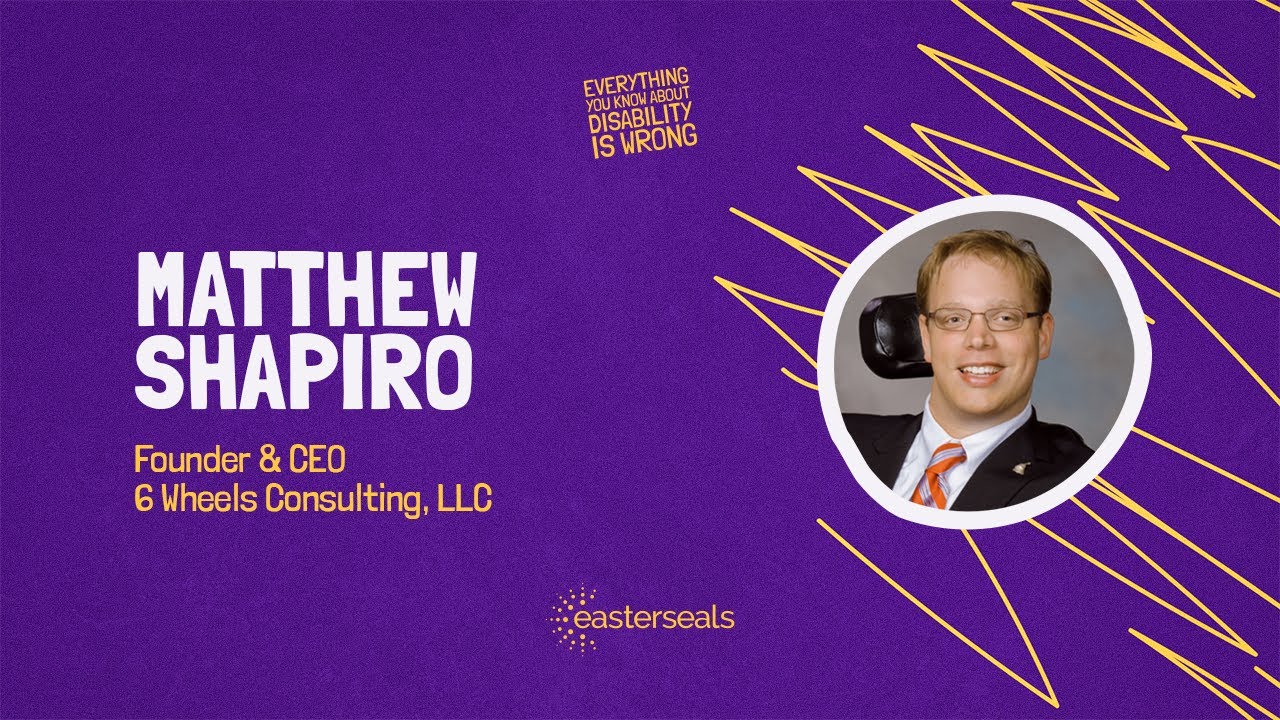
Matthew Shapiro, founder and CEO of Six Wheels Consulting, joins hosts Lily Newton and Erin Hawley for a candid conversation about language, work culture, and the everyday practice of access. Matthew unpacks how assumptions show up in daily life, why “disabled” is a valuable identifier, and what it means to balance personal energy with public advocacy.
The conversation moves from nuance in calling out ableism to concrete advice for workplaces. Matthew shares practical examples that help everyone, like standing desks and curb cuts, and invites leaders to start with simple changes that reduce friction. He challenges listeners to rethink design from the ground up and to see access as standard, not a special add-on.
Across the episode, Lily and Erin connect language to outcomes. They underline that asking for what you need benefits teams, and that many improvements cost more thought than money. The result is a grounded roadmap for anyone ready to begin, learn, and keep going.
Transcript
Lily Newton:
Hey listeners. Welcome to another episode of Everything You Know About Disability Is Wrong. Today on the show, we have Matthew Shapiro.
Erin Hawley:
Matthew is a disability rights advocate, consultant and public speaker. He has spent most of his life working to raise awareness and improve understanding of disability issues across sectors.
Lily Newton:
Matthew's career blends personal lived experience as a disabled person with formal training and disability related programs. He's also the founder and CEO of Six Wheels Consulting.
Erin Hawley:
Welcome to the show. So nice to have you, and happy Disability Employment Awareness Month.
Matthew Shapiro:
Yes, happy NDEAM, everybody, and thank you so much for having me on. Aaron and Lily, I'm super excited to have a wonderful and hopefully engaging and dope conversation with you guys.
Lily Newton:
I'm excited for a wonderful, hopeful, engaging and dope conversation too. That's like what we want from everything. There you go. Before we dive into this dope interview, I would like to begin with audio descriptions. So I'll start. This is Lily speaking. I am a mixed-race white passing person with short brown and blonde hair and green eyes. I'm wearing my usual Lakshmi pendant that I will mess with throughout the whole episode.
And if not, it'll be this blue and green fidget toy that I'm messing with. I'm also in my new office space. I talked about this a little bit in other episodes so I just like to acknowledge it. I no longer work from a desk. I accommodate my chronic pain by working on a bed. And I'm comfortable and I have a big Jonas Brothers poster behind me so things are good from Willy's camera's point of view. Erin, your turn.
Erin Hawley:
Hello, this is Erin speaking. I'm a white presenting woman with. I have red hair. I say this every time. I have red hair but my hair looks brown and this lighted. I have blue eyes and I'm wearing a white and pink striped shirt. I'll pass it to Matthew.
Matthew Shapiro:
Sure. Hi everybody, this is Matthew speaking. I am a white presenting male with black rimmed glasses. Uh, I'm wearing a gray collared shirt. It does have my Six Wheels logo on it, but you can't see that. Uh, I'm sitting in my wheelchair in my office in my home. Um, and, yeah, just again, stoked to be here.
Erin Hawley:
Awesome.
Lily Newton:
Matthew also has some gorgeous, like, plants and art behind him.
I'm just staring at your plants. They're really gorgeous. I'm like, I should get some plants in here. It looks really nice in the frame.
Matthew Shapiro:
I can. We can thank my mom for all that. So there we go.
Lily Newton:
Go Moms. We love moms on this show. Go Moms is actually something we have yelled on multiple episodes of this show. Love it.
Matthew Shapiro:
Love it.
Lily Newton:
All right, Erin, take us away. Let's dive in.
Erin Hawley:
All right, so the first question we always ask is the name of this podcast is Everything You Know about Disability is Wrong, and what do people get wrong about you?
Matthew Shapiro:
Oh, wow. That is a loaded question. So I think there's a lot of things, right, I get a lot of times, like, wow, you're so articulate and you're so smart, and, you know, you know, I'm. You seem so normal. I've gotten all three of those many, many times when I'm doing the work that I do. And, you know, I think people have this perception that if they see all of us as disabled people, right, they expect us to have speech challenges or not be super smart or, you know, be, like, sad all the time. And as the three of us know, like, yes, all of that can be true, and days can. Can, you know, bring that about.
But for the most part, right, we are just typical people that, you know, want to live lives, want to have relationships, want to do work, want to. Want to do crazy things as young adults, right? And, you know, I think if. If the rest of. I think the biggest problem isn't us, it's like society, right? And not to call out all of society, because it's not everyone, right? But it's this just negative perception that, like, we need to be fixed or we need 100 support. Not to say that, like, we don't need support, because we do.
But it's just this overall perception that, like, all we need is to be helped. And all we need is, like, and we're not smart and we're not articulate, and we're not all of those things that I mentioned before.
Lily Newton:
Yeah. I think assumption is, like, the most common through line we get with that answers to that question and what you said, like, yes to all of that and that, you know, sometimes we get we do live the like, stereotyped assumptions and sometimes we live completely different lives. And Easter Seals is running a campaign right now called Know the Facts. And it's just built on like, wow, the general public does not understand the breadth and scope of disability. Like, even when we think about that one in four Americans being disabled. Any assumption you have, like, I don't think that there's anyone out there who has these assumptions that actually believes that 25% of the population is this one identity, like, or this one type of person. You know, we're such a varied group because we're a huge group.
Matthew Shapiro:
Well, and it's interesting too that like, in 2025, almost 2026. Right. Like, those assumptions still exist. Right. And I think that that is something that bothers the ever living bejesus out of me. Right. Because it's like, all right, the ADA has been around since 1990. 91.
Right. And the fact that those assumptions still exist in 2025, 2026, is astonishing to me. Right. Like, I would not be surprised that so many people in this world know at least one person with a disability. Right. And so the fact that like, we're still having to, not to say that the no Effect campaign isn't needed, but like, the fact that we still need to do that also is, like, I don't want to say problematic, but it's frustrating.
Erin Hawley:
Yeah.
Lily Newton:
It's certainly telling of a problematic, like, societal view.
Matthew Shapiro:
Yeah.
Lily Newton:
And like, it's, it's, you know, when you work in the world of disability, it can feel like, oh, we've made such far strides. And every once in a while I'll be in a, like, setting where it just kind of like knocks the breath out of me where I'm like, oh, wow, like, these people have really outdated views of disability still.
Matthew Shapiro:
Right, Right. It's, I agree. I, I, I tend to get like, I, I, I feel conflicted in myself a lot of times because it's like, I know we've made progress and I know that we have a lot of progress to make. And I also know that, like, in order to make that change, like, I, and we have to be in the fight to make the change. But the other side of me is also like, but I'm also really tired and I'm also really like, I don't always want to be the one to have to do the education and to have to do all the things. And like, to me, that's like a really. And this happened to me, like, recently. Right.
That there's like, this really Big internal struggle of like, yes, I want to. I love my work that I do. I love being an advocate. I love having conversations like this. But the other side of me is like, I'm also really tired of having to be the person that's like, no, this isn't accessible, or, no, I'm not, you know, I am articulate, and you shouldn't be surprised that, like, I can speak, you know, clearly and, and like, have opinions on things. And so it's like this internal wrestling match that I, that I have. And it's, you know, a lot of times I end up, you know, you're still going to do the advocacy, but there's still that side of like, man, I am tired. And I just wish society would, would catch up at some point, if that makes sense.
Erin Hawley:
No, it totally makes sense and I completely understand being tired all the time and, you know, because, like, being an advocate takes work beyond just living as a disabled person and acts of living as a disabled person takes up a lot of energy in itself and existing in the world. So to think, you know, you are doing enough, I should say, simply by existing and living. But the energy to be an advocate is extra work, and not everyone can do it all the time, and that's totally fine. It's important to have a community that is working together, so when you're not doing good, one day somebody else can pick up the slack.
Matthew Shapiro:
Sure, sure. And I agree with that completely. But I would also, I guess I'm coming into this podcast with guns ablazing right away. But I like, I also would challenge our community to like, be more of a cohesive unit. Right. I, I even still, right. I've been doing a lot of this advocacy work since I was probably 17, right. I am now.
I'll be 35 in January, so like pretty much more than half my life I've been doing, you know, advocacy work of some kind of. And the challenge that you still run into is, is silos and segmentation of our community. And, you know, I think sort of the, you know, Aaron, I think you're entirely right, right. That there, there are people that, that can sort of lift up the slack. Right? But imagine if we were all rowing in the same direction, right? And we were all saying, like, the fact that, like, cutting Medicaid and Medicare is, like, on the table for, you know, is a, is a conversation that is being had. Imagine if we, the whole community was like, nah, bro, we're going to. If, like, that's like the third rail that you don't Touch. But.
But because in a lot of spaces, we're not a cohesive unit, and there is splintering that. That. That message doesn't. And that unity doesn't connect. Does that make sense?
Lily Newton:
Totally. And I think it goes into.
Erin Hawley:
You know, the idea of that disability is such a big and vast community, and there are still also a lot of people who are disabled themselves and don't realize it or don't use that terminology. And like, for me, like, before I found out I was autistic, I was in the world of mental health. And like, I, you know, it was like there was something mentally wrong from a very young age for me. I was in. Do you know, I have the life experience of a disabled child. Like, I'm constantly in medical places, all these things, but I didn't have that language. And then for me, like, finding the language of disability has been so freeing. But I still sometimes will find people in the mental health world who I used to know that, like, would not classify their depression as a disability.
Lily Newton:
Would not. And it's like, we. I get that this word can feel scary to use, but like, we need Uncle Joe, who's complaining about his back and knee pain, to understand that that's disability and that he should care about disability in general. Because that one in four number, you know, I would guess it's even bigger than that, actually, when we think about all disability. Like, you know, if you're wearing glasses, that's a disability accommodation, right?
Matthew Shapiro:
And when you throw, like, long haul Covid into that, right? Which is something that, like, we didn't have to deal with until five, six years ago. And, and you know, to your point, Lily, like, I would. I would also argue that, like, people that think the word disability is a bad word, right? Like, that plays into some of that too. Like, you know, people. I hate when people use language of like, I'm differently abled or I'm handicapable or, you know, it's like, own the word, right? Like, we are disabled people. Like, it is okay for me to sit here and say, you know, I am a disabled person. It is not a word. Like, it is a huge part of my identity as a person.
And so for the people that, to your point, like, don't want to acknowledge that they have a disability or don't know that they have a disability and, and therefore don't use the word disability, I think that, like, we need to be trying to reach those people differently, right? And. And, you know, each person can have their own experience. I am certainly not trying to say like, you have to believe what, you know, what Lily, Aaron or Matthew believe. Right. But like, to not even own, like, and to not even be comfortable to say that you are a disabled person. Like, that sets us back, I feel like. Right. And, and there is nothing wrong for the three of us to sit here and say we are disabled adults.
Right. And, and you know, that doesn't, that doesn't make us any less, that doesn't make us any better. Right. It is just, you know, it's the same thing as to say I am a person of color. Right. Or I am, you know, and so I don't know why there is hesitation to use that identifier.
Lily Newton:
Yeah, I, it and the same, it's, it's interesting because there's like both sides of ableism that go into why people won't use that word. Because there's even been like, oh, I'm not disabled. That's not, I don't identify with that. Or there's the like, well, I don't want to take up space. Disabled people really have it. Like, I don't want to do this. And I always say, like, it's not a pie. We're not going to run out of the disabled identity.
Like, it actually is empowering for the community the more people that use it. There's no I, like, I truly don't find in my work, which is, you know, I'm constantly talking to new disabled people, having these conversations. We never run into a, like, I wish that person wouldn't use disabled because they're not really disabled. Like, that's not a common viewpoint in our community, but I feel like it's a common viewpoint in the non disabled community of like, oh, I, they don't want us to use that word.
Matthew Shapiro:
Like, no one's, to your point, like, no one's commandeering the word disabled, right? To just use it and say like, I'm disabled. Like, like there's usually something behind that, that, that, you know, allows them to use that identifier.
Lily Newton:
Right. And this, the, the like whole faking it narrative is just so insidious and like, it's just delusional. Like, it's just not based in reality. And so whenever people say things to me like that, I'm like, you're just not based in reality right now. Like, that is not the case. There are not these amazing disability benefits that we get that like, would make people want to commandeer the phrase. I'm. I, I wish it was that.
I wish it was that case. But that's not the case.
Matthew Shapiro:
Well, and if it were. If it were easier for us to get, you know, the benefits that we do have allowed to us, but in many cases, it's a pain in the ass.
Lily Newton:
Yeah.
Erin Hawley:
Yeah. And there's also, like, this belief that you have to be suffering to have a disability. And if you're not suffering and you're not disabled, which is just really ableist.
Matthew Shapiro:
Yeah. I'm not going to lie too. I struggle with ableism because I. I understand the notion of ableism, but I also feel like people throw ableism back in your. Like, even the disability community. In the disability community, people throw ableism back in your face. Oh, that's ableist. Or.
Oh, and like, you could. They could make an argument that, like, literally everything is ableist. Right. And like, so I, I've very much, ever since I learned about the whole idea of ableism, I very much struggled with, like, yes, there's parts of it that I can. Can, like, get behind. But then like, when all we see on social media is like, da, da da is ableism. Da, da da. Like, it's like, okay, like, yes, but like, can we also agree that.
I don't know, I've always struggled with ableism too, because, like, I, I understand it, but I also feel like we. We get very, like, defensive with ableism. Right. And it's like, oh, my gosh, you're being ableist. Like, you're a terrible person. Like, yes and no. If that. Does that make sense?
Lily Newton:
It does. And I hear. I'm so glad you brought this up. This is like my. I'm gonna get on my soapbox for a second because I have a lot of. I have thoughts on this because I think it is. This is like what I dream of someday, like, getting a PhD about and getting to write about in that. Like, I think that we in, in general speak about ableism entirely wrong in that, like, when ableism gets brought up on social media, like, in that, like, well, this is being ableist because you're not thinking about the people who blah, blah, blah.
Sure. But ableism is not just, like, bad against disabled people. People think ableism translates like ableism means bad against disabled people. And I personally would love to rewrite this narrative and help us understand that ableism is a hierarchy of brain and body function. That is what ableism is. So ableism is the root of most other isms and ogenies out there. Right. Because when we think about, let's take misogyny, like, this idea of, like, women are too emotional.
Matthew Shapiro:
Right.
Lily Newton:
What does that boil down to? It boils down to like, women's brains work differently and therefore have less value. Same thing with, like, when we get into racial inequities, people like, we think about like, well, the. This race is xyz Whatever awful statement people make. Well, what they're saying is like, this race's brain and body work different. And so, and that's. So I try to think of it as like a hierarchy.
Matthew Shapiro:
Are you saying in that case, like, just so I'm trying to be clear and I. Because I think I agree with you. So what you're saying is like, with ableism, basically, like, the hierarchy is saying, like, disabled people's brains and bodies work differently than everyone else's is saying that.
Lily Newton:
If your brain and body works differently, you have less value. So like, I personally believe, like, I do not want to live in an ableist belief system, so I acknowledge that our brains and bodies may work different based on lived experience or literal disability. Right. I don't think that means that we have any less or more value. I don't think any human. And that's the part that I think it's like, like, messed up on social media is when people are like, well, this is ableist. I want to respond like, well, of course this whole world is like, we, we have a world based on how productive you are, means you're like an exceptional human. Right? So how do we reframe the conversation of like, what does it mean for everyone to have this stuff that they need to feel valued and who's to.
Matthew Shapiro:
Determine what production is? Right, like, yeah, like. Like, who's to say? Like, because I can, you know, only do X amount. Like, that is my level of production that I can provide to society. Right? Like, who's to say that, like, you have to, you have to do X number of things by X number of time. That is like what production is supposed to look like. No, Right, because like, you know, I work slower. I have to process differently. That also doesn't mean, like, I don't bring value to what we're doing.
Lily Newton:
Absolutely. And like, I'll tie it up with the like statement I made about the like, misogyny example. I'll, you know, I, as an autistic woman in general, I am a very emotional person. You say the right thing, I'm crying. It's a fact about me, but it doesn't make me less valuable. Actually. It. It is a completely different thing that I offer that could be very beneficial to a group of people who maybe struggle with emotional process.
Like, it's just like, I think that to be anti ableist is to acknowledge that there is, you know, all of us do work differently. All of us do process and experience the world differently, but none of us are better or worth more because of it.
Matthew Shapiro:
And, and as a male who suffers with anxiety, I am a hot mess, right? So it's not to say like, oh, just because, you know, you and Aaron are female. Like, no, right. Like, I go to therapy and I take medication for anxiety and like, if my anxiety is really bad, I'm a hot mess. And so, you know, luckily I've been able to get that under control. But. But yeah, I think that that, like, that blanket statement of, like, males can be emotional too. And like, that's, that's also okay for men to show emotion. I think that there is an element of like, oh, be a man.
Don't, like, suck it up and deal with it. And it's like, no, like, you can, you can cry and you can go to therapy and you can do all the things too, if it makes you a better person and it makes you feel better.
Lily Newton:
Yes. And, oh, I love that you said that. Because in this whole conversation, I think a thing like a red flag of that hierarchy coming up is basically in any conversation, if you think to yourself, suck it up, push through this. I always say challenge that with like, is it because if you don't, you will think of yourself as worth less?
Matthew Shapiro:
It's funny, right? Because I talk about that a lot with my work and it's something I struggle with because what I have figured out is I work my butt off because I feel like I'm trying to prove society wrong, right? I work as hard as I do because I am trying to sort of rise above what society thinks I should be doing, right? And so I, and this is something that I've had to work through in therapy, which is like, I also have to remember to take a break, right? And to, to not, like, overwork myself. I love what I do. My work is amazing. It is. I've gotten to do so many cool things. It's been a great year, work wise. But I also, like, it's, it's, it's. If I don't rise above, then we're going to get back to that societal conversation you're having earlier, that society doesn't view us as having value.
And so it's this weird, like, wrestling match between, like, wanting to show value but then also finding the balance of, like, being okay if you don't reach the benchmark. And also, like, making sure that you're taking time for yourself, if that makes sense. This podcast is brought to you by Easter Seals. Easter Seals empowers people to live independent, full lives. And we've been doing it for over 100 years. We're in communities nationwide providing support at every age and stage of life. Whether you need employment services, mental health support, or want to find a welcoming community, we've got you covered. Visit easterseals.com to learn more.
Erin Hawley:
Yeah, that makes complete sense and something I really relate to because I think I've talked about this before on other episodes, but there's this desire in me and obviously in you, that we don't want to fit into the stereotype of disability. So we push ourselves to do, like, everything, all the time at 100%. And then you get to the point in your life where it's like, at least I have where you say, I'm done trying to please other people and to not fit in that stereotype. Because it's also ableist of me to think that, like, you know what I'm saying?
Matthew Shapiro:
I do. To be honest with you, I don't know if I am there yet. Personally, I'm very much a people pleaser. And so it's like, it's doubly, like, you know, it's doubly. I have the individual motivation, but that I also am trying to please people. And so, you know, again, therapy's great and I highly recommend everyone doing therapy, right? Because, like, it's becoming very, it's become very clear to me in the work that I'm doing in therapy that, like, I have to, to change the mindset. But like, that, like, in all the therapy I'm doing, I'm doing so much therapy right now, but, like, I am rewriting my brain and how I think and it's like, so, so refreshing in that way.
Erin Hawley:
Yeah. And it's like, believe me, you'll get to that point, but you're just like, no, but like, for example, I have a problem with, like, trying to do all the things all the time. And like, maybe two years ago I was just like, I'm going to get myself off of social media, delete my accounts. And that has made all the difference because you're not comparing yourself to other people as often. And it just puts me in a better headspace and it protects my ability to just chill.
Matthew Shapiro:
Sure. No, and kudos to you for, like, recognizing that, like, that's a huge growth point.
Erin Hawley:
I am still on, like, Instagram. I can't let Go of that one.
Matthew Shapiro:
Sure. But yeah, we got to get all the great selfies, right?
Erin Hawley:
Yeah, totally.
Lily Newton:
Yeah. Aaron, you're not a people pleaser. It's like the greatest gift in my life to have you as like an older woman. I look to and I'm like, okay, cool, I can get there. I don't have to, I don't have to live my life for the sake of like proving other people. Like, I, I think for most of my life my like biggest fuel has been like, spite. And like, if I get told, like, I love being underestimated because I'm like, oh, you think?
Matthew Shapiro:
Watch.
Lily Newton:
It's my favorite thing. And now I'm kind of getting to a point where it's like, well, maybe I don't have to love that. Like, maybe I can just be like, actually I don't want to be underestimated, but it's not my job to prove to you that like I, you underestimated me doesn't actually mean I have to do anything.
Matthew Shapiro:
Like, yeah, I struggle, I struggle with that. Right. Because like my mindset is like. And again, maybe this is like my fatal flaw, but like my mindset is like, if I don't do it, who's going to? Right?
Lily Newton:
Yeah.
Matthew Shapiro:
You know, and, and so, and I know that there are a ton of amazing advocates and a ton of amazing people in our community that, that can indeed pick up the slack for me and for us. Right. But like, I'm also a very self motivated person. Like, that's just, that's what how I'm wired. And again, maybe that mindset is, is like playing into my challenge. But like, it's also again, hard to break that, that, you know, that's, that's how I've been, been like built for 30, you know, almost 35 years. And it's like, oh, that is a well ingrained, like thought process in my brain. But again, that's what therapy's for.
Erin Hawley:
Yeah. I mean, yeah, you seem like a very driven person, which is fine, which is great. But yeah, I totally get that.
Matthew Shapiro:
Yeah. Yeah.
Lily Newton:
Well, this is like a little bit of a shift in gears to a different topic, but I think it actually does align well because hopefully it can get some more people to understand like why we need more people to be doing this advocacy work. So Matthew doesn't feel like the world is on Jose's shoulders, which, like one of the. I mentioned that Easter Seals is running a know the facts campaign right now and it's built on these truths. And one of the truths is that disability does not divide us, it actually connects us. And one of the, like, the messaging around that topic is all about how when you improve accessibility, you know, it's National Disability Employment Awareness Month. So let's say in the workplace, but really in any aspect of life, when you improve accessibility, it actually benefits every single person, not just the disabled person that this access point was adjusted for. So I was wondering if there was a moment from your own work where you have seen that way that improving accessibility helps everyone.
Matthew Shapiro:
I mean, every day, right? Like, I talk a lot about disability in the workplace, right? And so thinking about how do we develop a workplace that works for everyone, right? That you have standing desks everywhere, so that, like, you know, and I tell people in my home office I have a standing desk, and they were like, well, what, Matthew, why do you have a standing desk? You don't stand. And it's like, yes, but it automatically allows for that desk to become accessible no matter. No matter what, you know, because, like, right now I have my desk raised up a little bit so you guys aren't staring up my nose. But like, it. It is if we had standing desks for every piece of equipment in an office space, I could use every one of those desks without having to say, hey, can you put something under the legs to make it taller so that I can get my wheelchair under? You know, and it's, it's thinking about people who are not disabled love curb cuts, right? We talk about, we talk about that all the time. That like a curb cut can be used for somebody who has luggage, for somebody who has a child, for. For, you know, other things. And there's this notion that, like, curb cuts are solely for disabled folks.
And. No, that's not the case. And there's one example that I always love to bring up. And I don't know if you all are. Are familiar with this, but Da Vinci, back in his day, you can look this up, and I highly recommend that you look this up. He built something called the perfect City. And it was a city entirely made with ramps. No stairs, no anything, right? And it was on like a water aqua, you know, like boats could.
Could use it. And. But there were no stairs anywhere. Now imagine if we did that today, right? We disabled people can't use stairs, but everyone can use a ramp. And so why do we continue to build things with stairs, right? It is astonishing to me that we haven't been able to rethink, redefine, for example, how we build things, right? If we built without stairs and built everything with Ramps, everyone could access it without question. But there is this norm that says we have to build with stairs. Who made the rule that said we had to build with stairs? Who is the all knowing person that says, oops, that building's not built with stairs. That's a bad building.
Lily Newton:
Right?
Matthew Shapiro:
No, Right. And you know, who's to say, you know, we, we have this and I've, I've heard about this and this isn't always true, but like there's the whole like grandfathered in rule here in the United States. That's not really a rule, by the way. That's really kind of like a, a thing that's been shared. And I bring this example up too all the time. I was in Amsterdam with my family. We, you know, I've been to 13 countries and, and we were in Amsterdam for one of them and we were out and about and I had to use the bathroom. And so we were looking for an accessible restroom.
And so we go into this really old church and we're like, hey, do you guys have an ada, you know, a disability accessible bathroom? And they're like, yeah. So we go in and you know, it's this beautiful bathroom, large, has grab bars, you know, everything you would think you would need in a fully accessible single stall bathroom. Right. So. So a same sex attendant can go in there with you, an opposite sex attendant, without questions. And so out of curiosity, I asked the person at the front desk of the church, hey, like, when was this built? And they go the 1300s. And I was like, yo, if, if Ray can put a fully accessible, amazing looking bathroom into a church that was built in the 1300s and yet we in the States can't do that because oh my God, it's grandfathered like baloney, right? Like baloney, baloney.
Lily Newton:
Yeah. This gets brought up a lot with like Broadway stages. Well, like, you know, they're historic and there's so much history behind them, so we can't modify them yet. Somehow we've got actresses flying. Like if we can make these modifications for other things, like, it's just. Yeah, it can be done. It can be.
Erin Hawley:
And you know, I was watching a YouTube video. I'm really into Greek mythology.
Lily Newton:
Nice.
Erin Hawley:
And I was looking at a video of some guy, he went to the Parthenon and I was like, oh, I look at it though, it's probably not accessible. They have an elevator and that's like 2,000, over 2,000 years old, right?
Lily Newton:
Yeah, if they can do that.
Erin Hawley:
What's happening?
Matthew Shapiro:
I got stuck in the Sistine Chapel. Right. So like they have like one of the, one of like the kind of the chairlifts in the Sistine Chapel kind of thing, right? Where you roll your chair on and everything. And like they didn't know how to use it. And so we were joking as a family. We were like, well, guess I'm sleeping in the Sistine Chapel, Ton. Like, well, like, like I don't understand why there, why there is this notion here in the States that like, can't do that. I mean, I, part of me does understand it, right? Because it comes down to like money, right? But I think that's a, pardon my French, like a BS excuse.
And like I, when I went overseas, it was like, man, I wish I could like move over here. And like I, I feel like I would. You know, there's, there's, there's single stall restrooms everywhere. There is family restrooms that can fit like 10 wheelchairs in them without question. Right? There's. I had a, we did a, a gondola tour, right? And there was a fully wheelchair accessible gondola that they like, I could get in in my power chair. And it was, it just, I think it, it frustrates me that we are un able or unwilling to think outside of the box here in the States to do stuff like that.
Erin Hawley:
Yeah, there's so many people, like see something and they say this can't be inaccessible and they're not even going to try.
Lily Newton:
Right?
Erin Hawley:
And that's really frustrating because there's a lot of different options and like you said, thinking outside the box, right?
Matthew Shapiro:
And that's it. I mean, honestly, like, that's a huge part of the work that we do with six wheels is to say, like, look, it doesn't cost you, it doesn't cost you a billion dollars to make something accessible, right? It is things as simple as rearranging your office space to make it a more universally designed space. Thinking about, instead of like immobile desks, get standing desks. Like, granted, I know that the cost on the front end is higher, but like the investment will pay for itself over time when more people can access, you know, the things that they need. You know, if you have a long, if you have a long conference table, Aaron, I don't know how you feel about this, but I know like a lot of times when I have to sit at a long conference table, obviously I'm all the way at the end, right. And everyone else is typically in the middle of the table. And there's like a psychological disadvantage where you feel disconnected from everyone. Well, like, one solution would be, okay, put that, put the, put the conference table at an angle, right? So that wheelchair users can access the side of the table, they can feel included with everyone else and you just go about your business.
That doesn't cost you any money. That only cost you effort to like think that way. Right. And to, to then rearrange your space in that way that costs you, that cost you time and like manpower to do that. Right. But I guarantee you if you did that, you're making your spaces more accessible. That literally cost you no money to do. Now if you have resources, monetary resources, and can put the investment in to do those things, certainly want you to do that.
But if you don't, there are other things you can do. You can buy a hundred dollar portable ramp to allow someone to get into your, into your store, right. It, it's not, it's not this process that like again, you have to spend a gazillion dollars to make it work.
Lily Newton:
Yeah. And I think that's such an important conversation to be having during National Disability Employment Awareness Month because that is like the end all answer, right. Is people will be like, well, that costs money, so we're not going to do that. But what you're describing is more of a culture change than actually like physical costs that you're going to have to have. It's really a culture change of letting go of this. Well, this is the way we've done things and looking to your team and asking, what do you need to be successful? And that's for disabled and non disabled people. When we start to acknowledge, like, I work best in this environment and actually having those conversations, that's where we get like incredible innovations. And it really is a culture shift to having these conversations.
And I acknowledge that in the United States, it's not our national culture to openly talk about your needs. Needs are kind of seen as like something you should be quiet about, but it's actually very important. And so I wonder for you, as someone who has been in this advocacy space for so long, do you have advice for people who are in organizations and want to start changing the culture and have these conversations?
Matthew Shapiro:
Yeah. So first start, right. I know it's as simple like that seems really simple, but I think that there is like this like fear of oh my God, it's so much that we have to do. And so you end up not doing anything by paralysis because you're like, oh my gosh, how do we do xyz? You start, right? You, you take time as an organization to rearrange your office to the most like, inclusive way that you can you take time to evaluate. Like, okay, can we invest in different types of furniture? Can we, can we go to our disability erg employment resource group in our organization and say, okay guys, like how can you support us? Like, what can we do to support you to make your experience working here better? And you can develop a plan, right? You can say, all right, we're going to, as an organization, we're going to take a year and we're going to develop a fully. We're going to develop a disability inclusion plan. We're going to talk about how do we develop a strong disability corporate culture, right? Like how do we recruit people with disabilities to come into the workspace? How do we, how do we represent disability? Right? When, if we. Is it, is it on our marketing materials? And when you are representing those people, are they truth authentic and real disabled people? Not, you know, clip art that is sound or staged imagery.
Right? It's real, authentic people. And when you develop that plan that I mentioned, it doesn't just sit on a shelf. There are actionable steps that can be taken to improve the process. And it's a plan that is regularly reevaluated. Like, what are we doing right? What are we doing wrong? What can we revisit? What can we do better? How can we innovate all of those things that you sort of mentioned, Lily?
Lily Newton:
Yeah, and it's, you know, proven time and time again. I don't have the specific like facts or sources on this, but I, you can fact check me for sure that creating an accessible work environment is good for your business. Like it is just good business. We see massive returns on investments in accessibility and hiring disabled people is proven to be good for organizational company culture in general. And you know, I, if there's anyone, if you manage people, whether it's one person who is non disabled or a group of people that may have disability, if you're not taking disability into account, I do think you are missing the mark as a manager because these conversations do need to start between every small team that exists of just saying, how do you work with best? And these conversations of do you want to be called on in a meeting or would you prefer to know in advance if you're speaking? Do you like an agenda beforehand? Like these kind of conversations. They, you know, this, this idea of like, how do I start my disability plan? Can seem quite overwhelming. But you know, I challenge anyone listening this October whether you're disabled or not, to just start a conversation with your Colleagues that starts with I work better when I have blank.
Matthew Shapiro:
Or how can I help you? Yeah, how can I help you be the best version of you while you are working in our space.
Lily Newton:
Absolutely.
Matthew Shapiro:
It is, it is not as. It is not as daunting as people want to make it out to be.
Lily Newton:
Exactly. I think that that is a really important. I think a lot of things about disability and that we've talked about this episode, it like, it just doesn't have to be that daunting. It feels daunting because disability is still so unspoken about. But it is a normal fact of human life. It is much more normal to experience disability than it is to not.
Matthew Shapiro:
And it's more likely now that it's going to happen.
Lily Newton:
Yes. And honestly, if you live long enough, if you're lucky enough to, you will experience disability because that's how our human bodies work. And it's. I. It's scary to talk about, but for some people, but I think that, you know, these awareness months might seem like a little. Why do we still need this? But it's helpful to have, you know, something to kind of ground this conversation in. If the ideas that Matthew and us are sharing are feeling like, I can't start that conversation. I know for me as an autistic person, it helps me to have little scripts.
And in your next team meeting, if you have one in October, it could be helpful to say, it's National Disability Employment Awareness Month. Is there something we could be doing for our disabled colleagues? Because I guarantee, if you are in a room with more than four people, whether you know it or not, someone in that room is experiencing some form of disability.
Matthew Shapiro:
And, and, and cheap plug here. But if you really don't know what to do, call me. Right. Hire me. Right?
Erin Hawley:
Yeah.
Matthew Shapiro:
Because that is what we do at Six Wheels. That is one of many things that we do at Six Wheels. And so, like, if you are unsure where to start, have someone like me or Aaron or Lily at the table to help you in that process.
Lily Newton:
Yeah. And this, this episode is going to come out mid October and you actually have an event coming up, so do more plugs.
Matthew Shapiro:
Yeah. So just to kind of give some feedback on, on where people can find me, we're all over social media. If you look up Six Wheels Consulting, it's the number six. And then our website is sixwheelsconsulting.com but yes, we do have a Disability Employment Awareness Month event that we're doing on October 22nd. It is a virtual event, 1 to 4pm Eastern. We are selling Tickets. We're trying to make a little bit of money for six wheels. So tickets are 20 bucks, very, very affordable.
We have a lot of people based in Virginia because that's where I'm, I'm based. But we have Deborah Rue, who is a very well known kind of global leader in disability in the workplace stuff. She's our keynote. I'll be doing some stuff. We've sold several tickets already, but we'd love to have more people come join the conversation. And realistically, I just wanted to give people a space to kind of come invent. Right. Because there's a lot of uncertainty right now with what's going on around employment issues federally and all of those things.
And so wanted to give people a space to how can we support each other? How can we, you know, unify and do all that? So if you're listening to this and want to, want to join the event, you know, you can find out about it on our social media pages. We've been posting about it like crazy and we'd love to have you join us.
Lily Newton:
And there are links to all of six Wheels social media accounts in this episode description. So you can find it super easily. And I, yeah, I think that that is really important because, you know, everything we said at the start of this conversation about how I shouldn't feel like it's all on you is absolutely true. But at the same time, nobody's got us like we do in this community.
Matthew Shapiro:
Sure.
Lily Newton:
And having space to support one another is super duper important. Having months where we acknowledge what it's like to be a disabled employee is super duper important. And I hope that this episode potentially has motivated one person to either disclose their disability in their workplace or ask for an accommodation that they need. Because every time we as individuals accommodate ourselves, we make it easier for our colleagues, our community, our family and friends to do the same. So, you know, the most basic thing you can do to move the movement forward is help yourself accommodate yourself.
Matthew Shapiro:
Sure, yeah. No, I couldn't agree more. And I say, you know, we sort of say we're all tired, but that's not going to stop me. Right. Like I'll sleep when I'm dead sort of thing. Right. So, but, but yeah, no, we just got to keep working. And I appreciate the work that Easter Seals does and I appreciate this platform to be able to come on here and talk about things that are really important to me.
So, yeah, no, just really appreciate the time. And if anyone has any questions or wants to continue the conversation, please find me on social media, please go to our website and would love to work with anyone who's listening.
Lily Newton:
Well, thank you so much for coming on our show. This was such a wonderful conversation and such an important one at such an important time. It was really wonderful to have you on. Thank you so much.
Matthew Shapiro:
Thanks for having me. It was great. Thank you so much, Aaron.
Erin Hawley:
I love you.
Lily Newton:
I love co hosting this show with you.
Erin Hawley:
So.
Lily Newton:
And listeners, thank you for tuning in. If you're watching the video, thank you for watching. And we'll see you next time on another episode of everything you know about disability is wrong.
Erin Hawley:
If you liked what you heard, go ahead and subscribe and leave us a review wherever you get.
Lily Newton:
Thank you to our listeners and as always, thank you to Easterseals for giving us the space and resources to share such authentic conversations from within the disability community to our listeners.
Erin Hawley:
And I'll see you next time for another episode of Everything Yo Know about Disability is Wrong.
Lily Newton:
Everything you know about disability is wrong.
Legal
Sign up for Emails from Easterseals
Get exciting news, helpful resources, & inspiring stories delivered to your inbox each month.