


Episode 43: Just Between Us: Disability Language, Pride & Power
Erin & Lily unpack disability language—why words matter, why euphemisms fail, and how shared vocabulary strengthens advocacy.
Listen Now
Published on October 9, 2025.
Watch Video
Episode 43 Show Notes
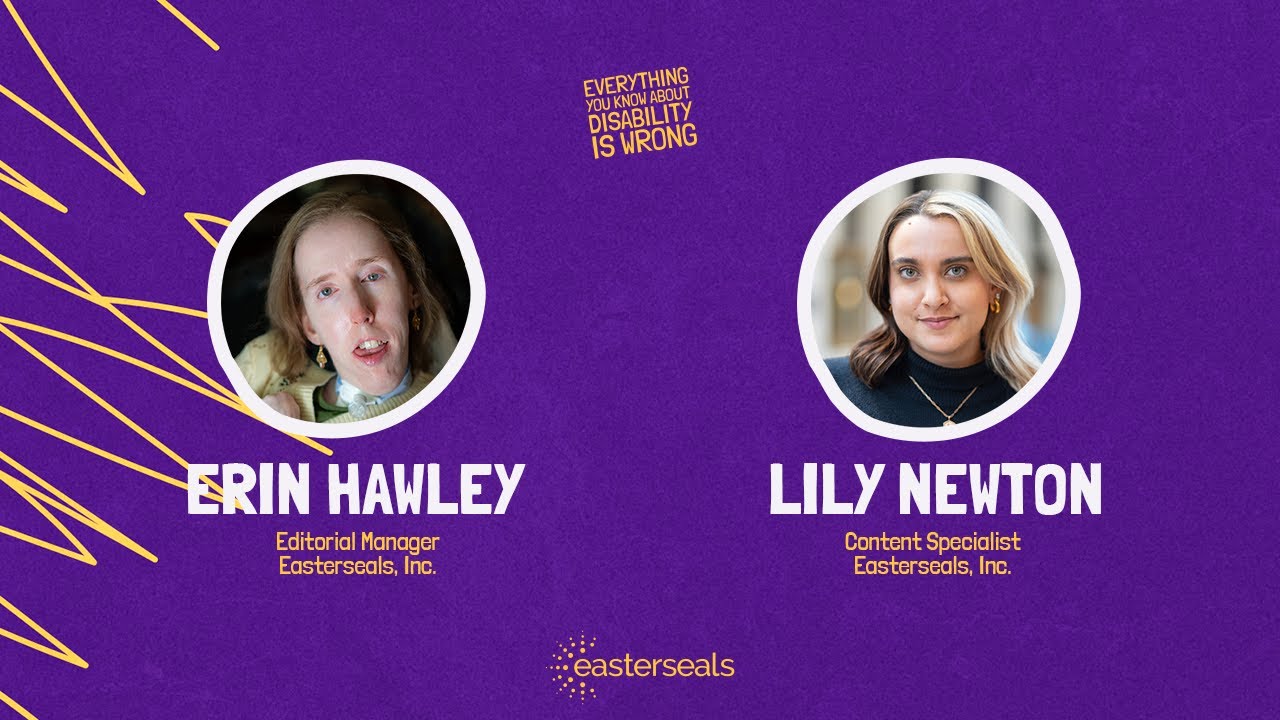
Your co-hosts Erin & Lily bring another “Just Between Us” conversation to Everything You Know About Disability Is Wrong. This time, they’re diving into disability language: why euphemisms like “differently abled” miss the mark, how identity-first vs. person-first language is used, and why words matter.
They share stories from their own journeys—how language has shaped their identities, how it can affirm or erase, and why offering grace and education is often the most powerful tool. With humor, honesty, and a few reframes, Erin and Lily show how shared vocabulary can build connection and strengthen advocacy.
Transcript
Lily Newton:
Hey, listeners, welcome back to another episode of 'Everything You Know About Disability Is Wrong.' Today it's just between us. If you haven't seen a Just Between Us episode, this is just where Aaron and I chat about a topic, because we're besties, and it's nice to just chat through things with nuance. So today, Erin, we're talking language. We're working on a language guide for Easterseals right now. And it's really helpful, if you're a brand that has to do with disability at all, to have, like, a very specific guide for how to be respectful and, like, use proper language when it comes to talking about disability, because a lot of larger brands don't necessarily have that language yet, so. So if you are a disability brand of any type, I recommend having, like, a how to collaborate respectfully with our community guide to share with any external groups you work with. Because some groups try really hard.
But we've. I know Erin's seen some pretty egregious, like, writing done by people who were trying to write about disability, but clearly, you know, led with a. When speaking for the disability to the differently abled community. And we immediately were like, no.
Erin Hawley:
And the reason why definitely able is terrible is it's like a euphemism. I just said disability.
Lily Newton:
Just disability. Yeah. I think that's the thing people don't understand. Like, it's so obvious when someone is speaking and they're like, oh, and that person, they're specially gifted. Like, there's like, the pause and the like, I don't want to say disability. And it's so obvious when someone has that reaction that they're, like, not comfortable with disability. I gave a talk the other day to a group of people who wanted to be more, like, disability inclusive. And I, like, made them, on the count of three, say the word disability.
I was like, on the count of three, we're going to say disability. Then I was like, okay, now on the count of three, we're going to say disabled, because that's the second hurdle. Some people are willing to say disability, but they still feel like the word disabled is like bad. And I think a lot of that comes from the conversations that were kind of had about person first language versus identity first language. Aaron, for any listeners who have no idea what that means, you want to give them some background?
Erin Hawley:
Sure. So disabled people is identity first. That means you're putting disability first, very clearly defined. And that's to say, you know, disability is nothing to be ashamed of and there's no reason to not say it. Whereas people with disabilities is people first. And the intention of that is so that you're separating the person from their disability. Which I understand why that was the thing for a long time because a lot of people don't, they see someone like me and they're like, that's all that you are. And I am the person, believe it or not.
But also by doing that, by using person first, you're saying I should be separated from my disability. My disability is nothing to be ashamed of. So why are you doing that? And that's the difference.
Lily Newton:
Yeah. And one thing we say at Easter seals a lot is that, you know, the most important thing is to empower people by using the language that they feel fits them. So if someone really prefers a certain type of identity language, you should follow suit and use the language that makes them feel comfortable. But it's certainly a case where different people have different opinions. Like, I feel very strongly and I think it's a pretty common thought process in the autistic community, but obviously we are not a monolith, so there's lots of different thoughts. But I, I feel very strongly to be identified as an autistic person rather than a person with autism, because with autism feels like it's like something I carry in my purse, like offer people. In reality, it's entirely who I am. And I always think about when like disabled people on social media get comments where people are like, you make your whole personality disability and it's like, well, you know, it's just the way my brain and body function.
Yeah, it isn't, it's me. And so that's kind of my thought. And I really prefer identity first because I do feel so strongly tied to my disabled identity. And also for me, joining the disabled community, like understanding disability and the understand my own identity as a disabled person was such like a pivotal moment in my self acceptance and my like pursuit of joy that I feel very strongly about that because I didn't have that language for so long and once I had it, it was like, oh, I'm disabled. It, it's such, like a answer to so many questions I've always had. But I was thinking, and the point you made, Aaron, about like, a lot of people see someone who has apparent disabilities and disability is all that they see. So I've been, I've been thinking about how that could definitely be something in the community of like, people who have non apparent versus apparent disabilities might have different opinions because of the way that either disability is seen as is assumed as their entire identity, or disability is assumed as none of their identity. Like, a lot of people look at me and assume that I'm not disabled.
So it makes sense that I'm so like, no, I am disabled. It's who I am. It's my identity. But did you ever have a time in life where you were like, disability is separate from me, or have you always felt pretty grounded in it?
Erin Hawley:
There was a long time that I had no other disabled people in my life, so I didn't connect to disability at all. As far as, like, identity. Obviously I'm disabled and I have been my whole life, so it's been part of my life. But I, for a long time I did prefer person first because of the reason that I said earlier, like, it was, it was part of me and not all of me. And I have changed my mind. I still don't care if someone uses person first for me, but I prefer identity first because I feel the most comfortable if somebody understands and accepts my disability rather than wanting it to be separate from my personhood. Because accounting is a huge part of my life. And I can't deny that.
And it feels silly to even try to, you know, it does inform every part of who I am. And that's fine. There's nothing wrong with that. And also, like, I've had people in my life who I interact with who use identity first but still treat me like shit. So it's like having regardless of whichever term they use, like matters more to me how they treat me.
Lily Newton:
I'm glad you say that because I was just thinking that it, you know, the conversation of person first versus identity first feels kind of like, charged because there is that, like, see me as a person or see my full identity. But in reality, like, I kind of wish that that language didn't have that much power because it's like, why do you need me to separate myself from my disability? For you to see me as a person.
Erin Hawley:
Right.
Lily Newton:
Like, disabled people are people. So.
Erin Hawley:
Yeah, the white people is in there still. Yeah, it is. I don't like the disabled, because there's no person in it.
Lily Newton:
I agree. The disabled feels very, like, monolithic. And, you know, historically, I think when you start any, like, declarative about a group of people with the blank, like, and blank being an identity. Not great. Usually not great.
Erin Hawley:
No.
Lily Newton:
But, yeah, I think. I think it's. You know, when we're writing, especially for Easter Seals, we tend to lead with identity first and then go back and forth. So if you're a writer or a marketer or someone working with disabled people, that's usually a good rule of thumb is to kind of go back and forth, because it almost does what Aaron and I were saying. It kind of, like, takes the power out. It's like, these are the same thing. Like, a person. Whether you're saying person with a disability or a disabled person, like, either way, we're talking about a disabled person who has a disability.
Erin Hawley:
Exactly. And, yeah, it's like, I don't know why this is gonna make me sound, like, so old. I don't understand. Like, I've noticed in advocacy spaces that language is, like, the number one topic. And I think there's obviously a valid reason to discuss it, but, like, can we move beyond that?
Commercial :
This podcast is brought to you by Easterseals. Easterseals empowers people to live independent, full lives, and we've been doing it for over 100 years. We're in communities nationwide providing support at every age and stage of life. Whether you need employment services, mental health support, or want to find a welcoming community, we've got you covered. Visit easterseals.com to learn more.
Lily Newton:
I completely agree. And I think that, you know, this episode is about language. Like, we. Obviously, Aaron and I are not saying that language doesn't matter. We are. Aaron. Aaron's got a master's in English and writing.
Like, we. We care about English, but there, there. I mean, we care about language there, but there is a layer to it. It's like we're talking so much about rhetoric when, like, people's health benefits are being taken away and disabled people still can't get married without losing their benefits. And, you know, most buildings, most public buildings still are inaccessible. Like, I'm really happy we're having these language conversations, and they matter so much, but they shouldn't derail progress, I think.
Erin Hawley:
Yes. Like, I'm just seeing in some spaces where someone will use identity first. I mean, will use person first, and other people just, like, jump on them. And I think there has to be some grace, because most people, as we understand from research Most people don't understand disability at all, even if they have disability in their life, whether they're disabled themselves or their family or friends. But, like, I feel like sometimes the. This is. I sound so negative today. Sometimes the disability community is very insular and doesn't give people grace.
Where I think it's like, some advocates will be very pushy, and I feel like that's not going to get us anywhere. I'm very much into educating and meeting people where they are.
Lily Newton:
Yeah. And you know what? Like, we need all of it. Like, we need the people who are not willing to be lenient to show that, like, yeah, it's not disabled people's jobs to, like, bend over backwards to help explain. And we need people who are willing to. Who are willing to do this explaining. Because, like, Aaron said, we've done a lot of research through Easter Seals, and she's absolutely right. Not a lot of people still don't know very much about disability. And that can be kind of jarring when you're in the disability bubble, because it feels like, well, everyone knows this.
Even, you know, Aaron and I said we were going to do this episode, and there's a part of us that's like, do we still need to talk about this? But, yeah, we do, because there are still a lot of people who don't understand. And, like, this shared language of, like, oh, do you prefer person first or identity first to describe yourself? Like, that is such a. Like that. Having that script is such a bridge of connection and respect. So, like, that's what I think is the more important takeaway of, you know, identity first or person first is less of, like, one is right and more of. We have a shared vocabulary now where we can extend the amount of respect that means I want to identify you in a way that feels right for you.
Erin Hawley:
Right. It's about, like, agency, because, you know, people have different opinions and different thoughts, and that's fine. The other day, I was, like, yelling at myself internally because I used the word handicapped, like, out loud. And I was like, whoa, whoa. And I was like, erin, you're old. And it's fine. Because that used to be the term back in the day. And, like, language is very important.
But also, if you're listening to this and you're like, oh, my God, I've used handicapped, or I've use a certain word. It's not fine, but it is like, it is fine. You know what I mean?
Lily Newton:
I know exactly what you mean.
Erin Hawley:
Yes.
Lily Newton:
Yes. And I say, I like that you say learning there, because like, that's the. That's the shift in mindset everyone needs to understand, is that when someone, especially from within a community, shares like, hey, we don't use that language anymore, even if it's yourself. As Erin's experience was like, I wish that everyone, including ourselves, would view that as, like, a gift of knowledge rather than a scolding.
Erin Hawley:
Oh, I love that. A gift of knowledge.
Lily Newton:
Because there's something there in, like, yeah, I want to equip you with the language because I know you're trying to be respectful, but you just haven't been taught it. And I think, you know, Erin and I have a lot of grace to give. And if you don't have that much grace, that's fine. Like, don't overextend yourself to make other people feel comfortable. But if you have the grace to give and can help the world become more accepting and use language that, like, helps us as disabled people feel confident, then I think you should do that for sure. This is like, go ahead.
Erin Hawley:
That's what you're talking about, how people who don't know what word to use kind of, like, fumble with their words. And that used to really annoy me. Then I'm like, wait, are they just trying to think of, like, what is the right word to use? Rather than, like, I am uncomfortable with disability.
Lily Newton:
That's such a nice reframe. You said you were the negative one. Look at you coming on with that positive reframe. That's so true. And there is a level of like, if we're trying, we should accept that, especially where we are in the world right now, where we are in America right now with what's going on with disability. I think it is really crucial that we accept those moments of connection. And, you know, we're about to launch a new campaign, actually, about how disability is nonpartisan.
Erin Hawley:
Disability.
Lily Newton:
Disability does not divide us. It actually connects us. And most of us relate to disability. And so if you can find those moments where you're taking the connection, I think that's really important because we gotta work together in this world.
Erin Hawley:
We sure do. Especially now.
Lily Newton:
Can you hear my dog snoring?
Erin Hawley:
No.
Lily Newton:
Oh, good, it's loud. I was gonna say this, too. It's kind of unrelated to the language idea, but not necessarily. I feel like you and I, Aaron, as, like, white passing, non white people, as, you know, white, non white people, which some of y' all listening might not have the nuance to understand. But listen, we exist. And, like, there is a level of, like, I am so willing to Use my privilege to explain things that certain people in my like, racial community would not want. Like, I wouldn't want them to have to explain because they're already facing the oppression of it. And I feel that way sometimes as like a someone with non apparent disabilities of like there are, there is privilege to that.
Even though sometimes it's frustrating to not like have my pain be seen, but there is privilege to it. And like, there's also privilege to like the educational opportunities Aaron and I have had and the fact that we have this job that accommodates our disabilities so well. And like that's a huge privilege. So for people like us, it's, it's worth it to extend that grace and try to get more people to understand because the ugly laws were not that long ago. Meaning that like these stats, like 1 in 4 people have a disability, like 70 million Americans have a disability. They feel so obvious to those of us in this community, but they still are so unknown to the general population. I think there are still a lot of people who in their hearts feel like disability is separate. Disability is something that doesn't relate to me, which is not the case.
Erin Hawley:
Yes, exactly. And like everyone knows somebody who's disabled, even if that person might not identify as disabled, which is a whole other topic.
Lily Newton:
Yeah, that's a, even if you don't know you are interacting with disability or accessible technology or you know, laws that came about because of disability activism, like every single day.
Erin Hawley:
Every.
Lily Newton:
And that's why we want you to, you know, know more about disability and felt like a good place to start with person first. It's going to be first and pur. In my head forever now. The title of the episode, first and pur Language. But the, the like.
Erin Hawley:
Oh, I lost what I was going to say.
Lily Newton:
Oh. It felt like a good place to start with this language conversation because shared vocabulary does allow for shared conversation. Shared act, shared advocacy, shared understanding.
Erin Hawley:
Yeah.
Lily Newton:
So if you got another topic, go ahead.
Erin Hawley:
If more people understand that we're all connected by disability, that will definitely help people who might feel uncomfortable with terminology and other aspects of disability.
Lily Newton:
Absolutely. Well, that's been it. Just between us, if you have another topic that you'd love to just hear to disabled people from different generations, different disabilities, discuss openly. And I say that because, you know, it's just two of us. There's a lot of other opinions in our community, but it can be nice to just listen to an unfiltered conversation about it. So that's what we've given you today. If there are other topics related to disability that you'd love to know more about. Drop a comment.
We'll we'll do more Just Between Us throughout the year.
Erin Hawley:
Yes.
Lily Newton:
And we'll see you next time on another episode of Everything you know about Disability is Wrong.
Erin Hawley:
If you liked what you heard, go ahead and subscribe and leave us a review wherever you get your podcasts.
Lily Newton:
Thank you to our listeners. And as always, thank you to easterseals for giving us the space and resources to share such authentic conversations from within the disability community to our listeners.
Erin Hawley:
And I'll see you next time for another episode of Everything you know about Disability is Wrong.
Legal
Sign up for Emails from Easterseals
Get exciting news, helpful resources, & inspiring stories delivered to your inbox each month.